
From Promises To Production: Gqeberha’s Small Automotive Businesses Seek Bigger Share Of Industry
By Asemahle Mfombi · Gqeberha
23 September 2026 · 4 min read

More than 700 small businesses gathered in Gqeberha as government, vehicle manufacturers and financiers discussed plans to open automotive supply chains to emerging enterprises, increase local component production and prepare entrepreneurs for opportunities created by the transition to electric vehicles.
South Africa’s ambitions to expand its automotive industry will mean little to emerging entrepreneurs if small businesses continue to struggle to secure funding, manufacturing contracts and a place in the country’s vehicle-production supply chains.
That challenge was at the centre of a high-level automotive industry consultation in Gqeberha on Tuesday, where Small Business Development Minister Stella Ndabeni and Nelson Mandela Bay Executive Mayor Babalwa Lobishe called for closer cooperation between government, vehicle manufacturers and financial institutions to open the industry to smaller enterprises.
More than 700 Micro, Small, and Medium, Enterprises (MSMEs) attended the Automotive Sector Business Breakfast and Consultative Engagement at the Boardwalk Convention Centre, where the government introduced its One National Plan for the SMMEs Ecosystem.
The gathering brought together emerging entrepreneurs, established vehicle manufacturers, component suppliers, development finance institutions, commercial banks, business chambers and organised business, as well as municipal, provincial and national government representatives. The consultation was intended to give small businesses a direct voice in shaping a national plan that seeks to coordinate government funding, business-development programmes and private-sector support, while removing obstacles that prevent smaller enterprises from growing.
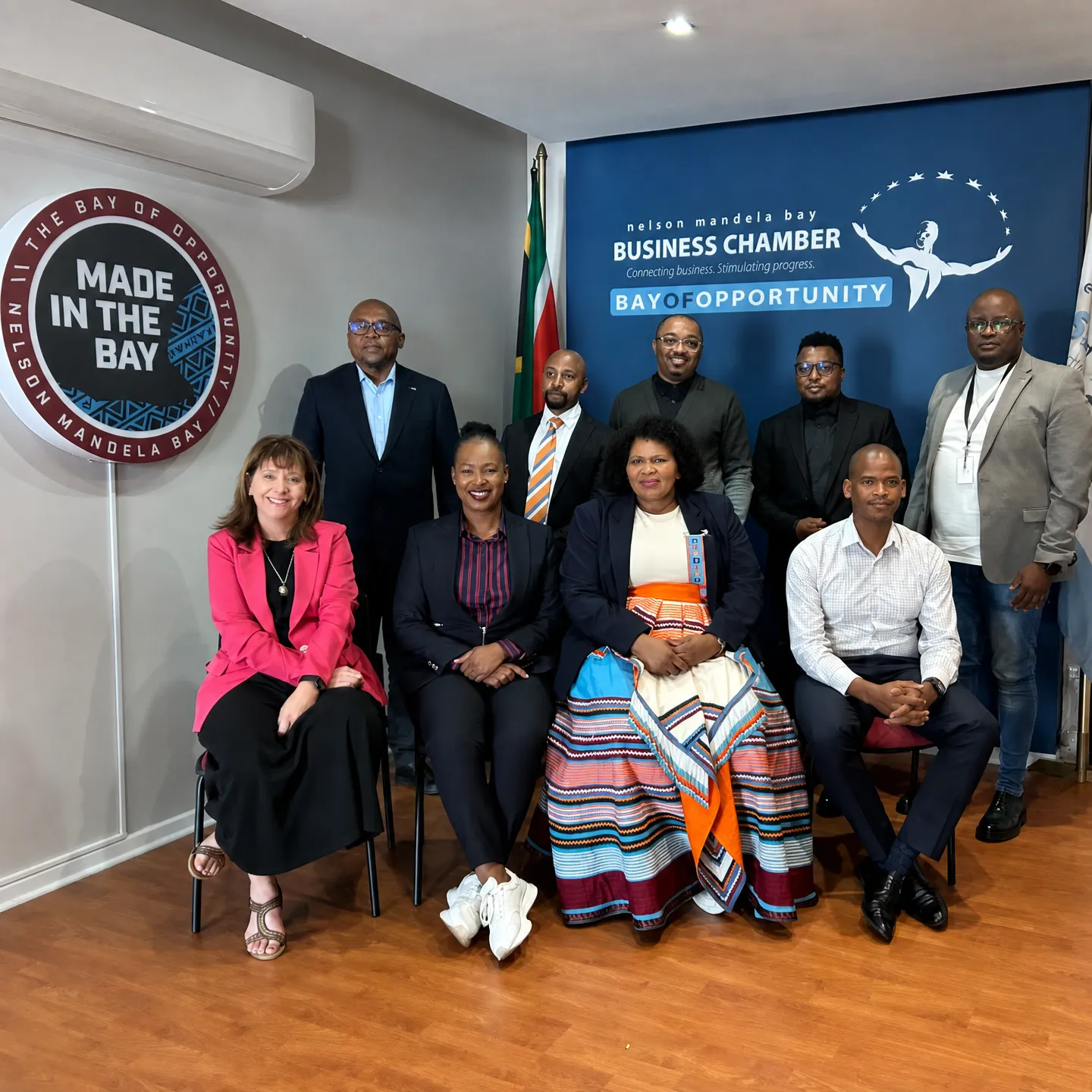
For Nelson Mandela Bay, one of South Africa’s major automotive manufacturing centres, the discussions carried particular weight. The municipality has already invested R17 million over three years to support the sector, but Lobishe argued that stronger national cooperation is needed if emerging businesses are to benefit from the industry’s growth.
Addressing the gathering, Lobishe called on the Department of Small Business Development to work more closely with municipalities to create an environment in which emerging automotive manufacturers can become meaningful participants in industry supply chains. She said Nelson Mandela Bay was well placed to serve as a pilot municipality for the One National Plan, given its established manufacturing base and existing support programmes.
“As the leading automotive hub in the country, Nelson Mandela Bay is perfectly placed to be the pilot for the aggressive implementation of this plan,” she said.
Lobishe said the plan should also address rising competition from cheaper imports, high domestic production costs and the global shift towards electric vehicles. She added that the municipality was already examining policy interventions through the District Development Model, which is intended to promote cooperation between the different spheres of government.
Her appeal underlined the need for national programmes to be matched by practical municipal action, where entrepreneurs still struggle with premises, infrastructure and local market access.
Ndabeni told the gathering that the One National Plan could not be drafted only in government offices, without the businesses expected to benefit from it. “We are here to realize meaningful economic transformation. We aim at doubling the beneficiation of MSMEs,” she said.
The plan aims to double the number of MSMEs in South Africa, with the broader ambition that small enterprises create nine million of the 11 million new jobs identified in the National Development Plan. Unlike the South African Automotive Master Plan, which sets the industry’s long-term objectives to 2035, the One National Plan is intended to identify specific opportunities for smaller enterprises, the barriers that keep them out of supply chains, and the institutions responsible for removing those barriers.
Ndabeni called for measurable commitments from vehicle manufacturers, suppliers, government and financial institutions. These would include identifying components that could be made locally, increasing procurement from emerging businesses, and putting in place the funding and technical support needed to meet industry standards.
Ndabeni's address underlined both the scale of the opportunity and the pressure on the sector, revealing that:
- the broader automotive industry contributed about 5.2% to South Africa’s GDP in 2025.
- Vehicle and component manufacturing accounted for about 23.8% of value added in the manufacturing sector.
- South Africa produced 618,077 vehicles in 2025, or about 0.64% of global output.
- Production rose 2.9% from 600,473 units in 2024.
- The Automotive Master Plan aims to lift the country’s share to 1% by 2035, or about 1.4 million vehicles a year.
A central question at the consultation was how South Africa could manufacture more of the components it now imports. According to the 2026 Automotive Trade Manual figures cited by Ndabeni, the country’s seven original-equipment manufacturers imported about R151 billion worth of components in 2025, while replacement-parts imports amounted to a further R107.5 billion.
The figures point to a large potential market for domestic manufacturers, although not every imported part can be produced locally at a competitive price. Ndabeni said government and industry needed to identify which products South African enterprises could realistically make, and what support those businesses would need to become reliable suppliers.
That includes machinery, technical expertise, working capital, certification, manufacturing facilities and long-term purchasing agreements. She also pointed to existing interventions, including the Automotive Industry Development Centre’s incubation programme.
Between the 2019/20 financial year and March 2025, R24.175 million was channelled into the programme, supporting 13 small businesses and sustaining 340 jobs.
One beneficiary was BATYI Automotive Component Supplier, which graduated from the programme in 2023 and later secured an agreement with Tier 1 supplier Motherson. According to the minister, the company now supplies more than 2,000 components through spray-painting and assembly operations and has created and sustained 40 jobs. The example illustrates how access to established manufacturers, production facilities and business-development support can help smaller firms enter the automotive supply chain.
The shift to electric vehicles also featured prominently, with both Ndabeni and Lobishe arguing that South Africa needed to prepare the industry for changing technologies and export-market requirements. Ndabeni identified a number of opportunities for emerging businesses in battery manufacturing, charging equipment, software, energy-management systems, vehicle recycling and related technologies.
For Nelson Mandela Bay, the proposed national plan offers a chance to build on existing municipal support and tighten the link between emerging businesses and the established industry. For the entrepreneurs in the room, the test is whether participation in the consultation becomes work on the factory floor and a real place in South Africa’s automotive supply chains.
You may also like

Hotel Group Backs New Push To Revive Bay Tourism
Asemahle Mfombi · 2d ago · 2 min read

Addo Fun Run Puts Sport, Heritage And Tourism On The Same Field
Asemahle Mfombi · 2d ago · 3 min read
SIU To Probe R57m Unfinished Mdantsane Pool As Scrutiny Widens Over Buffalo City Metro Projects
Johnnie Isaac · 2d ago · 5 min read