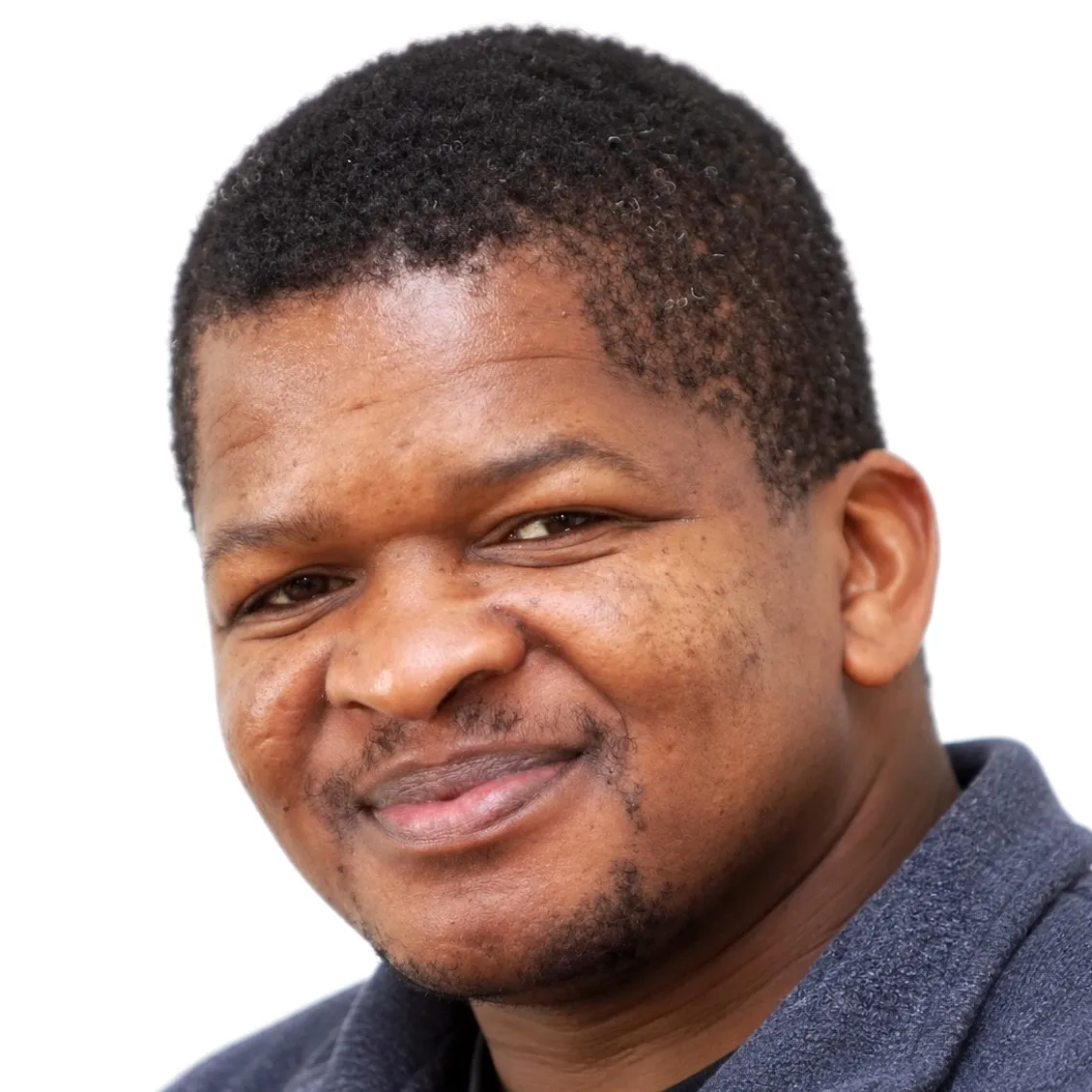
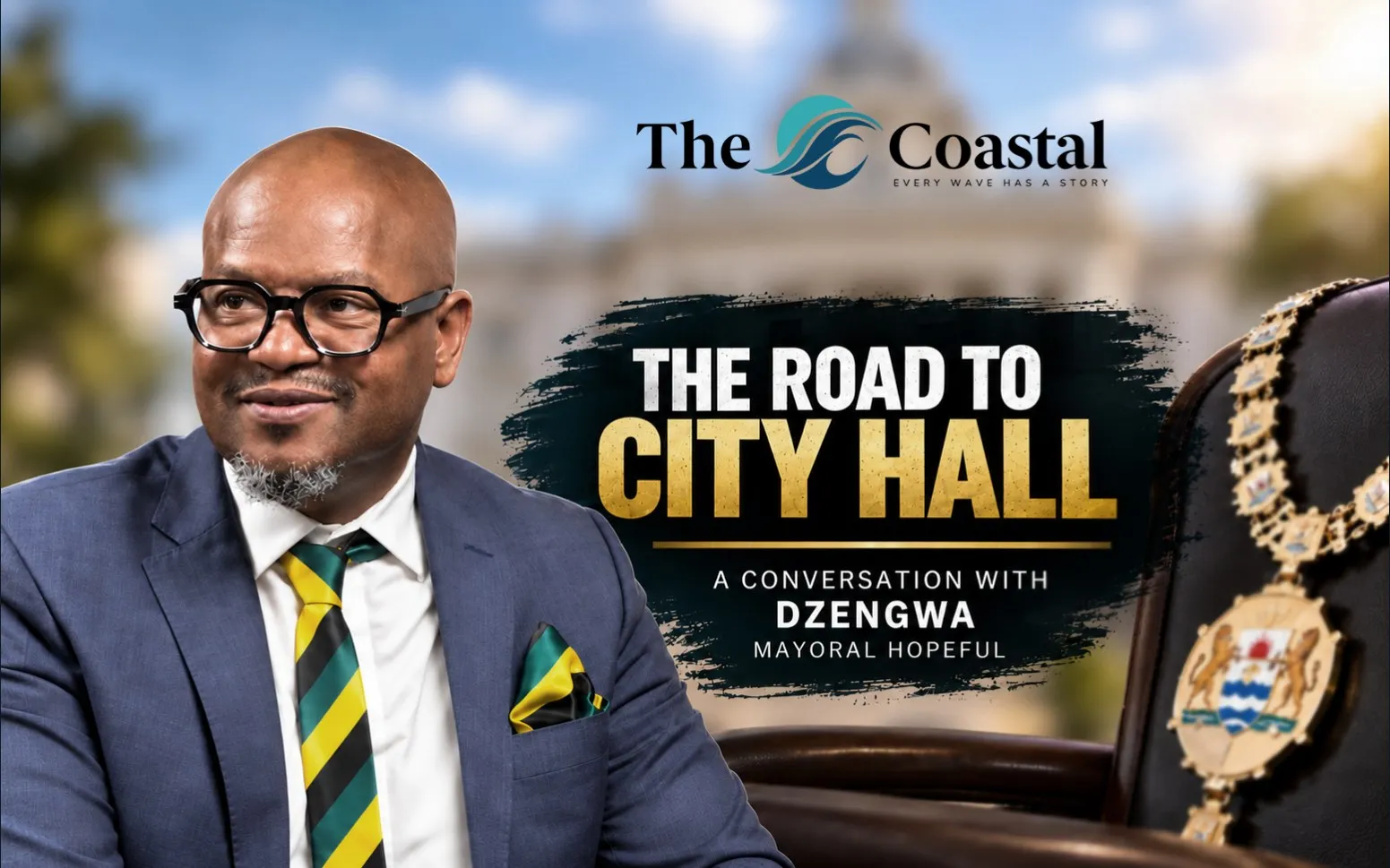
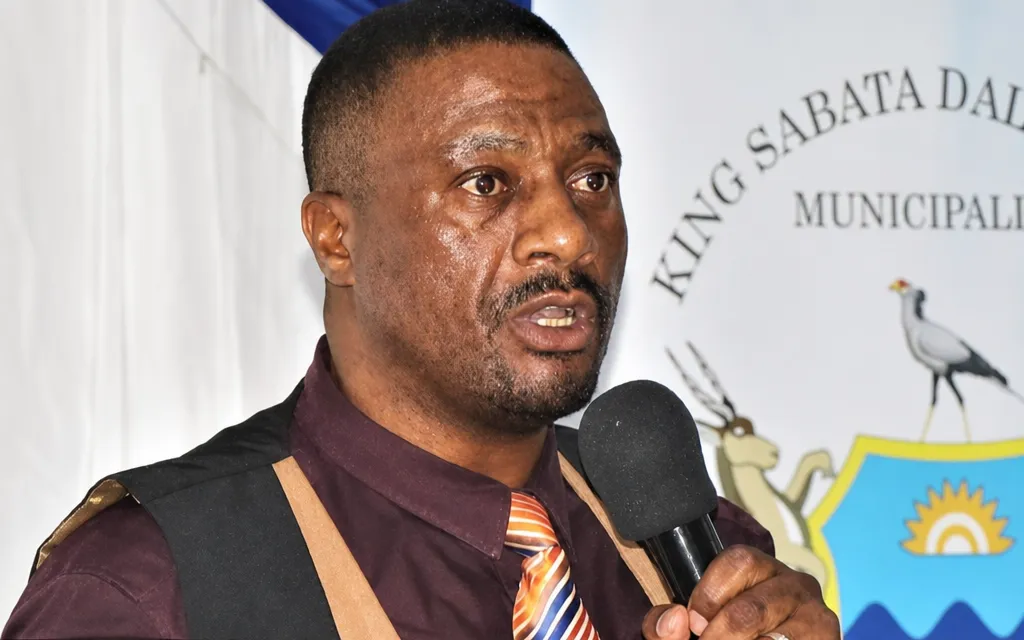
“I know what needs to be done," says Dzengwa, who is banking on nearly four decades of public sector experience to turn around a troubled metro
By Johnnie Isaac
14 September 2026 · 8 min read
The Road To City Hall is a series of sit down interviews with mayoral hopefuls.
For Simphiwe Dzengwa, Buffalo City Metropolitan Municipality is not an institution he has come to know through an election campaign. He claims to know it from the inside.
Long before his name appeared among the four African National Congress candidates vying to become mayor of the only metropolitan municipality, governed by a comfortable ANC majority, Simpiwe Dzengwa had already been working with Buffalo City. First through the South African Local Government Association (SALGA) and more recently through a national government intervention aimed at helping the municipality confront its deepening financial, governance, infrastructure and service delivery problems.
It is this experience that lies at the centre of his pitch for the mayoral chain. Dzengwa describes himself as a public-sector technocrat who has spent almost four decades moving between government, state entities and development institutions, dealing with public finance, infrastructure, governance, organisational transformation and project management.
He has had an opportunity to examine Buffalo City’s problems up close and believes he understands both the failures and the interventions required to address them. “I know Buffalo City quite intimately,” said Dzengwa in a wide-ranging interview in East London recently.
In 2021, SALGA sent Dzengwa to Buffalo City to induct and train newly elected councillors on the functioning of local government. “That was to induct and train the current councillors on what is the municipality and how does it function. So they know me and I know them,” he said.
His relationship with the metro deepened when national government intervened in response to mounting concerns about the municipality’s performance. Two years ago the Department of Cooperative Governance and Traditional Affairs deployed a team to support, stabilise and turn the municipality around. Dzengwa led that intervention through what was known as the Results Management Office. The assignment took him beyond council chambers and political structures. The team interviewed heads of departments, engaged members of the mayoral committee and interacted with directorates across the municipality in an attempt to establish where the problems lie and what could be done to address them.
“We didn’t end there; we made recommendations in terms of what needs to happen to turn around this municipality,” said Dzengwa. The resulting report was presented to council and, according to Dzengwa, received overwhelming support from political parties represented in the council.
At its core was a 10-point plan aimed at turning around and transforming the metro. For Dzengwa, this experience provides an important distinction between being a candidate with ideas about Buffalo City and being a candidate who has already spent time interrogating the machinery of the municipality. “I know what are the challenges and, most importantly, I know what needs to be done in this municipality,” he said.
A municipality trapped in a billing crisis
Dzengwa brings almost 40 years of work and activism experience.
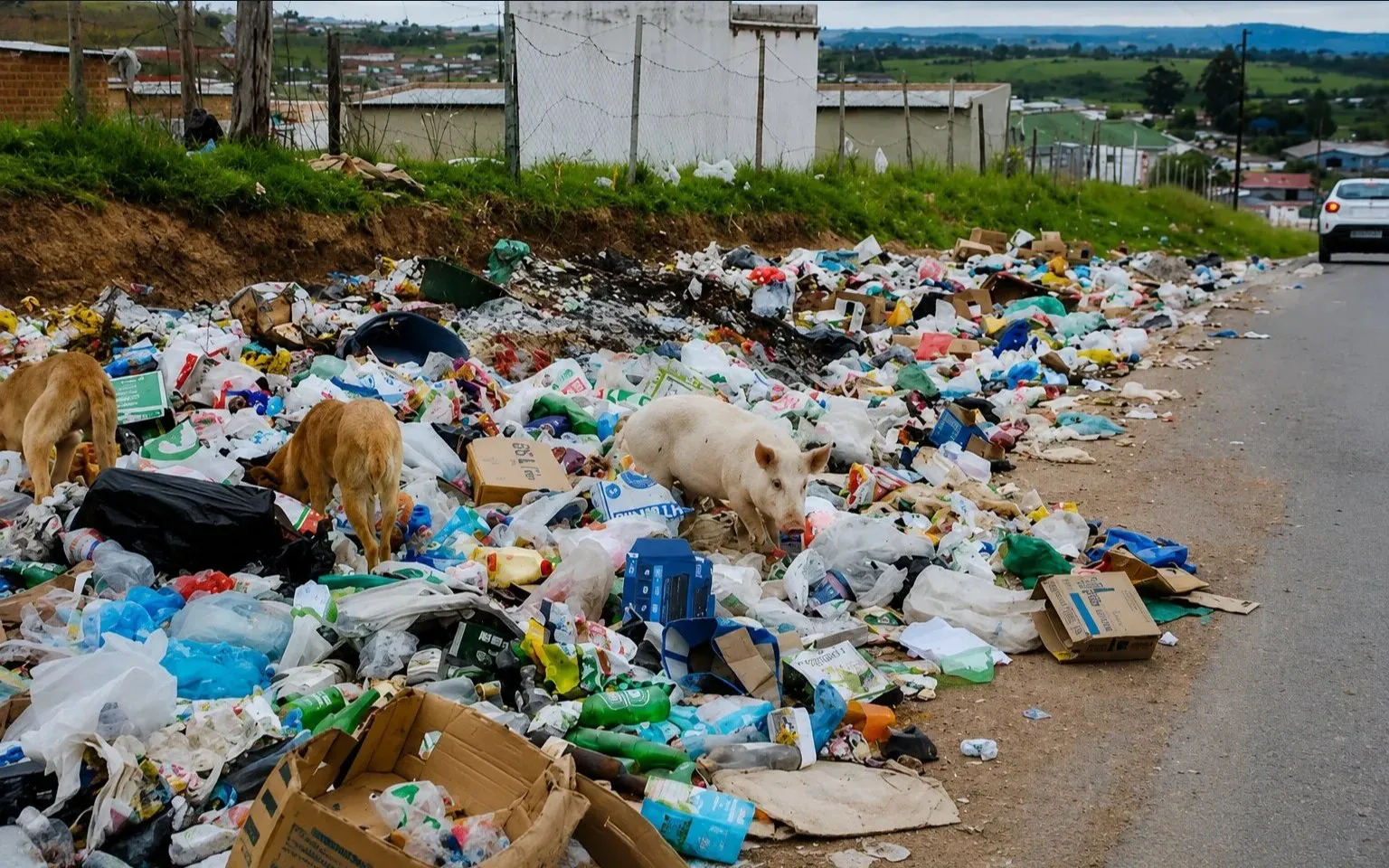
Dzengwa said the most visible manifestation of Buffalo City’s problems is its billing system. Residents have complained for years about faulty meters, bills that arrive late, bills sent to incorrect addresses and charges that they believe are excessive. He describes the situation as a fundamental municipal management problem rather than merely an administrative inconvenience. “Everyone is complaining about faulty meters, exorbitant bills, bills that do not arrive on time, or sent to incorrect addresses. It’s a huge mess and has been a complaint for a number of years,” said Dzengwa.
In his assessment, the billing crisis is inseparable from the municipality’s broader financial condition. Dzengwa says Buffalo City is collecting only about 67 per cent of its billed revenue, significantly below the 95 per cent collection benchmark set by National Treasury. The consequence is a municipality caught in a vicious cycle: residents who carry an increasing financial burden, while the municipality struggles to collect enough revenue to maintain infrastructure and provide services.
“We need to fix the finances,” he said. His criticism goes beyond revenue collection. He argues that the metro has struggled with investment decisions, financial stewardship and the basic discipline required to ensure that scarce public resources are used effectively. “The municipality is bad at investing, bad at making financial decisions and also bad at prudent stewardship of its finances,” said Dzengwa. The result, he argues, is a particularly damaging contradiction: Buffalo City needs massive investment in infrastructure at precisely the time that its finances are too weak to support that investment.
R11.6 billion infrastructure problem
Infrastructure is another major fault line. Cable theft, water losses, vandalism and deteriorating drainage systems are among the issues Dzengwa says emerged from his engagement with the municipality. He estimates that the metro requires about R11.6 billion to repair vandalised infrastructure and restore structures to an acceptable standard. But the municipality does not have that money. The challenge, therefore, is not simply repairing potholes or replacing damaged infrastructure. It is finding a sustainable way to finance the renewal of a metropolitan system that has been allowed to deteriorate while its revenue base remains under pressure.
Dzengwa’s experience in development finance and infrastructure financing forms an important part of his argument here. His professional background includes work involving multi-billion-rand portfolios, infrastructure delivery, project and programme management, public-private partnerships and capital raising. He has also undertaken executive training in infrastructure financing and development, development finance, performance budgeting, intergovernmental fiscal relations and local government finances.
He holds a Master’s degree in Public Administration from Florida Atlantic University, an MBA from Rhodes University, and is currently pursuing a PhD at Wits University.
The paradox of people being paid without the tools to work
His critique of Buffalo City’s service-delivery model also extends to municipal employees. Dzengwa said many municipal workers are effectively being paid without being properly equipped to perform the functions for which they are employed. He believes the municipality has increasingly relied on service providers for work that could potentially be performed by its own employees if they were properly equipped.
“Many people in Buffalo City are paid for not doing what they’re supposed to be doing, not because they don’t want to work but workers don’t have tools because most of the work in our metro is being outsourced to private service providers,” said Dzengwa.
Even the graveyards tell a story
For all the emphasis on billion-rand infrastructure deficits and municipal finances, Dzengwa’s understanding of the crisis also extends to the seemingly mundane details of municipal life. He points to the condition of cemeteries.
“Graveyards are dirty, they are not being cleaned or maintained. There’s no honour and dignity at the final resting place of our parents. These are the small things that can easily be done if only workers were given tools,” said Dzengwa
The metro does not only need large amounts of money, he argues. It needs better management of the money and resources it already has.
A technocrat entering a political contest
Dzengwa’s candidacy comes at a difficult moment for the ANC in Buffalo City. The party has governed the metro since its establishment, but faces a municipality troubled by service delivery complaints, financial pressures, infrastructure deterioration and internal political tensions.
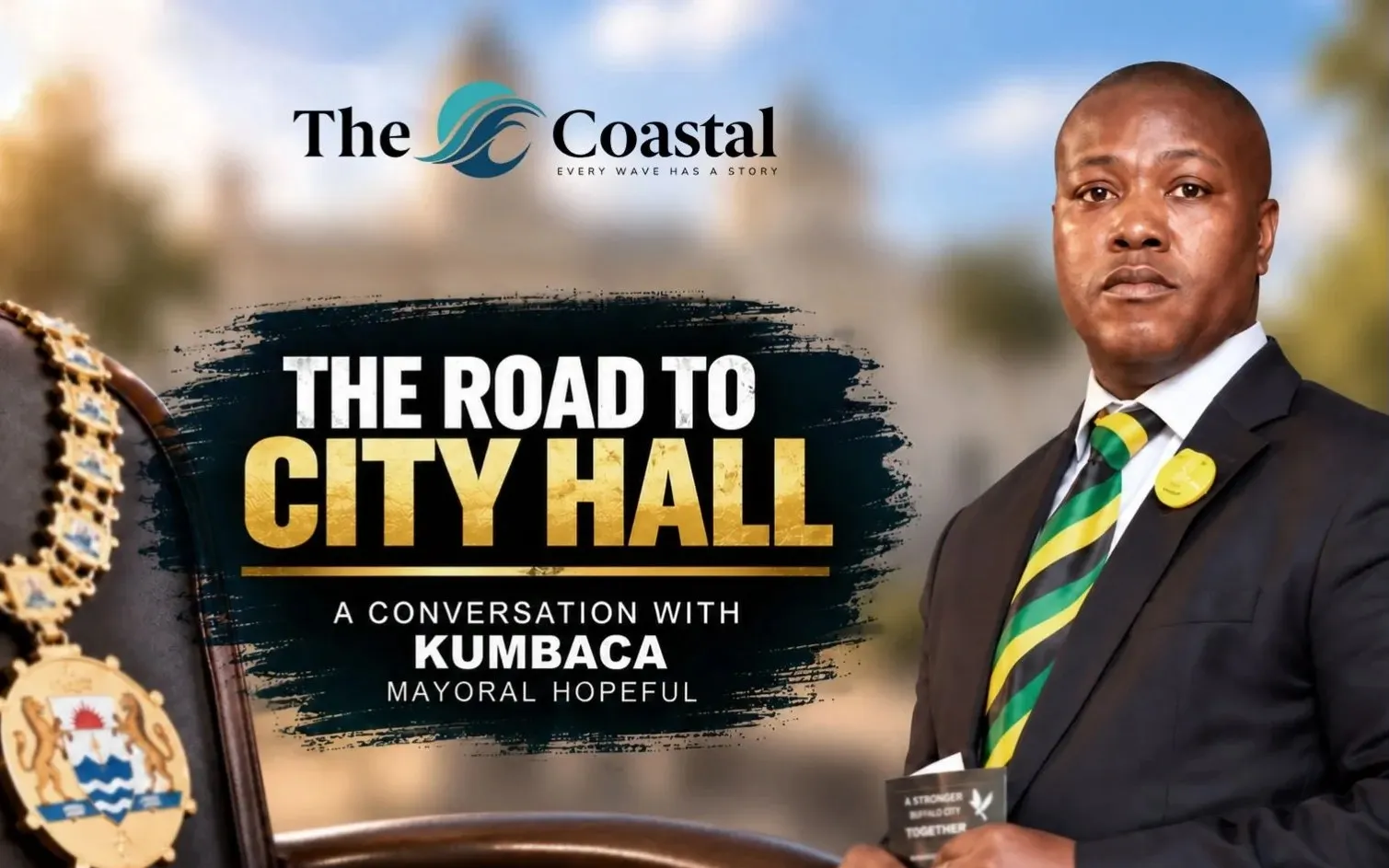
The ANC has unveiled four mayoral candidates: incumbent mayor Princess Faku, experienced councillor Ncedo Kumbaca, former Member of Parliament Nocawe Mafu, and Dzengwa.
Simphiwe Dzengwa
The contest is unfolding against the backdrop of growing political competition, including the United Democratic Movement’s efforts to capitalise on divisions within the ANC, while recent polling data has indicated that the Democratic Alliance has gained ground in the metro.
For the ANC, the mayoral contest is therefore about more than choosing who should preside over council. It is also about whether the party can convince voters that it has the capacity to repair a municipality. Dzengwa’s answer is to put his technocratic experience at the centre of the campaign.
His professional history spans local government, public administration, development finance, infrastructure and state institutions. His technical competencies include financial management and budget oversight, corporate governance, risk management, project and programme management, organisational transformation, government relations and public-private partnerships.
He is also conversant with the financial and regulatory architecture that governs government spending, including the Public Finance Management Act, the Municipal Finance Management Act, Treasury Regulations and municipal financial management systems. That background gives his candidacy a distinctly different character. He is not presenting himself primarily as a career politician but as a manager who believes Buffalo City’s central problem is institutional: a municipality that needs to restore financial discipline, rebuild infrastructure, improve revenue collection, professionalise its administration and reconnect its workforce with the services residents require.
From underground politics to public administration
Dzengwa is not a political newcomer. He grew up in the ANC underground movement and moved through student politics and the youth league before becoming a technocrat and public-sector executive.
He believes the combination gives him an understanding of both the political and administrative dimensions of government.
He boasts about his untainted reputation through his time in the public service. “In all my (almost) 40 years in executive roles, there’s no blemish against my name. My name has never been in the newspapers or Auditor-General reports for the wrong reasons,” said Dzengwa.
The test is now execution
The challenge for Dzengwa is that diagnosing Buffalo City’s problems and fixing them are two very different propositions. The metro’s problems are not new, and many have survived successive political administrations, management teams and government interventions.
A mayor would have to navigate council politics, organised labour, procurement systems, provincial and national government, communities, businesses and a municipal administration with competing institutional interests. The financial crisis cannot be solved simply by collecting more revenue. It requires residents to trust the billing system, accurate metering, political will to enforce payment, protection of municipal infrastructure and disciplined expenditure.
Dzengwa believes his experience gives him an advantage. He has already been inside Buffalo City as an adviser, trainer and turnaround practitioner. Now he wants to return not as an external interventionist, but as the political head of the institution he has spent years studying. His pitch is therefore straightforward: Buffalo City does not need another diagnosis. It needs execution.
Share
KSD formally ties senior managers’ performance to service delivery — particularly roads, water, sanitation and infrastructure
Asemahle Mfombi · 2d ago · 2 min read
5
NewsBetusile Mcinga Built This. Now It’s Time For The Eastern Cape To Show Up For Him