
Five Rhino Poachers Jailed For A Combined 125 Years
By Tembile Sgqolana
19 November 2026 · 3 min read
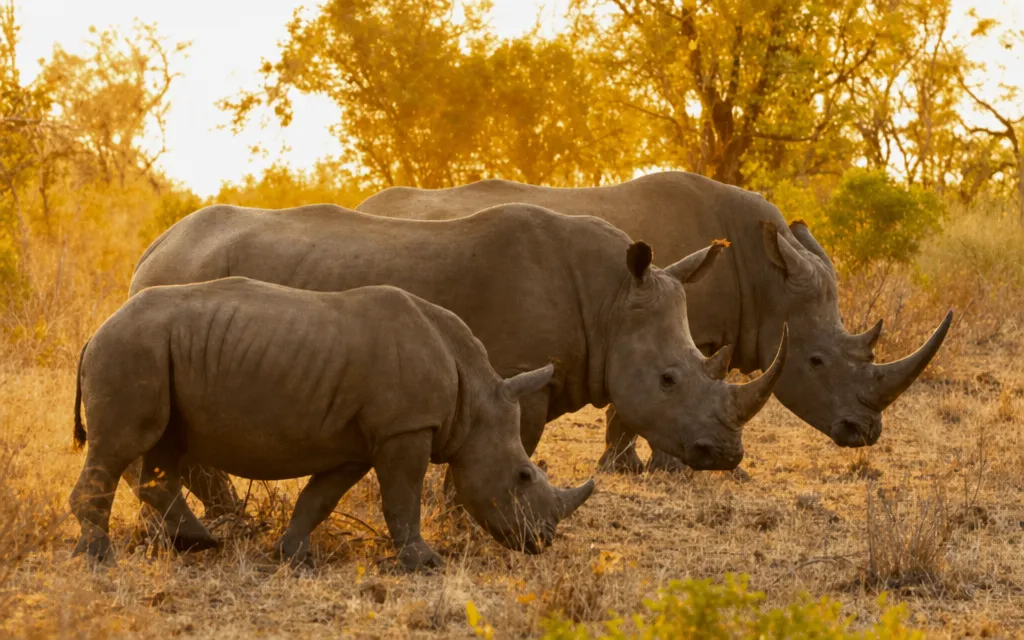
The sentences, widely considered as a strong stance against the poaching of wildlife, will hopefully boost efforts to sustainably protect South Africa's rhino populations.
Five men convicted of killing five rhinos at Hunters Hill Game Farm near Sterkstroom have been sentenced to a combined 125 years of direct imprisonment, in a case highlighting the criminal threat facing South Africa's rhino conservation efforts.
The Komani Regional Court, sitting at Cacadu, sentenced Sandile Rasmeni (42), Vusumzi Dube (46), Sylvester Ncube (47), Mbekezeli Nyathi (40) and Ishmael Chauke (44) on 16 November, following their conviction in September 2026.
The killings took place in two separate incidents in 2017 at Hunters Hill Game Farm.
On 30 September 2017, two rhinos were shot dead and their horns removed. On 15 October, less than a month later, another three rhinos were killed, with two horns removed.
According to police spokesperson Captain Yolisa Mgolodela, the investigation led to the arrest of five suspects in early December 2017 after two vehicles were stopped in the Free State, where a .458 Magnum rifle was recovered.
“Ballistic testing later established that the firearm had been used in both poaching incidents.
“The accused remained in custody throughout the trial after bail was successfully opposed,” she said.
This means that the convicted felons received an effective 25-year prison sentence each, with sentences on individual counts running concurrently. They were also declared unfit to possess firearms.
South Africa's rhino population has shown signs of recovery, but poaching remains a significant threat to conservation efforts aimed at protecting the country's remaining populations.
Department of Forestry, Fisheries and the Environment figures cited in recent conservation reporting indicate that South Africa's rhino population stood at 15,096 at the end of 2025, comprising 12,531 white rhinos and 2,565 black rhinos. The population increased by 4.9% compared with 2024.
Despite the population increase, poaching continues to threaten the recovery of the species. South Africa recorded 352 rhinos poached in 2025, down from 420 in 2024, reflecting a 16% decline.
The figures demonstrate the ongoing tension between conservation progress and wildlife crime, with law-enforcement agencies and conservation organisations continuing to work tirelessly to protect rhinos from illegal hunting and trafficking.
The Eastern Cape's comparatively smaller poaching numbers do not necessarily lessen the impact on local populations.
The loss of individual animals can affect breeding potential, population growth and the long-term viability of populations in protected areas and private reserves.
Rhino poaching is not simply the killing of an animal in the field. It forms part of a broader illegal wildlife trade in which horns are removed, transported and sold through criminal networks.
South Africa's National Integrated Strategy to Combat Wildlife Trafficking aims to strengthen responses to wildlife crime through improved law enforcement, intelligence, cooperation between agencies and efforts to disrupt trafficking networks.
The Department of Forestry, Fisheries and the Environment has also adopted biodiversity management plans for black and white rhinos to support population growth, protection and long-term conservation.
The Hunters Hill case highlights the importance of forensic evidence, particularly ballistic investigations, in securing convictions in wildlife crime cases. The linking of the firearm to both incidents helped establish the connection between the two attacks.
Chris Hani District Commissioner Major General Rudolph Adolph praised the meticulous and collaborative investigation conducted by Komani Stock Theft investigators and Eastern Cape Rhino Coordinators.
He said the sentence would serve as a deterrent against acts of cruelty towards endangered species.
Captain Mgolodela said the convictions and sentences mark the conclusion of a lengthy criminal case, but the wider conservation challenge remains; protecting rhinos from poachers and disrupting the networks that profit from the illegal trade in wildlife.
You may also like
Helpful Police Score R1.3m Abalone Arrests
Viwe Dyantyi · 5d ago · 1 min read

Makana Council Sitting Postponed After Smaller Parties Challenge Meeting Invitations
Thobile Hans · 5d ago · 2 min read

2,417 School Jobs Throw Eastern Cape Youth A Lifeline — Just For Three Months
Velani Ludidi · 5d ago · 4 min read