
No Place For Failed Mayors As ANC Enters Coalition Talks For Key EC Councils
By Johnnie Isaac
16 November 2026 · 5 min read
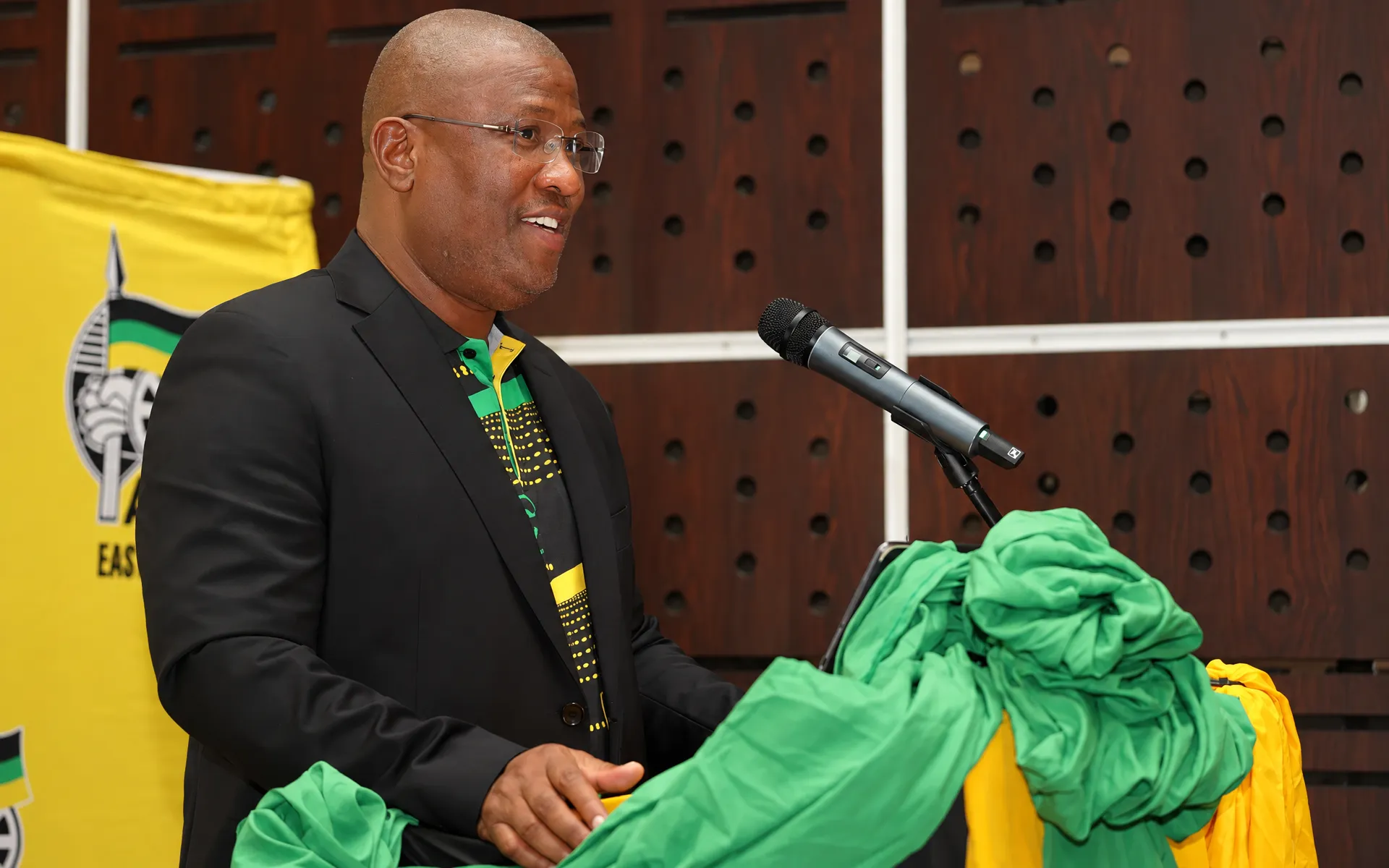
As the ANC negotiates coalition deals following its loss of outright majorities in key Eastern Cape municipalities, provincial chairman Oscar Mabuyane has issued a stern warning that underperforming public representatives must make way for new blood.
The ANC will not reward mediocrity, incompetence and failure when deciding who to deploy as mayors and other key political office-bearers in Eastern Cape municipalities following its bruising performance in the recent local government elections.
This was the commitment made by Eastern Cape Premier and ANC provincial chairperson Oscar Mabuyane during his address to the two-day Provincial Executive Committee (PEC) meeting, which opened at the ICC in KuGompo City yesterday. The meeting was attended by the party's National Executive Committee (NEC) deployee, Mmamoloko Kubayi.
Mabuyane, who admitted that the party had emerged bruised and bleeding from the local government elections, called on the ANC to apply the highest degree of meritocracy when deciding on key municipal deployments, including executive mayors, speakers and party whips. He, however, stopped short of explicitly identifying these deployments as among the key reasons for the party's poor electoral performance.
Mabuyane's stern warning comes as the party is busy negotiating coalition agreements in several key municipalities, including Buffalo City and Nelson Mandela Bay, where it failed to secure outright majorities. The two councils are expected to convene for their first sittings in the coming days to elect their mayors and speakers.
The Daily Dispatch reported today that the ANC may retain the mayorship of Buffalo City Metro with the help of the South African Communist Party, which has agreed to enter into a coalition with its alliance partner. But the SACP has attached a condition. It wants the ANC not field Princess Faku as mayor.
Mabuyane said that while continuity was important, the ANC should not reward those who had failed in their positions of deployment. “Those comrades who have distinguished themselves through effective leadership, administrative competence and an unwavering commitment to service delivery deserve serious consideration for retention. Equally, those whose tenures have been characterised by poor performance, administrative instability, political arrogance or a failure to respond to the needs of communities must make way for new leadership,” said Mabuyane.
Reflecting on the party's poor electoral performance, he said the results had exposed the extent of the ANC's declining support in the province.
For the first time, the ANC lost its outright majority in several Eastern Cape municipalities, including King Sabata Dalindyebo in Mthatha, Enoch Mgijima in Komani and Makana Local Municipality in Makkhanda. The party could also lose control of the Sarah Baartman District Municipality.
In the previous local government elections, the ANC retained control of Sarah Baartman by a margin of just two votes. However, this time, the ANC and DA secured an equal number of seats through direct district council representation, with each party holding about five seats.
In Buffalo City, the ANC's support dropped to approximately 42%, down from 58% in the previous elections. The party also secured only four proportional representation (PR) seats. “Across the country, the electoral outcome has exposed the extent to which our organisation has suffered a decline in electoral support. The emergence of hung municipalities, including municipalities that have historically constituted strongholds of the ANC, is a clear manifestation of this political reality,” said Mabuyane.
He said the ANC had been confident that its electoral position would remain strong enough to secure decisive majorities in municipalities across the province. However, the results had demonstrated that organisational presence did not necessarily translate into electoral confidence.
Mabuyane warned party colleagues against attempting to explain the outcome through convenient political arguments, saying they needed to respect the intelligence and judgement of voters. “Our people have already passed judgement on the performance of municipalities. They know which deployees provided leadership and which ones failed. They know which ANC public representatives remained accessible and which ones disappeared from their communities after being elected. They know which municipalities delivered services and which ones became synonymous with administrative paralysis and political instability,” he said.
Mabuyane said the ANC had done what it knew best by mobilising communities to participate in the democratic electoral process across the province, but these efforts had failed to translate into improved voter turnout. “Yet, despite these efforts, voter participation remained disappointingly low. In the Eastern Cape, approximately 1.7 million people are reported to have participated in these elections," he said. “We must be concerned and try to find answers about the more than two million registered voters who did not cast their votes.”
He told PEC members that the party needed to understand why so many registered voters had stayed away from polling stations, arguing that their absence was, in itself, a political message.
“Their absence cannot simply be dismissed as political apathy. ln many instances, it reflects disappointment, frustration and a growing distance between the ANC and the communities it was established to serve,” he said.
Singling out Buffalo City Metropolitan Municipality, where the ANC is facing the prospect of governing through a coalition for the first time, Mabuyane said the outcome in one of the province's two metropolitan municipalities, which had historically remained an ANC stronghold, was particularly instructive.
“Comrades, who among us would have imagined that Buffalo City, with its rich revolutionary history and longstanding electoral support for the ANC, would find itself in a position where the formation of a municipal government requires negotiations with other political parties? This is a political development that demands serious reflection,” he said.
He said that as the ANC embarked on coalition negotiations, any arrangements entered into must be guided by the interests of the people, the stability of municipal governance and the broader objectives of social transformation.
“We now find ourselves in circumstances where we may have to engage political opponents with whom we have fundamental ideological and political differences, because we contest state power in order to advance the national democratic revolution, which is about transforming this country and redressing the imbalances of the past. Such political engagements must never be confused with the abandonment of our revolutionary principles,” said Mabuyane.
He reiterated the need for meritocracy in leadership appointments, warning that no one should be considered untouchable when deployment decisions were made.
“Factional considerations, personal loyalties and political patronage must find no accommodation in this process. The best amongst us must be deployed, especially those who have proven their capabilities and demonstrated the requisite skills,” he said.
You may also like

ANC Falters Again In Largest Eastern Cape Metro
The Coastal Reporter · 09 Nov · 3 min read

How Self-Importance, Infigthing, Corruption Allegations and Arrogance Led To ANC Decline
Johnnie Isaac · 07 Nov · 6 min read

Something Fishy Keeps Sardine Boats at Bay
Tembile Sgqolana · 05 Nov · 2 min read