
Opinion
Who Can Fix Buffalo City? Putting The Mayoral Hopefuls To The Test
By Zola Pinda
19 September 2026 · 11 min read

The mayoral contest demands more than political loyalty. It demands a hard look at the candidates’ records, experience, strengths and gaps—and a decision that ultimately belongs to its citizens.
A journalist is also a citizen. Like every other eligible citizen, the journalist has constitutional political rights. But the possession of a pen, a byline or an online publishing platform does not give a journalist a superior political right. It does not give the journalist authority to decide, on behalf of other citizens, who they should elect.
The journalist's private political view should be expressed when he or she makes a decision at the ballot box. Their professional judgment belongs to the discipline of journalism. South Africa's Press Code requires reporting to be truthful, accurate and fair; to present information in context; to distinguish fact from opinion, allegation, rumour and supposition; to verify doubtful information where practicable; to seek the views of subjects of critical reportage; and to avoid political or personal considerations influencing reporting. It also recognises that commentary may advocate strongly, provided fact and opinion are clearly distinguished and relevant facts are not distorted or suppressed.
The purpose here is therefore not to tell Buffalo City citizens whom to vote for. It is to place before them the strongest evidence that can reasonably be assembled about the candidates, the institution they seek to lead, the city's problems and its possibilities.
The writer has conducted the research. The writer has tested the evidence. The writer has disclosed a personal relationship where one exists. The writer has challenged his own conclusions.
But the writer does not own the vote. The citizens do. The private moment, at the ballot box, is where the journalist becomes an ordinary citizen again. Until then, the obligation is to the reader and the craft of journalism.
Buffalo City from the water
Buffalo City looks different from the water. From the harbour, KuGompo City presents itself as a city of possibilities: the coastline opening towards the Indian Ocean, the port connecting the metropolitan economy to the world, the lights of the city stretching inland, and an industrial base anchored by one of South Africa's important automotive manufacturing operations.
From another vantage point, however, Buffalo City looks like a municipality struggling to convert its metropolitan strength into assets and prosperity.
Its coastline, harbour, automotive industry, tourism, heritage, universities, sports culture, creative industries and rural hinterland are assets. Mdantsane is an enormous human and cultural asset. Qonce and Bhisho give the municipality historical and political depth.
Yet the municipality is simultaneously subject to national and provincial support aimed at addressing service delivery failures, financial controls and governance. Its own 2026/27 planning documents record a Section 154 intervention and continuing weaknesses that demand political and administrative attention.
That is the contradiction at the heart of the 2026 mayoral contest.
Buffalo City does not lack assets. It lacks sufficient institutional capacity to convert those assets into sustained metropolitan performance.
The mayoral question therefore cannot simply be: who is the most popular candidate? Nor can it be: who has the strongest political network?
It must be a harder question: who has demonstrated the capacity to lead a distressed metropolitan institution and simultaneously turn Buffalo City's economic, physical, cultural and human assets into a coherent metropolitan economy?
A city larger than its political argument
Buffalo City is often discussed through the vocabulary of municipal failure: billing problems, ageing infrastructure, financial pressures, service delivery complaints, political disputes and questionable accountability.
All of these issues matter. But they can also obscure the bigger story?
The municipality stretches across KuGompo City, Mdantsane, Qonce, Bhisho and surrounding communities; incorporating a coastline, harbour, industrial economy, substantial residential areas, rural settlements and important heritage institutions.
Its metropolitan growth strategy identifies sectors including agro-industry, automotive manufacturing, renewable energy, the ocean economy as well as the film and creative industries. Its investment proposition includes major industrial players such as Mercedes-Benz South Africa, Nestlé and Johnson & Johnson. Buffalo City Tourism identifies a 68-kilometre coastline, beaches, estuaries, heritage attractions and nature-based opportunities.
The question is therefore not whether Buffalo City possesses a development proposition. It does.
The question is whether political and administrative leadership can integrate these assets.
Automotive manufacturing cannot remain disconnected from skills development. The harbour cannot remain disconnected from tourism. Tourism cannot remain disconnected from heritage. Heritage cannot remain disconnected from local enterprise. Local enterprise cannot remain disconnected from procurement. And municipal infrastructure cannot remain disconnected from all of them.
That is what metropolitan leadership should mean.
But the city cannot be romanticised
The danger of talking about Buffalo City only as an economic opportunity is that it can become a tourism brochure rather than political journalism.
The municipality's problems are real. Its planning documents record a qualified audit opinion, continuing infrastructure challenges, water supply constraints, wastewater problems, vandalism, weaknesses in financial controls and concerns about governance and accountability. National and provincial interventions have been required because ordinary municipal systems have not been sufficient to resolve these problems.
In July 2026, National Treasury temporarily withheld Buffalo City's equitable share grant funding transfer amid compliance concerns affecting municipalities. The funds were subsequently released after corrective measures were addressed, but the release did not amount to a declaration that every financial management requirement had been resolved.
Parliamentary oversight has also put hard numbers to the infrastructure problem: a maintenance budget of about 1% against an 8% recommended level, electricity losses of 32% valued at roughly R831.43 million, and water losses of 41% costing roughly R187.49 million.
Those numbers are more useful than political slogans because they tell voters what the next mayor will actually have to confront.
The mayoral question
As of the time of writing, the Buffalo City contest remains politically fluid. The principal names publicly associated with the contest include ANC figures Princess Faku, Simphiwe Dzengwa, Ncedo Kumbaca and Nocawe Mafu; UDM deputy leader Nqabayomzi Kwankwa; EFF candidate Mkhululi Dlevu; and MK Party candidate Mzwandile Vaaiboom. Final electoral eligibility and party-list certification must be checked against the latest IEC position before publication.
The mayor is not directly elected by citizens. Citizens elect councillors; the newly constituted council determines the executive leadership. That makes the candidate comparison necessarily provisional and makes the council result part of the eventual story.
For this assessment, each contender is tested through the same questions: what is established; what is the strongest qualification; what evidence exists of delivery; what is the principal gap; and what remains unproven?
Simphiwe Dzengwa: the strongest institutional case — but not a blank cheque
There is a personal disclosure that belongs near the beginning of any discussion of Simphiwe Dzengwa. I know Dzengwa. We share a Rhodes University history. That relationship is context. It is not evidence.
For this comparative assessment, Dzengwa must therefore survive the same test applied to every other candidate.
On the available record, he does.
His strongest qualification is the combination of public financial management, executive leadership, development finance, institutional turnaround and exposure to different spheres of government. His academic and professional record includes public administration, financial management, an MBA from Rhodes, Treasury and government experience, development-finance exposure, banking and senior executive positions. He has also held senior institutional roles and has been associated with Buffalo City's 2026 turnaround and diagnostic work.
That is highly relevant to a municipality confronting financial, infrastructure, supply chain management and institutional problems.
But there is a crucial limit.
Dzengwa has not already demonstrated that he can run Buffalo City as an elected Executive Mayor. His 2026 intervention work cannot honestly be described as proof that he has “fixed” the metro.
The evidence supports a narrower conclusion: his professional record is unusually well matched to the institutional problems Buffalo City faces in 2026.
That is a powerful qualification. It remains a qualification, not a guarantee.
Princess Faku: the incumbent has the advantage — and the burden
Princess Faku has the qualification every other candidate must confront: she has actually occupied the office. She became Executive Mayor in March 2023 after previously serving as Deputy Executive Mayor.
That gives her direct experience of the political and administrative reality of running Buffalo City.
But incumbency changes the question.
For an outsider, voters can ask: can you do it?
For an incumbent, they can ask: show us what you have done.
Fairness also requires acknowledging that not every municipal problem originated during Faku's tenure. A mayor inherits systems, contracts, infrastructure backlogs, personnel structures, financial weaknesses and political relationships.
The proper test is therefore not whether Buffalo City has problems. It plainly does. The test is whether the administration has materially improved the trajectory.
The municipality's continuing intervention status, financial pressures and infrastructure weaknesses mean Faku carries both the advantage of direct experience and the burden of direct accountability.
Her strongest qualification is metropolitan executive experience. Her greatest political vulnerability is that she must defend the performance of the institution over which she has presided.
Nocawe Mafu: national executive experience meets a municipal question
Mafu brings a different kind of experience. She has served in Parliament, chaired the Portfolio Committee on Human Settlements and served as Deputy Minister of Sport, Arts and Culture. Her record includes exposure to housing delivery, oversight, sport, arts and heritage.
That makes her particularly relevant to Buffalo City's heritage, cultural, sport and human settlements possibilities.
But national executive experience is not identical to metropolitan government.
A deputy minister operates within a national departmental and cabinet system. A mayor must manage the political interface with a council while holding an administration accountable for municipal finance, infrastructure, electricity, water, waste, roads, spatial planning and local economic development.
Mafu's substantive credentials are therefore significant, but her final electoral status must be checked carefully because of the ANC's candidate-list disputes.
The evidence supports respect for her national executive record. It does not justify pretending that national office is the same as having run a metropolitan municipality.
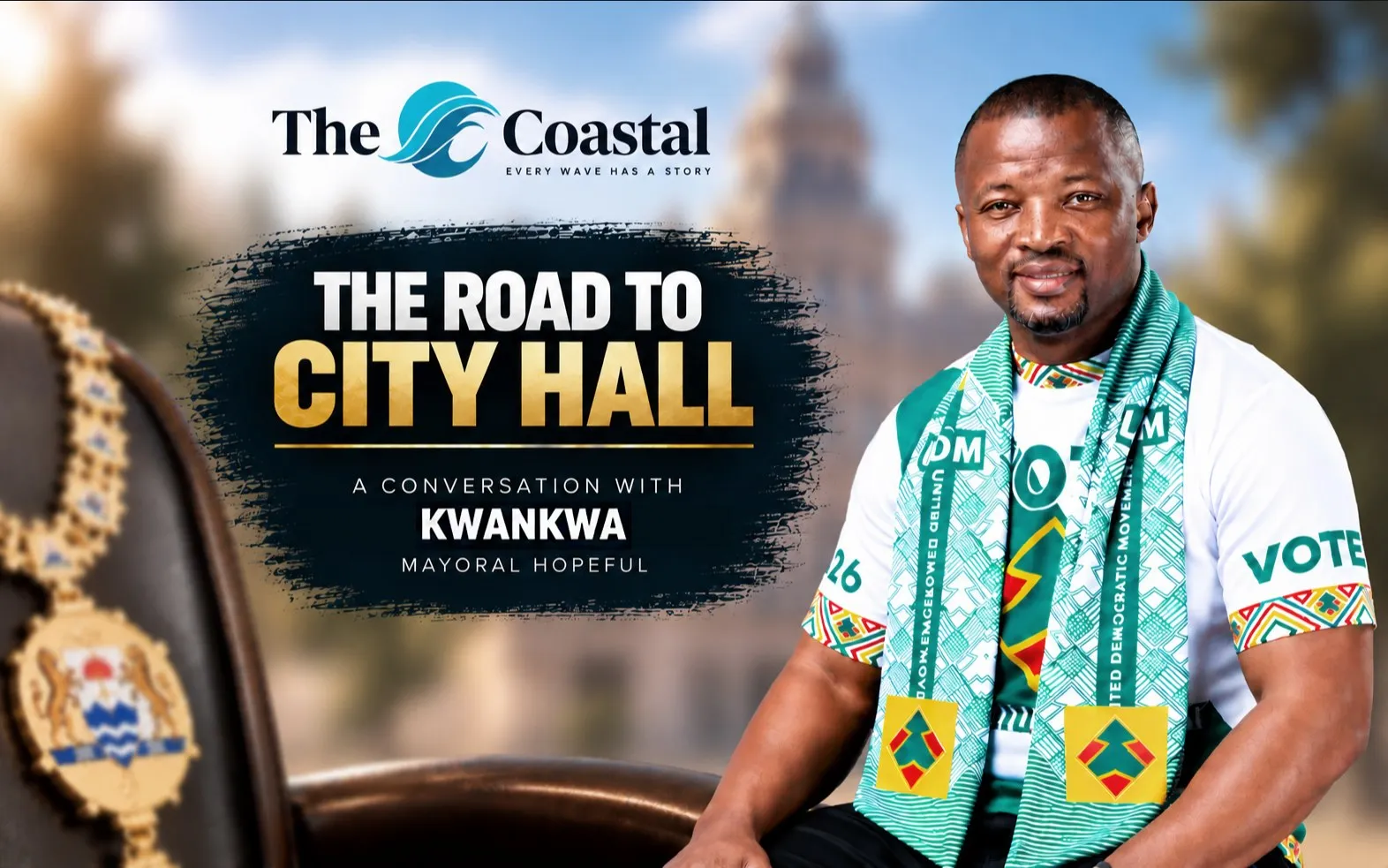
Nqabayomzi Kwankwa: political authority without municipal executive history
Kwankwa presents one of the strongest alternative political cases. He has parliamentary experience, financial management exposure, committee experience and senior political leadership within the UDM.
His argument is fundamentally about political accountability.
The strongest case for him is political leadership combined with financial and parliamentary oversight.
The weakness is equally clear: he has not previously run Buffalo City as its executive mayor.
That does not mean he cannot. It means the claim must be presented as a proposition rather than an established fact.
Ncedo Kumbaca: the municipal technocrat
Kumbaca's experience is closer to Buffalo City's physical reality. He has been associated with municipal infrastructure and development, including roads, engineering and stakeholder management work.
That experience matters. A metropolitan government ultimately has to fix roads, pipes, electricity networks, wastewater systems and public infrastructure.
But portfolio leadership is not the same as leading the executive of a metropolitan municipality.
The evidence does not justify treating his infrastructure experience as equivalent to having run the entire municipality, its budget and its political-administrative system.
He may nevertheless be one of the candidates whose experience deserves serious attention from voters precisely because infrastructure is central to Buffalo City's immediate crisis.
Mzwandile Vaaiboom: local memory and community activism
Vaaiboom brings deep local political memory. His history in Buffalo City politics, including his former role as chief whip and association with economic-development and community initiatives, gives him an understanding of the municipality's political terrain.
His environmental activism is also relevant in a municipality where wastewater, rivers and the coastline are increasingly important public questions.
But political experience and community activism are not the same as metropolitan executive management.
The strongest case for Vaaiboom is his local institutional knowledge and community orientation. The principal question is whether that experience translates into the financial, administrative and executive discipline required to run a metropolitan municipality under intervention.
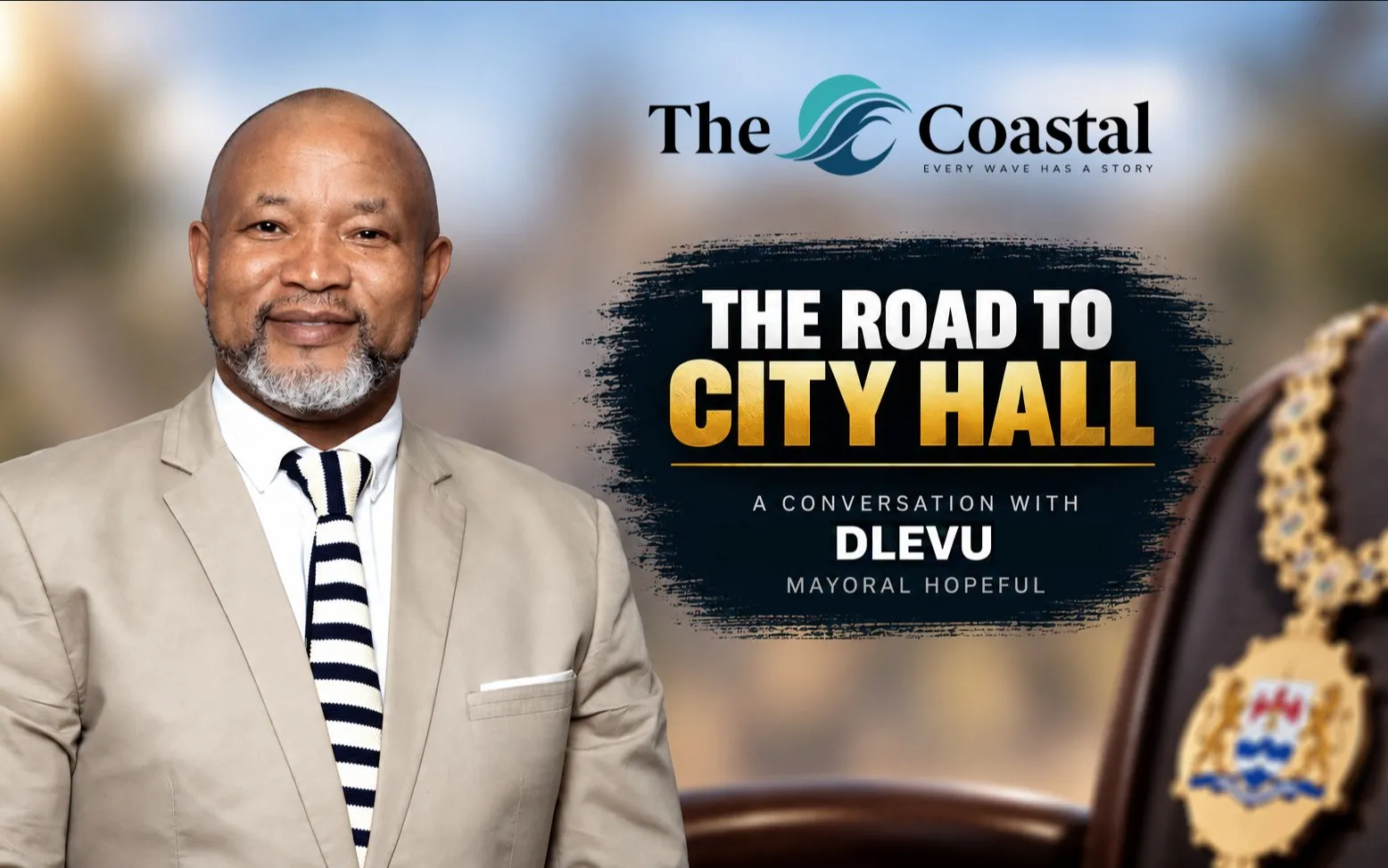
Mkhululi Dlevu: political alternative, thinner municipal evidence
Dlevu offers the EFF's political alternative. His profile includes senior party responsibilities and political activity, and the EFF has selected him for the Buffalo City contest.
The evidence available for this assessment is materially thinner when the test shifts from political leadership to municipal executive management.
There is less demonstrated evidence of running a metropolitan administration, managing municipal finance, overseeing large infrastructure systems or delivering a citywide turnaround.
That does not make his candidacy illegitimate. It makes the evidentiary burden different.
A candidate proposing a major change in political direction must still demonstrate how that direction will be converted into competent administration.
The real election is about the institution
The deeper mistake would be to imagine that Buffalo City's crisis can be solved by one personality.
It cannot.
The next mayor will need a competent municipal manager and senior management team. The city needs financial controls that work, credible revenue collection, infrastructure maintenance, competent procurement, consequences for wrongdoing, a functioning political-administrative interface and an economic strategy connecting automotive manufacturing, the harbour, tourism, the ocean economy, agriculture, heritage, education and township enterprise.
The mayor will also need political authority sufficient to operate within whatever council the voters produce.
That is why the mayoral contest matters beyond personalities.
Buffalo City is not merely choosing a mayor. It is choosing the political leadership that will attempt to repair an institution while simultaneously asking that institution to become an engine of metropolitan growth.
The citizens decide
I began with Buffalo City from the water because the city looks different when seen as a whole.
Its problems are real. So are its possibilities.
The candidates bring different kinds of experience. One has direct metropolitan executive experience. Another has a strong public-finance and institutional-turnaround profile. Others bring national executive experience, parliamentary authority, municipal infrastructure knowledge, local political memory or a distinct opposition programme.
The evidence does not make the political decision for the citizen.
Nor should it.
I do not know who will win Buffalo City. I do not know what council the citizens will produce. I do not know who will ultimately occupy the mayoral office.
That uncertainty is not a weakness in this article. It is the honest starting point of it.
The journalist's job is to search deeply, verify rigorously, disclose honestly, test every conclusion and place the evidence before the public. The citizen's job is to judge. The ballot's job is to deliver the verdict.
The possession of a pen does not give the journalist ownership of that verdict.
The people of Buffalo City own it.
And if this article has done its job, it will not have told them whom to choose. It will have made it harder for anyone — politician, party, commentator or journalist — to make that choice for them.
You may also like

OPINIONS & PERSPECTIVES: I Am A man. I Am A Father. I Am Scared.
 Mayibuye Mandela · 1d ago · 3 min read
From Boardroom To City Hall: Dlevu Sets Sights On Buffalo City
The Coastal Reporter · 1d ago · 6 min read
Kwankwa: Fix Local Government First If You Want South Africa To Grow
Johnnie Isaac · 2d ago · 5 min read