
Kwankwa: Fix Local Government First If You Want South Africa To Grow
By Johnnie Isaac
17 September 2026 · 5 min read
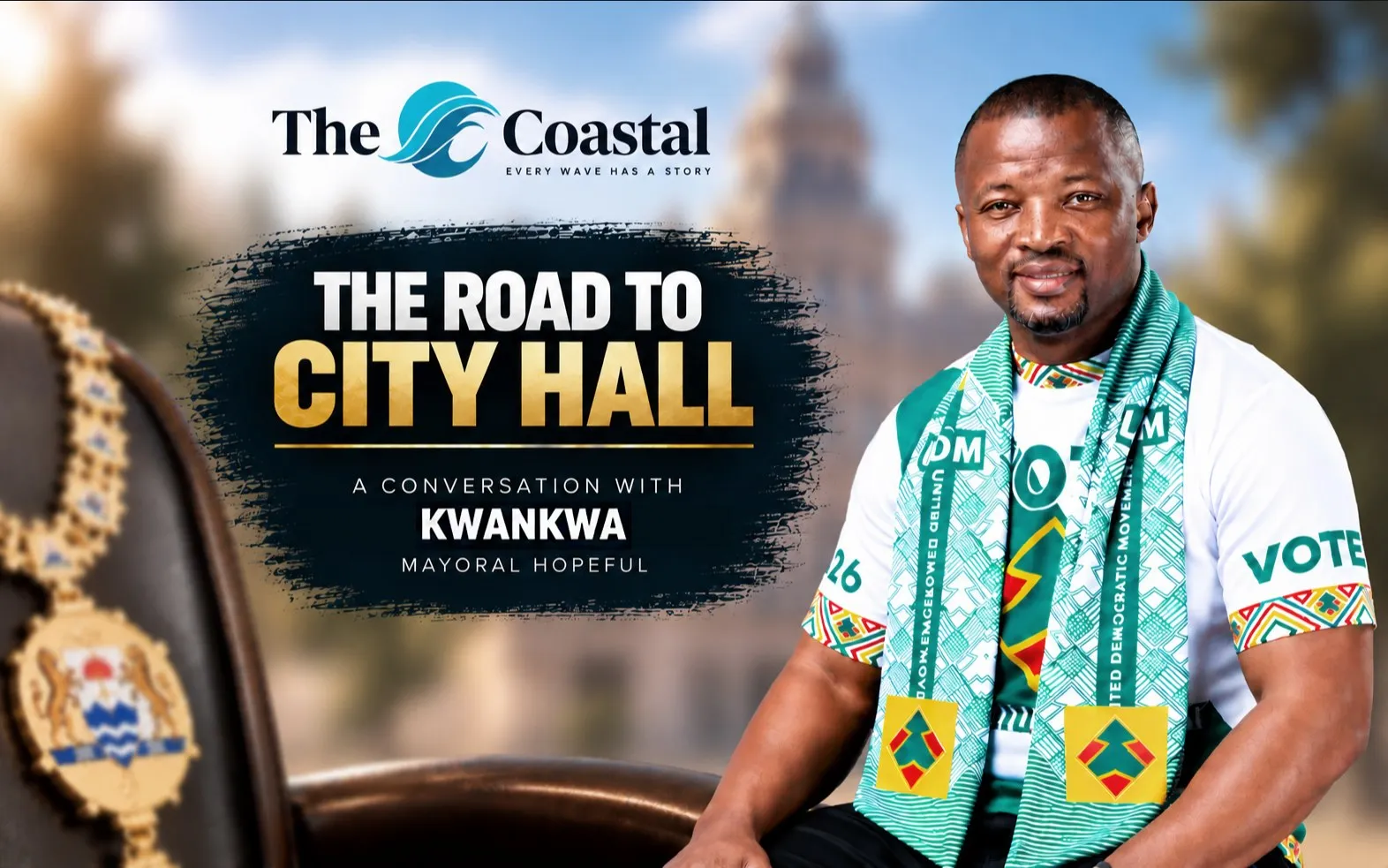
UDM mayoral candidate for Buffalo City Metro, Nqabayomzi Kwankwa, says fixing the municipality's finances, infrastructure and administration is essential, not only to improving services, but to unlocking jobs and economic growth.
The road to economic growth does not begin in Pretoria, Sandton or the boardrooms of big corporations, but begins much closer to the ground; in municipal corriders, according to the United Democratic Movement deputy president Nqabayomzi Kwankwa.
The party’s Buffalo City Metro mayoral candidate believes South Africa cannot seriously address unemployment, poverty and economic stagnation while more than 200 municipalities remain dysfunctional or struggle to perform their most basic functions.
For Kwankwa, local government is not merely another sphere of government. It is the foundation on which the country’s broader economic ambitions rest.
“Municipalities must be functional and it must function optimally because if you can't get the municipalities going again, you'll always cry when Statistics South Africa releases those quarterly unemployment reports. If we want to fix South Africa, we must start from the foundation, the local government,” he says.
He believes that economic growth cannot be treated as something that simply falls from heavens like manna, detached from the quality of governance on the ground.
“Government cannot expect investment, employment and economic activity to flourish while municipalities struggle with basic administration, infrastructure, financial management and service delivery,” he reckons.
It is an argument that gives his Buffalo City campaign a broader political frame. Kwankwa is not simply presenting himself as a candidate seeking to replace the ANC in the metro. He is positioning the election as a contest over whether local government can be restored as an effective instrument of economic development.
The UDM's second-in-command is campaigning in Buffalo City while simultaneously balancing his responsibilities as a Member of Parliament and his national party responsibilities, including engagements with UDM structures beyond the metro.
But Buffalo City has increasingly become an important battleground for the party. The UDM has benefitted from growing disillusionment within the ANC, with some former ANC members and supporters turning towards opposition parties amid internal battles over candidate selection and local political structures.
Kwankwa, however, believes that UDM's growth in the Eastern Cape is linked to voters looking for alternatives to the ANC. “This is not only a Buffalo City problem. Throughout the province, people are no longer willing to subject themselves to the failed governance of the ANC."
He says the party is receiving requests from communities seeking assistance with problems allegedly created by the ANC, although the UDM does not have the resources to respond to all of them.
Kwankwa argues that the ANC's problems cannot be solved simply by replacing its mayoral candidate. He believes replacing the current Buffalo City mayor and ANC regional chairperson, Princess Faku, with another candidate would not fundamentally alter the party's electoral fortunes. The party may have individuals with credibility, he says, but the organisation itself has lost the credibility required to persuade voters.
“ANC has lost credibility. There may be credible individuals, but the unfortunate thing is that the organisation itself no longer has credibility. They can replace MamTshawe with any other candidate, any time, but that won't make much of a difference,” says Kwankwa.
Before entering full-time politics and becoming a UDM Member of Parliament, Kwankwa held various managerial positions in the banking sector.
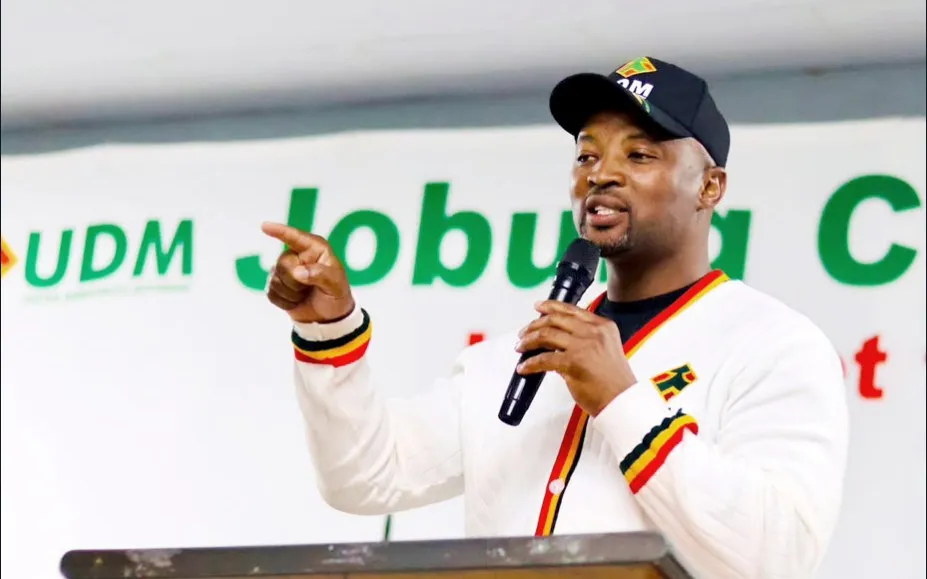
His diagnosis of Buffalo City's finances provides perhaps the clearest picture of the municipality he stands to inherit.
For Kwankwa, the metro's service delivery problems can be directly linked to the mismanagement of public finances. He points to the recent withholding of the municipality's equitable share grant funding by National Treasury as evidence of the seriousness of its financial problems.
“People often discuss potholes, water shortages, sanitation and other service delivery failures without asking the more difficult question: where will the money come from to fix them?” he asks.
“Money is wasted in the Buffalo City Metro. That is why they have high irregular expenditure. There's no adherence to the Public Finance Management Act,” he believes.
Kwankwa also echoes allegations made by fellow Buffalo City mayoral hopeful Ncedo Kumbaca about the use of municipal resources and temporary employment initiatives for political purposes.
He said people on the ground have told him about ANC leaders allegedly using money to campaign, arguing that the resources ultimately come from Buffalo City ratepayers.
“They are busy implementing projects, starting youth employment initiatives. That is the money which has been extracted from the BCM ratepayers,” he said.
Kwankwa also refers to concerns raised by UDM councillor Anele Skoti about council processes involving deviations from normal procurement procedures.
“They deviate to extract funds for campaigning,” he alleges.
However, the problem according to him extends beyond procurement and financial controls. Kwankwa argues that Buffalo City also has weak project management capacity, meaning that even where money is available, the municipality struggles to turn budgets into completed infrastructure and functioning services.
He points to discussions around recent and previous audit findings before the provincial Standing Committee on Public Accounts as evidence of recurring concerns about the municipality's project management capabilities.
“What dominated the recent audit report, that they went to discuss before SCOPA and the previous ones, they always lamented a lack of project managerial capabilities in this municipality,” he said.
His criticism extends into the metro's approach to its residents. Kwankwa said that property valuations have placed additional pressure on households while the municipality has struggled to maintain basic infrastructure, particularly in township communities.
In rural villages, falling within Buffalo City's boundaries, he points to a lack of reliable electricity, lack of running water and a dependency on water tankers as examples of what he sees as the consequences of inadequate infrastructure maintenance.
Kwankwa's political proposition is that these problems are connected. The potholes are connected to the budget. The water shortage is connected to infrastructure maintenance. The unfinished projects are connected to project management. And the municipality's inability to deliver is ultimately connected to the quality of its financial and administrative governance.
“Everything else from potholes, dilapidated infrastructure, basic human settlement infrastructure, that is why the National Treasury withheld their equitable share grant allocation. Treasury was telling them to run things properly,” he says.
He says an incoming UDM administration would have to examine what happened under the current administration and hold people accountable where wrongdoing is uncovered.
Kwankwa has warned that no one will be spared from investigations after the local government elections, signalling that an investigation into the metro's affairs would form part of his approach should the UDM take control of the municipality.
Should the UDM fail to obtain a majority of the vote, Kwankwa hopes that opposition parties can work together to form a government. “It will be a sad day for the people of Buffalo City if they vote out the ANC, but the opposition parties can’t find each other and form a government. This will allow the ANC to sneak back through the back door,” Kwankwa says.
You may also like
Eastern Cape Bets Big On Green Hydrogen As Three Capes Join Hands
The Coastal Reporter · 1d ago · 4 min read
Taxpayers Face R74m Bill After Bhisho Loses Wild Coast Road Battle
Bhongo Jacob · 1d ago · 3 min read
KSD Carries R1bn In Overdue Rates, Refuse And Rental Debt
The Coastal Reporter · 2d ago · 1 min read