
Opinion
OPINIONS & PERSPECTIVES: The ANC's Fall From Grace

By Zola Pinda
27 October 2026 · 5 min read
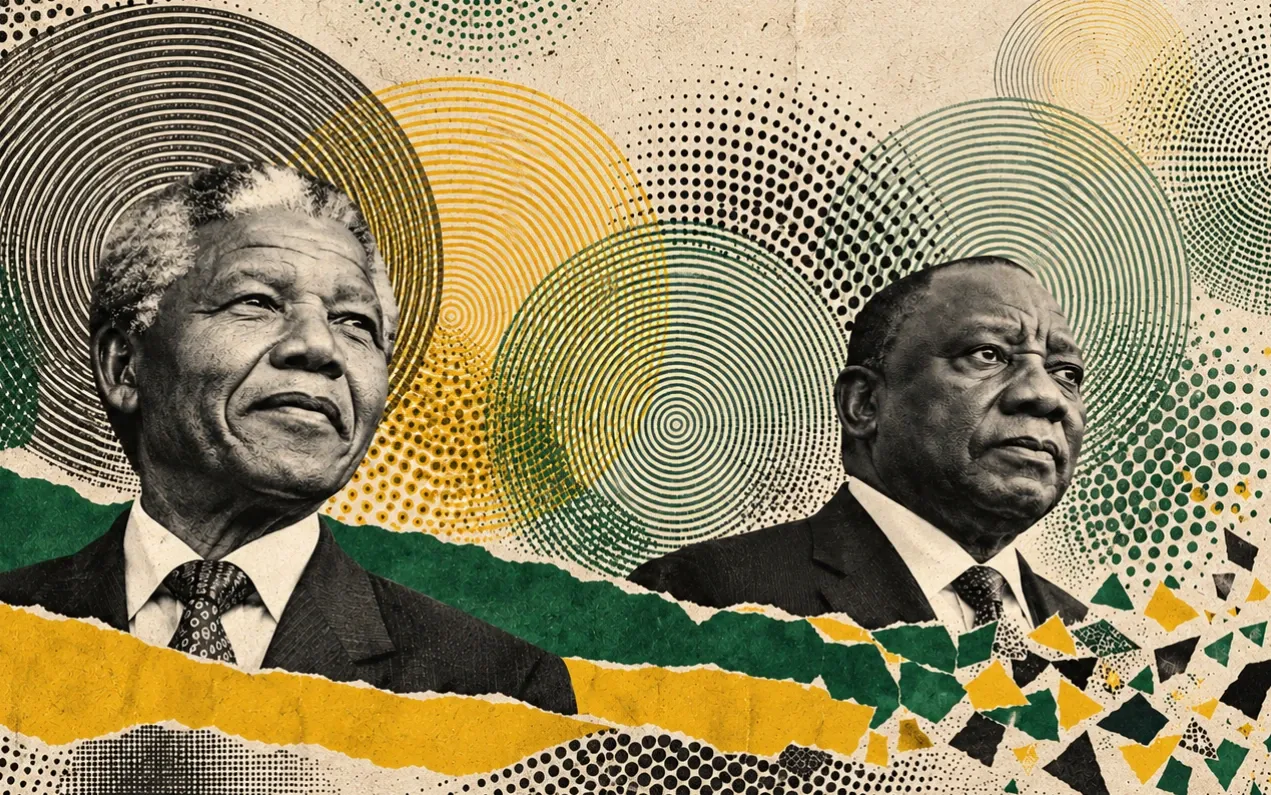
As the ANC confronts three decades of declining electoral support, fresh polling, points to an increasingly fragmented political landscape ahead of the 2026 local government elections; with coalition politics and voter trust set to shape the contest.
From Mandela’s 62.7% in 1994 to Ramaphosa’s 40.18% in 2024, the ANC’s electoral decline tells a story of diminishing political trust.
As South Africans prepare for the 2026 local government elections, the question is whether the liberation movement can reverse its fortunes or whether the country is entering a new era of fragmented political power.
The African National Congress entered democratic government in 1994 with a historic mandate. Its 62.7% share of the national vote reflected the moral authority of the liberation struggle and the promise of a new constitutional order.
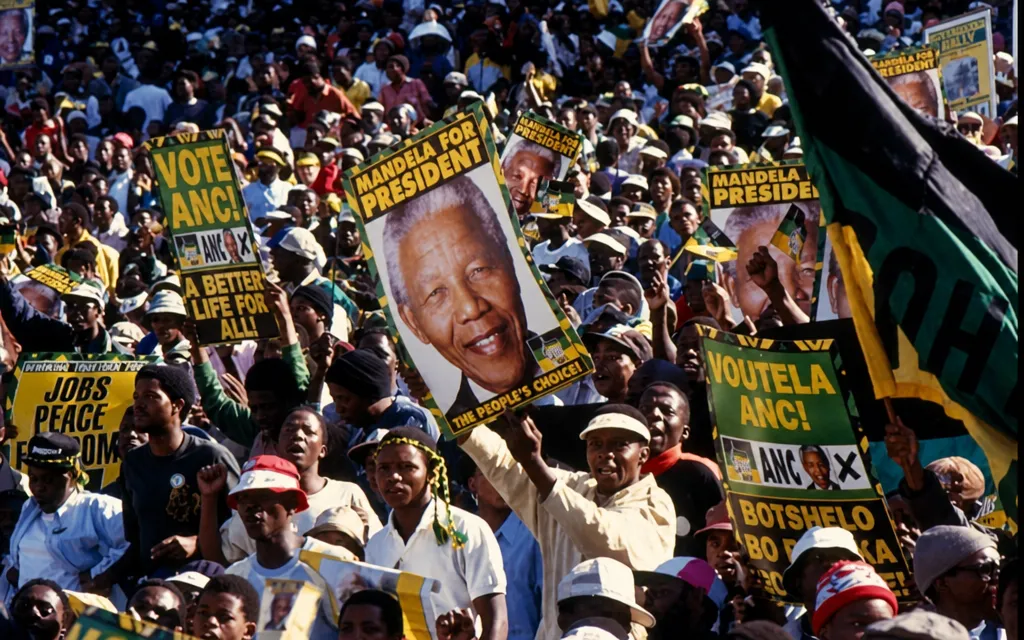
Under Nelson Mandela, the ANC’s standing was inseparable from the achievement of universal suffrage and the peaceful transition from apartheid. The party’s vote rose to 66.4% in 1999 and peaked at 69.7% in 2004, during Thabo Mbeki’s presidency.
That peak reflected the ANC’s broad national reach, but electoral dominance also made the party’s internal accountability and responsiveness increasingly consequential. The decline that followed was gradual at first, then sharply accelerated.
Figure 1. ANC share of the national vote in general elections, 1994–2024. Source: IEC election results.
The Zuma years and the cost of lost trust
The ANC won 65.9% in 2009 and 62.2% in 2014, but the downward trend continued through Jacob Zuma’s presidency. Corruption allegations, state-capture findings, governance failures and repeated public controversies damaged the party’s claim to be the custodian of democratic renewal. These pressures did not erase the ANC’s historic support, but they weakened the belief that liberation credentials alone could guarantee competent government.
The 2019 election result of 57.5% marked a new low for the ANC in a national election. By 2024, the party fell to 40.18% and lost its national parliamentary majority for the first time since 1994. The result was not simply a change in vote share; it forced the ANC to govern through a more fragmented parliamentary landscape and negotiate with other parties.
Ramaphosa, the DA, the EFF and MK: a fragmented contest
Cyril Ramaphosa inherited a party facing demands for renewal while carrying the accumulated burden of its years in office. The ANC’s 2024 result demonstrated that promises of reform and renewal had not restored its former electoral dominance. Voters’ choices are shaped by many factors, including service delivery, unemployment, inequality, corruption concerns, local leadership and whether opposition parties appear able to govern effectively.
The Democratic Alliance has consolidated support among voters seeking an alternative to ANC rule and has become an important coalition actor. The Economic Freedom Fighters continue to appeal to voters focused on economic redistribution and structural inequality. uMkhonto weSizwe (MK), meanwhile, has disrupted the political landscape, particularly in KwaZulu-Natal, and draws attention to the limits of treating the ANC’s decline as a simple transfer of support to one opposition party.
The opposition vote is divided among parties with different constituencies and policy priorities.
October 2026 polling: a snapshot, not a result
Figures reported on 19 October 2026 by the Social Research Foundation/Common Sense put national support at ANC 32%, DA 26%, MK 12% and EFF 8%. The chart below shows those four reported figures alongside a calculated remainder of 22% for other parties combined. That remainder is arithmetic, not a separately reported poll category.
Figure 2. National party support in the SRF/Common Sense figures reported 19 October 2026. *Other parties combined is the calculated remainder.
These figures should not be merged with Ipsos’s September estimates. Different fieldwork dates, methods, question wording and samples can produce different results. Polls are indicators of opinion at a particular time, not forecasts that can be treated as election outcomes. National polling also cannot be assumed to predict local contests in individual municipalities.
Buffalo City: a local warning sign
Buffalo City offers a distinct local test. Ipsos estimates reported in September 2026 put the DA at 33%, the ANC at 29% and the EFF at 27%. The remaining 11% in the chart is a calculated remainder, not a separately verified polling category.Figure 3. Buffalo City metro party-support estimates from the September 2026 Ipsos poll. *Remainder calculated from the three published figures.
The estimate contrasts sharply with the ANC’s 59.43% share in Buffalo City in the 2021 local government elections.
However, Ipsos cautioned that the Buffalo City sample was relatively small, with a maximum margin of error of ±15.46%. The estimate should therefore be read as a warning signal and not as a reliable prediction of the final vote. Local campaigns, turnout, candidate selection, ward-level dynamics and late changes in voter intention can all affect the outcome.
What the 2026 local elections will test
The local government elections will test whether the ANC can persuade voters that it can improve municipal performance and rebuild trust, rather than rely primarily on its liberation history. They will also test whether opposition parties can translate dissatisfaction into durable governing arrangements. A fragmented vote can create coalition opportunities, but it can also produce unstable councils if parties fail to agree on transparent, workable programmes.
The strongest conclusion supported by the record is that the ANC’s electoral dominance has ended at national level and is under pressure in important local contests.
It would be premature, however, to claim that one poll determines the 2026 outcome or that the ANC’s national support will follow the same path in every province or municipality. The local results will depend on local conditions as well as national sentiment.
Conclusion: history is an asset, not a substitute for performance
From 69.7% in 2004 to 40.18% in 2024, the ANC lost 29.52 percentage points of its national vote share. That decline spans several presidencies and reflects a long erosion rather than a single electoral shock.
The 2026 local government elections will show whether the party can begin to reverse that trajectory — or whether South Africa’s political future will be shaped increasingly by coalitions, competition and a more dispersed vote.
For the ANC, the central challenge is no longer only to explain its history. It is to demonstrate that its present-day leadership can deliver accountable government.
For opposition parties, the challenge is to show that criticism can be matched by credible, stable administration. Ultimately, voters will judge parties by what they do with public power.
You may also like
Malema Returns To KuGompo City To Rally EFF Support Ahead Of Local Polls
Asemahle Mfombi · 20 Oct · 1 min read

OPINIONS & PERSPECTIVES: What If Science And Our Ancestors Are Speaking Of The Same Mystery?
 Sizwe Kupelo · 10 Oct · 3 min read

OPINIONS & PERSPECTIVES: Has The Eastern Cape Become Too Accustomed To Municipal Failure?
Andile Nduna · 10 Oct · 9 min read