
The Luxury Car And The African: Is the SUV Challenge More Than A Public Display Of Wealth
By Unathi Kondile
10 November 2026 · 9 min read
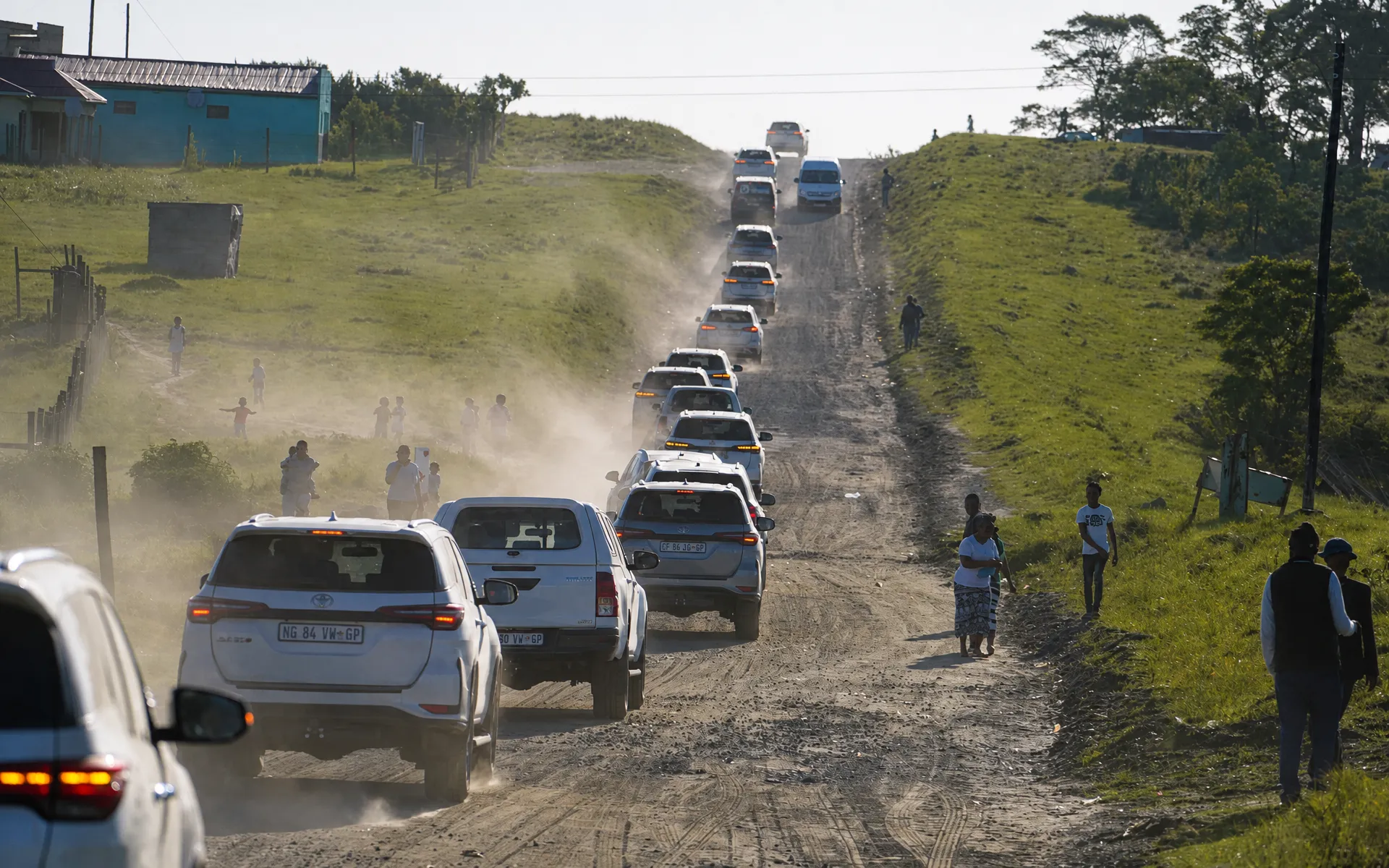
While a convoy of expensive SUVs through the Eastern Cape's rural towns raises uncomfortable questions about how we display success, it also reveals how wealth, influence and connections can benefit communities often left behind -- if done right.
Many years ago, when I was younger and more sanctimonious, I took issue with what I considered as a rather vulgar habit of wealthy people going to Gugulethu township’s Corner Lounge or Mzoli's in Maseratis, G-Wagons and Ferraris.
I would sometimes corner these ‘grootmans’ with questions. I wanted to understand what, exactly, goes through a man's head when he pulls up in a R3-million car in the middle of a struggling township? What is the psychological transaction between the person behind the wheel and the hundreds of people looking on? Is it pride? Achievement? Validation?
Or is there something else entirely?Yes. Children will cheer. They will point, shout, whistle and generally lose their minds. Your contemporaries will admire you, envy you or dismiss the entire spectacle as “Arms Deal” or “Tender” money. What does the driver imagine they are communicating by driving a supercar through a community where many residents are struggling to put food on their tables?
And we have seemingly made an art form of the luxury vehicle. Success is seemingly not quite official until it has been German-engineered, leather-upholstered and parked conspicuously outside a tshisa-nyama or upmarket restaurant.
Up in the North West, there is a man who has taken this expression of African success to something approaching an Olympic relay discipline. Solly Soka Madibela, MySol MySol. A procession of Mercedes-Benzes, BMWs, Rolls-Royces, Lamborghinis and Ford Raptors moving along the dusty streets of Marikana, Mooinooi and Majakaneng is not an uncommon sight. All escorting one man. MySol.
The MySols and many others say they do this to inspire. They want children, who grow up where they grew up, to understand that poverty is not a life sentence and that extraordinary success is attainable. Even the young forex trader, Trunicques Louw, made a similar argument after using his Land Cruiser to tow his brand-new red Lamborghini to Tzaneen a few weeks ago.
"It's not just to flex and say, 'Look, I did it!' It is actually to show the people that came from exactly the same place and same situation as me, that it is possible. You can do it," he said.
Have we arrived at a point where the most persuasive evidence of achievement is a luxury vehicle? Have we become so thoroughly seduced by capitalism that even our acts of inspiration must be accompanied by a price tag? When a person makes it, must the community see the car? Why not the school they built, the business they funded, the clinic they helped establish or the roads they have resurfaced? Why is the Lamborghini the preferred instrument of social transformation? Perhaps, Hangwani Maumela might be best placed to address this question.
I kept putting these questions to my co-drivers, Pedro Mapelo of I’solezwe lesiXhosa and DJ Black Coffee’s vocalist and media personality Azola Ntshingwa Xosa during the most recent SUV Challenge.
My co-drivers were tired of me. Shame.
Amidst the 40+ Sport Utility Vehicles (SUVs), the three of us were entrusted with a Toyota Fortuner 2.8 GD-6 Automatic. I don't trust that car one bit! It has lots of power, but it just doesn’t feel planted. There is something unnerving about the way its tall, rigid body seems to sway and lean through bends. Like a heavyweight boxer with questionable balance.
Origins: The SUV Challenge
The SUV Challenge is the brainchild of serial entrepreneur and Siyavuya Foundation founder Siyavuya Mbete. I first encountered the idea in 2018, when Mbete walked into my office in Vincent, East London, and proposed a partnership that would see us taking a convoy of SUVs through the Eastern Cape. I thought he had lost his mind.
He told me about visiting his village in Dutywa and how children had cheered when they saw him arrive in his SUV. One child, he said, had declared an intention to buy an SUV when he grew up. I was unconvinced.
Then Mbete began unpacking the other components: road safety awareness, showcasing the Eastern Cape's overlooked villages through the participation of celebrities and influencers, directing business towards black-owned enterprises, engaging local communities and creating visibility for places that rarely feature in the country's tourism brochures. There was also the possibility of bringing influential people into villages they would otherwise never visit.
I was sold. Cautiously.
The first SUV Challenge was more an organisational adventure. Everything that could go wrong tried to go wrong. It was a torturous unending long drive. Super fun though! It even felt like the international Gumball 3000 supercar rally, thanks to the luxury SUVs that were arranged by I'solezwe lesiXhosa's top-tier motoring journalist and SA Car of The Year juror, Sisanda Mbete, then.
The second iteration of the challenge I attended was considerably much better. It attracted Miss South Africa Shudufhadzo Musida, broadcaster Putco Mafani and an assortment of television and radio personalities, including Dumisani Mbebe and Gabriel Temudzani. There were visits to places ranging from Bizana to the Baviaanskloof, engagements with traditional leaders and local businesspeople, and conversations with SANRAL officials, including Mr Mbulelo Sonqishe, about the future of road infrastructure in the Eastern Cape.
It was beginning to look like something.
The third edition moved to KwaZulu-Natal, and that was when I finally understood the possibilities. KwaZulu-Natal's celebrities turned out in numbers. There were police escorts, remote destinations, extraordinary networking opportunities and a final gathering at KwaMax in eMlazi. If I am counting correctly this year's SUV Challenge was the sixth iteration. I have only missed two.
At the opening gala dinner at the Wild Coast Sun on Thursday, 29 October 2026, Mbete reflected on the learning curve. "In our first SUV Challenge we had a number of challenges. We would run out of fuel, we had to improvise along the way, ensure that people were adhering to speed limits and so much more. The first one taught us a lot, and that I couldn’t possibly co-ordinate such an event alone!" he said.
Among the prominent guests on the opening night was the Minister of Small Business Development, Tembisa Stella Ndabeni, whose presence was particularly relevant to the Challenge's stated ambition of directing attention and business towards local enterprises along the route.
The journey: From Bizana to KuGompo City
Bright-eyed and bushy-tailed, we made our way from Sol Kerzner’s Wild Coast Sun through gruelling gravel roads that led to the Mtentu Bridge construction site. More than 100 VIP guests were given presentations and an opportunity to tour the site. The planned infrastructure developments along the Mthatha-to-Port Edward corridor promise to reshape connectivity in this part of the province, with completion of the broader road programme anticipated by the end of 2029 or 2031.
Local entrepreneurs were encouraged to begin positioning themselves to benefit from the economic activity that will come with the new road. Accommodation establishments, petrol stations, restaurants, retail businesses and tourism operators.
In Mthatha, virtually every black-owned hotel and BnB was fully booked. Dinner was at the locally owned Sage restaurant; another example of how a travelling delegation can create immediate economic activity in the places it visits.
A convoy, or motorcade as Transkei nationals would call it, of luxury vehicle does not constitute economic development. But a convoy that fills local accommodation places, eats at local eateries, buys from local businesses and draws attention to places that have been neglected by mainstream tourism begins to offer a more tangible proposition.
The following day, we converged at Mqhekezweni Great Place, the historic village where Nelson Mandela spent part of his childhood under the guardianship of Chief Jongintaba Dalindyebo. It should be one of the Eastern Cape's most treasured heritage destinations. Instead, the village is struggling with a reputation for violent crime and social breakdown. Gangs, comprising fourteen to twenty-year-olds are terrorising that village.
Minister Ndabeni acknowledged the scale of the problem and called for a concerted effort to change the village's image and restore its standing as a tourism destination.
"It would be remiss of me not to mention that I, as a member of Parliament, am aware of the rampant crime in this village of Mqhekezweni! We should do everything in our might to change this bad image of Mqhekezweni. This is a place with a legacy and we should turn it into the heritage jewel that it is," she said.
But the Minister had another message, one that struck me as particularly relevant to the entire purpose of the SUV Challenge. She took aim at educated black South Africans who have come to regard education as a personal trophy rather than a social responsibility.
"Abafundileyo mabeze nemfundo yabo! Oh! Niyeke ukuqhayisa ngezidanga bantwana basekhaya! Ayonto yokuqhayisa imfundo, yinto yokuzisa umahluko ekuhlaleni. Ukuze silungise indlela yokuphila. Awusakwazi ngoku ukuyokulima ngoba ngoku wena unesidanga, awusakwazi ukuncedisa utata ekuqokeleleni iigusha ngoba wena unesidanga... Masidibanise aba bantu bafundileyo naba bangafundanga ukwenzel’ba sakhe isizwe sethu sibheke phambili. Yenye yezinto ezizanywa yile SUV Challenge ke le; ukuzisa naba bafundileyo babelapha ezilalini, bancedise."
In English: a degree is not something to show off. Education is supposed to change the circumstances of the community from which one comes. I also spotted Gugu Khathi, DJ Tira's wife, whom I last encountered during the KwaZulu-Natal edition. She’d come all the way from KZN to partake in this year’s challenge. She has since partnered with the Siyavuya Foundation through her Women of Influence organisation.
"Our work is fundamentally focused on transforming the lives of women and girls, particularly in underserved communities. Over the years, the SUV Challenge has become an invaluable platform for extending our reach into communities across the Eastern Cape, enabling us to build meaningful relationships with women and girls and connect them to our empowerment programmes and opportunities for growth
"Importantly, this work goes beyond direct engagement. Through our presence in these communities, we have been able to identify and nurture emerging young changemakers who are now becoming voices and leaders within their own communities, driving awareness and inspiring action in villages such as Mqhekezweni and so forth," said Khathi.
Part of the SUV Challenge’s objectives is to create these linkages; connect existing community-based organisations and grassroots changemakers to broader development networks. Food parcels, school shoes and locally manufactured sanitary pads were also distributed in some of the communities. All infrastructure, such as the framed marquee, were done locally. So was the catering.
Driving through the narrow streets of Qumbu, Mount Frere (kwaBhaca), Mt Ayliff (Maxesibeni), Bizana, Flagstaff, Lusikisiki, Libode, Mthatha, Dutywa, Gcuwa, et cetera I would at times hop off to walk alongside the Fortuner (to stretch my legs) as the convoy crawled through congested main roads.
People, in all these towns, gathered to watch. Children cheered. Phones came out. Photos, questions and the usual excitement that accompanies a procession of expensive vehicles moving through an otherwise ordinary afternoon.
At times the convoy stopped, engaged community members, selfies were taken with celebrities, and it was a generally a happy atmosphere. And that temporary happiness matters. That excitement matters. Every little bit of it.
As a longstanding SUV Challenge participant, I have become more sympathetic to Siyavuya Mbete's idea.
The SUV Challenge is at its most interesting when it stops being about the SUVs. When it brings businesspeople (like Paul Siguqa, Babalwa Mbuku, Bontle Mtshengu, Zama Mbatha and more) into villages, connects organisations working with women and girls, draws attention to infrastructure, puts money into local establishments and forces influential South Africans to confront the realities of communities they might otherwise only encounter in election campaigns.
At our final stop in KuGompo City, Mbete and I mused about the future. Luyakhula usana lukaBhele! We joked that one day people would pay to participate, bring their own SUVs and make the Challenge considerably bigger. But that growth will have to come with responsibility; sustained partnerships, meaningful community investment and a commitment to return long after the SUVs have gone home and the dust has settled.
Ultimately, success will not be measured by the number of SUVs in the convoy, but by what they leave behind in the Eastern Cape.
You may also like
Entertainment mogul plans new lease on life for Highgate Hotel restaurant and bar
Asemahle Mfombi · 12 Oct · 3 min read
Why Hamburg’s New Jazz Festival Felt More Rock ’n Roll Than Oppikoppi
Andries Bezuidenhout · 10 Sept · 2 min read
BOOK REVIEW: Africa's intellectual exile networks and archive get a massive boost from new writing
Bonface Orucho · 06 Sept · 5 min read