
OPINIONS & PERSPECTIVES: Mabuyane's Third-Term Ambition Meets Its Political Reckoning
By Zola Pinda
11 November 2026 · 9 min read
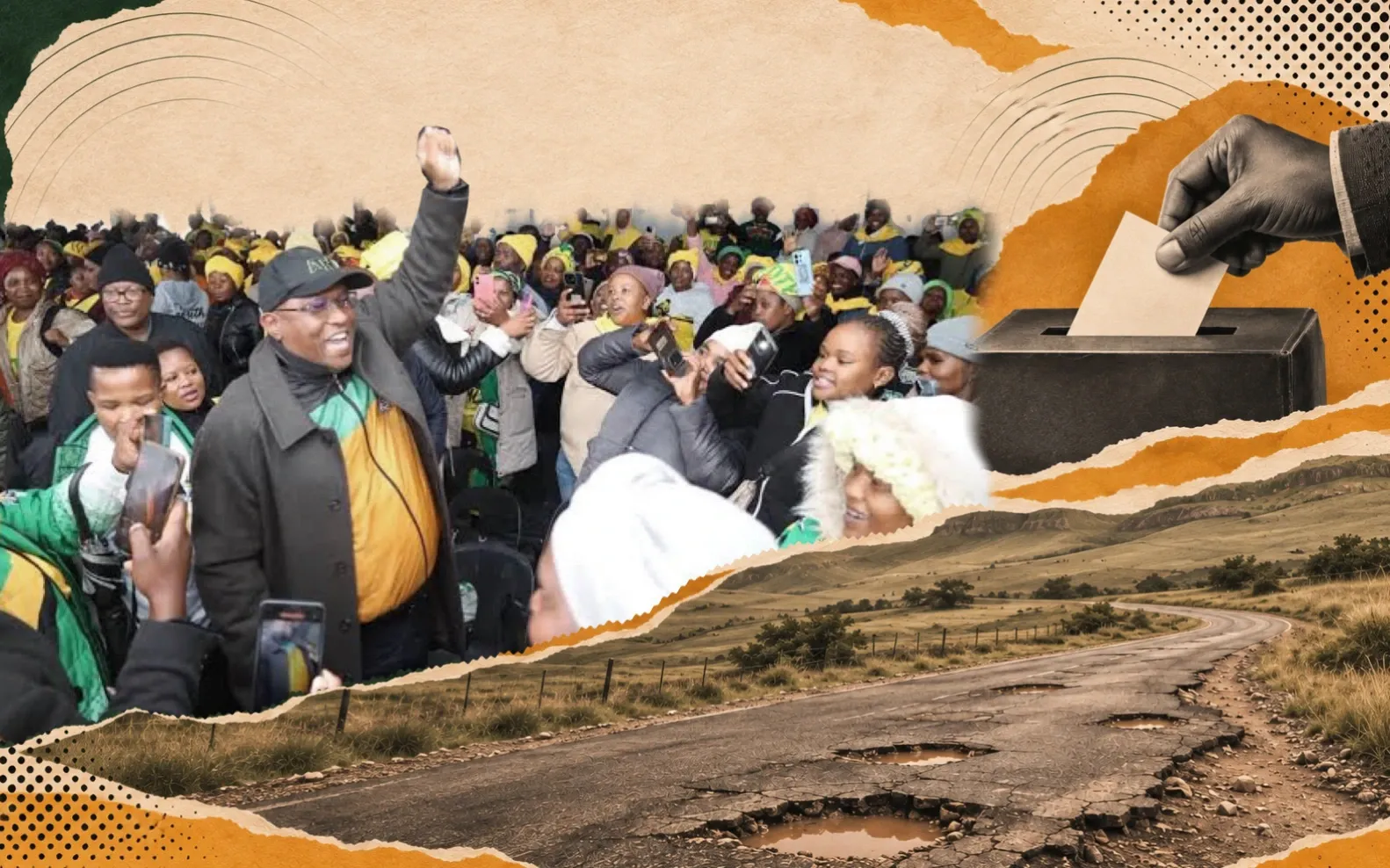
The ANC's loss of its outright majority in Buffalo City, its further decline in Nelson Mandela Bay and setbacks in other Eastern Cape municipalities raise uncomfortable questions about Oscar Mabuyane's leadership ambitions for a third term as provincial chairperson.
The Eastern Cape is confronting a political contradiction that deserves more than another round of ANC factional commentary.
Oscar Mabuyane, the province's Premier and – once the courts had set aside the national leadership's intervention – again the chairperson of the ANC's provincial executive committee, had sought a third term as the party's leader in the province.
Yet the political organisation under his leadership has suffered a significant electoral setback, while the province continues to grapple with persistent infrastructure and service-delivery failures.
The question is no longer simply whether Mabuyane has the political strength to remain at the head of the ANC in the Eastern Cape.
It is whether the political record of his administration and the electoral performance of the organisation justify another extension of his leadership. The 2026 local government elections have made that question considerably more difficult to avoid.
An electoral warning from the ANC's heartland
The Eastern Cape has historically been one of the ANC's most important political strongholds.
Its liberation history, organisational traditions and deep political connections to the movement have given the party an enduring electoral advantage. But political history is not an electoral guarantee. The 2026 results show a substantial erosion of that advantage. The ANC's provincial share of the vote fell to 45.2 percent on the ward ballot, against 62 percent in the 2021 local government elections. That represents a decline of roughly 17 percentage points.
The significance is not merely statistical. The ANC has lost its outright majority in Buffalo City Metropolitan Municipality, one of the province's two metropolitan centres. It has also, once again, failed to secure a majority in Nelson Mandela Bay, while Makana, another important municipality, has moved into coalition territory.
Oscar Mabuyane and Princess Faku
In Buffalo City, the ANC secured 42 of the 100 council seats. In Nelson Mandela Bay, the ANC obtained 32 out of 120 seats, short of the 61 required for a majority. In Makana, the ANC fell from 14 seats in 2021 to 10 in a 25-seat council. These are not marginal setbacks in peripheral municipalities. They concern important centres of economic activity, administration, and political influence.
The Eastern Cape ANC remains the largest political organisation in the province. But being the largest party and commanding an electoral mandate are increasingly different propositions. The results point to a deeper problem: the ANC can no longer assume that its historic relationship with Eastern Cape voters will automatically translate into political authority.
The infrastructure question
The electoral setback cannot be separated from the material conditions confronting communities. In the article Who Built the Roads? Mabuyane, SANRAL and the Politics of Infrastructure Credit, the distinction is made between infrastructure delivered by the South African National Roads Agency (SANRAL) and the provincial government's own responsibility for maintaining provincial roads.
The distinction is important because political communication frequently brings nationally funded infrastructure into the provincial government's record of achievement. The Ndabakazi Intermodal Interchange, for example, is a substantial infrastructure investment. Its reported R483 million cost, employment opportunities and participation by black-owned businesses deserve recognition. But the fact that SANRAL was thanked for its role raises a legitimate accountability question: who funded, planned, implemented, and ultimately bears responsibility for the project?
The same question applies to the province's wider road programme. The Eastern Cape Department of Transport has acknowledged that only approximately 10% of the provincial road network is paved, compared with a national average of 25%. This is not an incidental technical deficiency. It affects agricultural production, rural commerce, access to schools, healthcare, tourism, and the cost of doing business.
The contrast between impressive capital projects and the deteriorating condition of provincial roads raises a fundamental question about the priorities of government. A ribbon-cutting ceremony is politically attractive. Maintaining a rural road network is less visible, but often more consequential to the daily lives of citizens.
Mabuyane's administration cannot claim the successes of infrastructure development without accepting responsibility for the weaknesses in the provincial infrastructure portfolio.
The politics of a third term
Mabuyane's ambition to secure a third term as ANC Eastern Cape chairperson was never a minor internal party matter. He first became provincial chairperson in 2017, defeating Phumulo Masualle.
He was re-elected in 2022 and sought another term in 2026. A third term would have extended his leadership of the provincial organisation and consolidated his influence over its political direction.
Oscar Mabuyane
In January 2026, Mabuyane confirmed that he was prepared to make himself available if nominated by the branches. His supporters viewed continuity as a source of organisational stability, while critics raised concerns about leadership renewal, succession planning, and the concentration of political power.
His principal challenger was provincial secretary Lulama Ngcukayitobi, a former political ally. The contest exposed divisions within the provincial organisation. It also raised questions about whether the ANC's internal processes were sufficiently robust to manage leadership competition without recurring factional conflict.
The conference scheduled for March did not proceed as planned. On 26 March, the High Court interdicted the conference following challenges relating to branch processes and alleged irregularities. The ANC maintained that its procedures were in order and indicated that it would challenge the ruling.
The dispute nevertheless had serious organisational consequences. In May, the ANC's national executive committee announced that it had dissolved the provincial executive committee and installed a provincial task team to lead the organisation towards another elective conference. Whether the PEC had in fact been dissolved became the subject of a second round of litigation.
Consequently, Mabuyane did not obtain a third-term mandate. It would be inaccurate to describe this as a defeat in a completed election: the conference was halted, and the provincial leadership structure was subsequently put under a task team.
But politically, it represented a significant setback. The setback proved reversible, and the legal record is more tangled than the party's own account suggests. In June, the Makhanda High Court set aside the appointment of the provincial task team as unconstitutional and unlawful, holding that the national executive committee had acted without the dissolution its rules required, and declaring decisions taken by the task team of no force.
The ANC was refused leave to appeal and has petitioned the Supreme Court of Appeal. In the meantime the provincial executive committee was reinstated, with Mabuyane again at its head, on the argument that the organisation must keep functioning while the litigation runs its course.
A leader who had sought to consolidate his provincial authority found himself, for a period, without the provincial executive structure through which that authority had previously been exercised — and then restored to it, provisionally, while the litigation continued.
The burden of incumbency
There is a tendency in ANC political discussions to separate internal leadership contests from the performance of government. The distinction is convenient but increasingly difficult to sustain. Mabuyane is not only a party leader. He is the Premier of the Eastern Cape. His political standing is therefore inseparable from the performance of the provincial administration.
The provincial government must answer for the condition of its roads, the effectiveness of its departments, the reliability of public services, the management of public resources and the province's economic development prospects. The 2026 electoral results should consequently be read as more than a setback for the ANC's provincial campaign machinery. They are a warning about the limits of incumbency.
Voters do not necessarily distinguish between a provincial executive committee, a Premier, a municipal administration and the broader governing party in the way political office-bearers would prefer. They experience government through roads, water, electricity, public transport, schools, hospitals, employment opportunities, and the conduct of public officials.
The ANC cannot indefinitely rely on its liberation credentials while communities evaluate it through the everyday experience of government. Nor can a provincial leadership claim political success simply because the ANC remains the largest party.
The question of accountability
It would be simplistic to attribute every electoral loss to Mabuyane personally. The ANC's national decline, municipal failures, candidate selection, internal divisions, unemployment, and the performance of local administrations all contribute to the electoral picture. But it would be equally convenient to absolve the provincial leadership of responsibility.
Mabuyane has occupied a position of considerable political authority in the Eastern Cape for years. With that authority comes accountability for the strategic direction of the organisation and the relationship between its political promises and its record in government. The electoral decline raises questions that cannot be answered through internal party explanations alone.
Why has the ANC lost its outright majority in Buffalo City? Why has it failed, once again, to secure a majority in Nelson Mandela Bay? Why have voters in Makana and other municipalities become increasingly willing to consider alternatives? And what does the provincial leadership intend to do differently?
These questions require an honest assessment of the relationship between political leadership, municipal performance, and public confidence.
Renewal cannot be postponed indefinitely
The argument for leadership renewal is not an argument against Mabuyane as an individual. It is an argument about institutions and the ability of political organisations to reproduce leadership beyond the authority of one incumbent. Political movements become vulnerable when continuity becomes synonymous with the continuation of particular individuals rather than the strengthening of institutions.
A third term might have offered Mabuyane an opportunity to consolidate his political influence. But the more pressing question was whether the Eastern Cape ANC needed a new organisational direction.
The provincial conference dispute, the subsequent dissolution of the PEC and the electoral setbacks have made that question more urgent. The ANC must rebuild its credibility in the province. That requires more than reorganising factions, negotiating positions or selecting another provincial leadership slate. It requires a demonstrable change in the way government works.
The road ahead
The Eastern Cape needs a government that can distinguish between announcing projects and completing them, between securing funding and delivering services, and between political visibility and measurable public benefit. It needs a transparent infrastructure ledger showing who funds projects, who implements them, what they cost and whether promised completion dates are honoured. It needs municipalities capable of managing public resources, maintaining infrastructure, and delivering reliable services.
Most importantly, it needs political leaders prepared to accept that electoral support is earned through performance and can be withdrawn when expectations are repeatedly disappointed. Mabuyane's third-term ambition and the ANC's electoral decline have brought these questions into sharper focus. The issue is not whether Mabuyane has served the party for too long, or whether another leader would automatically perform better. The issue is whether the organisation has understood the message from the electorate.
The Eastern Cape is no longer a political possession that the ANC can take for granted. The province's voters are asserting their independence, its municipalities are entering a new era of coalition politics, and the ANC's internal leadership arrangements have been disrupted at a moment when organisational renewal is most necessary.
Mabuyane may remain Premier, but the political environment in which he exercises that authority has changed. The next chapter of his leadership will not be determined by the number of years he has occupied senior positions, the strength of his faction or the ambitions of those who support him. It will be determined by whether the people of the Eastern Cape can see a material difference in their lives.
Political authority is not renewed merely by seeking another term. It must be earned again through public confidence, institutional renewal, and the performance of government.
You may also like

How Self-Importance, Infigthing, Corruption Allegations and Arrogance Led To ANC Decline
Johnnie Isaac · 4d ago · 6 min read
Something Fishy Keeps Sardine Boats at Bay
Tembile Sgqolana · 6d ago · 2 min read
Protests Disrupt Voting in Three Eastern Cape Municipalities: IEC Reports Smooth Start
Johnnie Isaac · 6d ago · 2 min read