How Self-Importance, Infigthing, Corruption Allegations and Arrogance Led To ANC Decline
By Johnnie Isaac
7 November 2026 · 6 min read
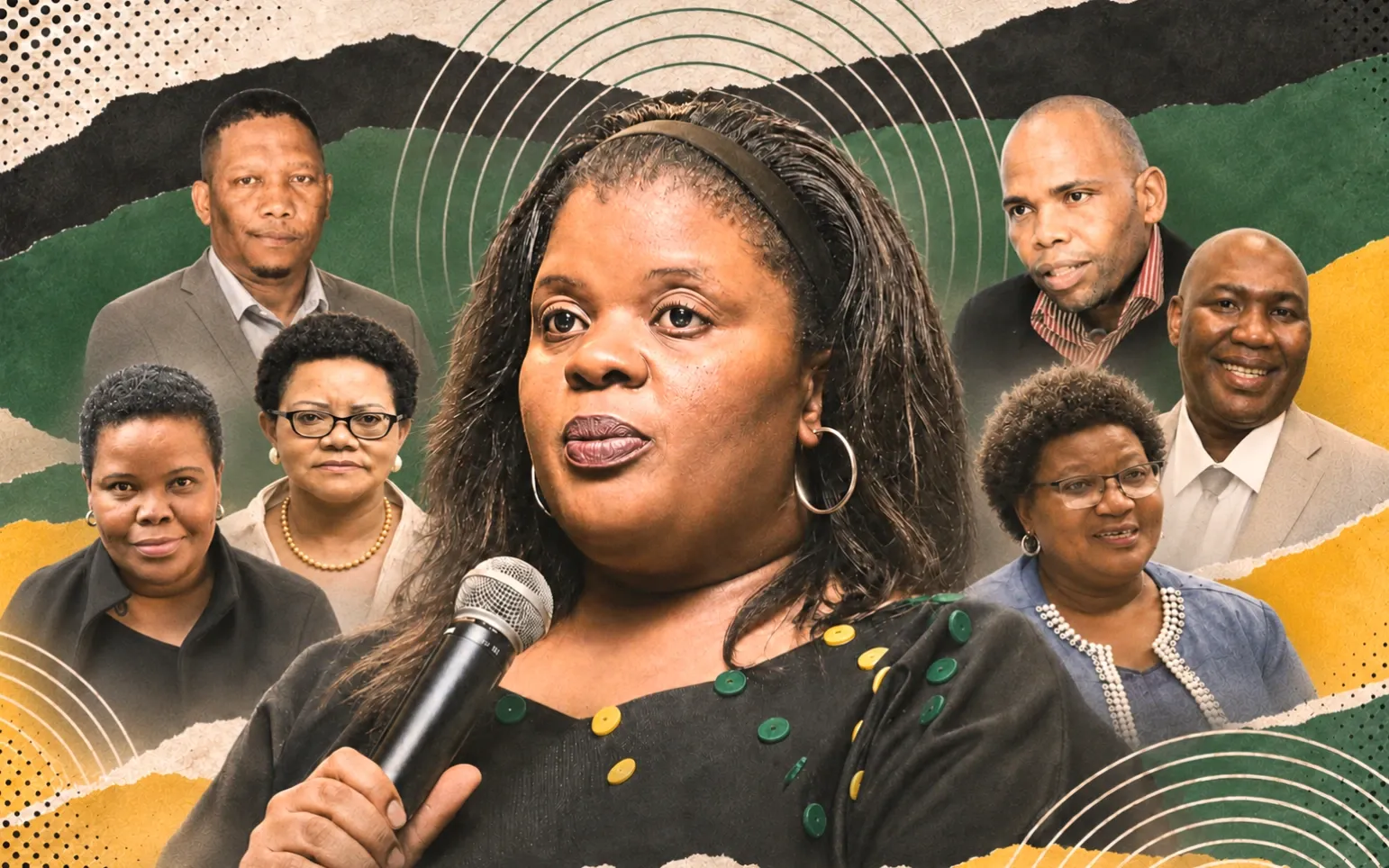
While the signs were there all along as political scandals, allegations of corruption, factional battles and tone-deafness to the needs of residents were left unresolved; voters were unforgiving this time around.
The ANC in the Buffalo City Metropolitan area has, for the first time, found itself entering the murky waters of coalition politics. While its loss of an outright majority may have come as a surprise to some, the writing has been on the wall for years.
The party's decline has been fuelled by several factors, chief among them the arrogance of its political elites, who are deployed to municipal councils but often become disconnected from the communities that elected them.
The ANC's Dr WB Rubusana region has, for years, been a battleground for factions jostling for power. Those who lose these internal battles are often marginalised and starved of political influence, while those aligned with the leadership enjoy access to the levers of power.
This factional contestation has also played itself out in the deployment of councillors.
Although the ANC has broadened its candidate selection processes to allow communities to participate and nominate their preferred representatives, including people who are not necessarily card-carrying members of the party, these processes have frequently been disregarded.
Instead, candidates favoured by regional leaders have been given preferential treatment, with internal processes manipulated to accommodate them.
While this is not unique to Buffalo City, where similar practices have been reported in other ANC-controlled municipalities, the consequences in the metro have been particularly damaging.
Some of those who felt isolated and marginalised by the regional leadership eventually took their political support elsewhere, finding a home in the United Democratic Movement (UDM).
The UDM has consequently emerged from relative obscurity to become the second-largest political party in Buffalo City.
Since Buffalo City was re-established as a metropolitan municipality in 2011, the ANC has been dogged by factional battles and internal power struggles that have progressively weakened the organisation and ultimately cost it its outright majority.
The party secured a resounding victory, winning approximately 70% of the vote in the 2011 Local Government Elections. However, it was not long after the metro's establishment that its political leadership and municipal appointees became embroiled in a series of controversies and scandals. Despite these developments, the ANC continued to retain its grip on power.
One of the most significant scandals erupted in 2014, when then-mayor Zukiswa Ncita, her deputy Temba Tinta, then-speaker Luleka Simon-Ndzele, then-member of the mayoral committee Sindiswa Gomba and municipal officials were implicated in allegations of corruption and financial misconduct.
The controversy centred on the council's approval of approximately R10 million, purportedly intended to fund events commemorating the death of former president Nelson Mandela in December 2013.
Mandela died on 5 December 2013, prompting municipalities across the country to organise memorial events. The Eastern Cape provincial government centralised procurement for these events through the Eastern Cape Development Corporation. However, despite these arrangements, the ANC leadership in Buffalo City used the occasion to extract money from municipal coffers, misleading councillors into believing that the expenditure was related to the Mandela memorial programme.
Approximately R6 million was paid to a service provider involved in the scheme, who subsequently distributed the money among various beneficiaries.
The scheme was allegedly engineered by then-ANC regional secretary Phumlani Mkolo, who was later charged alongside municipal officials and service providers implicated in the matter. Several individuals and company representatives were arrested and faced charges ranging from corruption and fraud to contraventions of the Municipal Finance Management Act. The trial remains ongoing.
Despite the scandal, Mkolo was re-elected regional secretary in late 2015, amid bitter factional battles within the ANC in the region.
Those aligned with Ayanda Matiti, who contested the local government elections under the banner of the Social Democratic Movement, attempted to establish a parallel leadership structure in protest against Mkolo's continued political influence, despite the pending charges against him.
Within the municipality, relations between then-municipal manager Andile Fani and Ncita's political administration deteriorated over the Mandela memorial scandal. The council made several attempts to remove Fani after he stopped a further R4 million payment and ordered an internal investigation that uncovered aspects of the alleged scheme.
Despite the scandal and the internal political turmoil, the ANC managed to retain its dominance in Buffalo City during the 2016 Local Government Elections with about 58% of votes. No consequence management or significant retrospection followed after losing the trust of 12% of its base, a miscalculation that resulted in further decline.
But, as has happened in several ANC-led municipalities, the lines between municipal administration and the party's regional political structures increasingly became blurred. Buffalo City became a particularly glaring example of this dysfunction.
Enter Princess Faku.
Faku is the mayor under whose leadership the ANC has fallen below the 50% threshold in Buffalo City for the first time. Her political manoeuvring has arguably been more effective than her record of municipal leadership.

In 2019, she made her way into the National Assembly as part of the ANC's generational-mix drive, representing the Eastern Cape. Ahead of the 2021 Local Government Elections, however, Faku was no longer interested in remaining in Parliament. Her sights were firmly set on the Buffalo City mayoral position.
She also saw an opportunity in the changing political dynamics following the departure of her predecessor, Xola Pakati, from the regional leadership.
Her lobbyists pushed for her appointment as mayor. However, following the ANC's internal interviews, the party's National Executive Committee endorsed Pakati for the position, with Faku appointed as his deputy. In 2022, Faku consolidated her control of the Dr WB Rubusana region following a dramatic regional conference in which she and Antonio Carelse worked with branch structures to undermine Lunga Nqam, who had secured the majority of branch nominations.
After emerging as regional chairperson, Faku and her allies continued lobbying for Pakati's removal. Their efforts eventually succeeded, paving the way for Faku to take over as the executive mayor.
Asked about the role played by sidelined ANC members in boosting the United Democratic Movement's electoral fortunes in Buffalo City, ANC provincial chairperson Oscar Mabuyane said the party had commissioned an investigation into allegations that some members had been excluded in favour of others.
“I don't want to speak conclusively about allegations relating to certain community meetings that did not go well. Such issues are currently being investigated through our forensic processes, and we will look into them. In deepening democracy, the ANC gave the public the power to elect councillors. If things went wrong, those responsible must be held accountable,” Mabuyane said.
UDM Buffalo City mayoral candidate Nqabayomzi Kwankwa said he was not surprised that the party had become an alternative for disgruntled ANC members, arguing that the two parties were not ideologically far apart, although the ANC was a “broad church”.
Kwankwa said the UDM was open to coalition negotiations with other parties but ruled out any arrangement that would bring the ANC back into power. “The people voted against the ANC. They wanted to remove it from power because of its misrule, corruption and the service delivery challenges facing this metro. We cannot, as a political party, bring the ANC back into power through the back door. We are not going to waste our time,” he said.
Meanwhile, the South African Communist Party (SACP), which contested the elections independently of the ANC for the first time, said the results had strengthened its bargaining position in coalition negotiations.
The party said it was no longer prepared to accept whatever portfolios were offered to it but wanted a meaningful role in the new administration.
Eastern Cape SACP spokesperson Xolani Malamlela said that although the party remained an ally of the ANC, it now had its own constituencies to serve following its electoral breakthrough, which included winning a ward in Buffalo City.