Eighteen-Month Plan To Fix The Bay.
By The Coastal Reporter
16 September 2026 · 5 min read
Source: Facebook
The Nelson Mandela Bay Civil Society Coalition proposes an ambitious recovery plan, to be implemented in three phases, to restore the efficient implementation of basic services and rebuild investor confidence in the Nelson Mandela Bay Municipality.
Nelson Mandela Bay’s civil society has put forward an ambitious 18-month Rebuild Plan aimed at stabilising the metro, restoring essential services, rebuilding public and investor confidence and putting the local economy back on a sustainable growth path.
The plan comes ahead of the hosting of the Nelson Mandela Bay Economic Summit at City Hall on 29 - 30 September 2026, where government, business, labour, civil society and other stakeholders will be challenged to translate the diagnosis of the Metro’s problems into concrete commitments and an actionable recovery agenda.
The Nelson Mandela Bay Civil Society Coalition says the metro can no longer afford fragmented interventions, short-term fixes or plans that fail to translate into action. The coalition represents a broad, non-partisan cross-section of society, including non-profit organisations, faith-based institutions, organised business, labour formations, civic structures, youth formations and community-based organisations. United by shared values, the Coalition exists to promote collaboration, accountability and ethical leadership in pursuit of sustainable development and the delivery of basic services in the metro.
The Rebuild Plan is deliberately focused on implementation, stabilising governance and leadership, restoring institutional functionality, strengthening financial discipline, improving service delivery and creating a transparent system through which progress can be measured and publicly monitored.
“This is not another plan to add to the shelves of plans that have come before it. It is a call to action,” says Monga Peter, Chairperson of the Nelson Mandela Bay Civil Society Coalition.
“Nelson Mandela Bay is at a point where institutional failure is no longer simply a governance concern. It is an economic risk, a jobs risk and a threat to the long-term well-being of our communities. We need to stop managing decline and start managing recovery.”
The Coalition’s analysis identifies three mutually reinforcing drivers of the metro’s crisis: governance instability, technical and operational failure, and financial weakness.
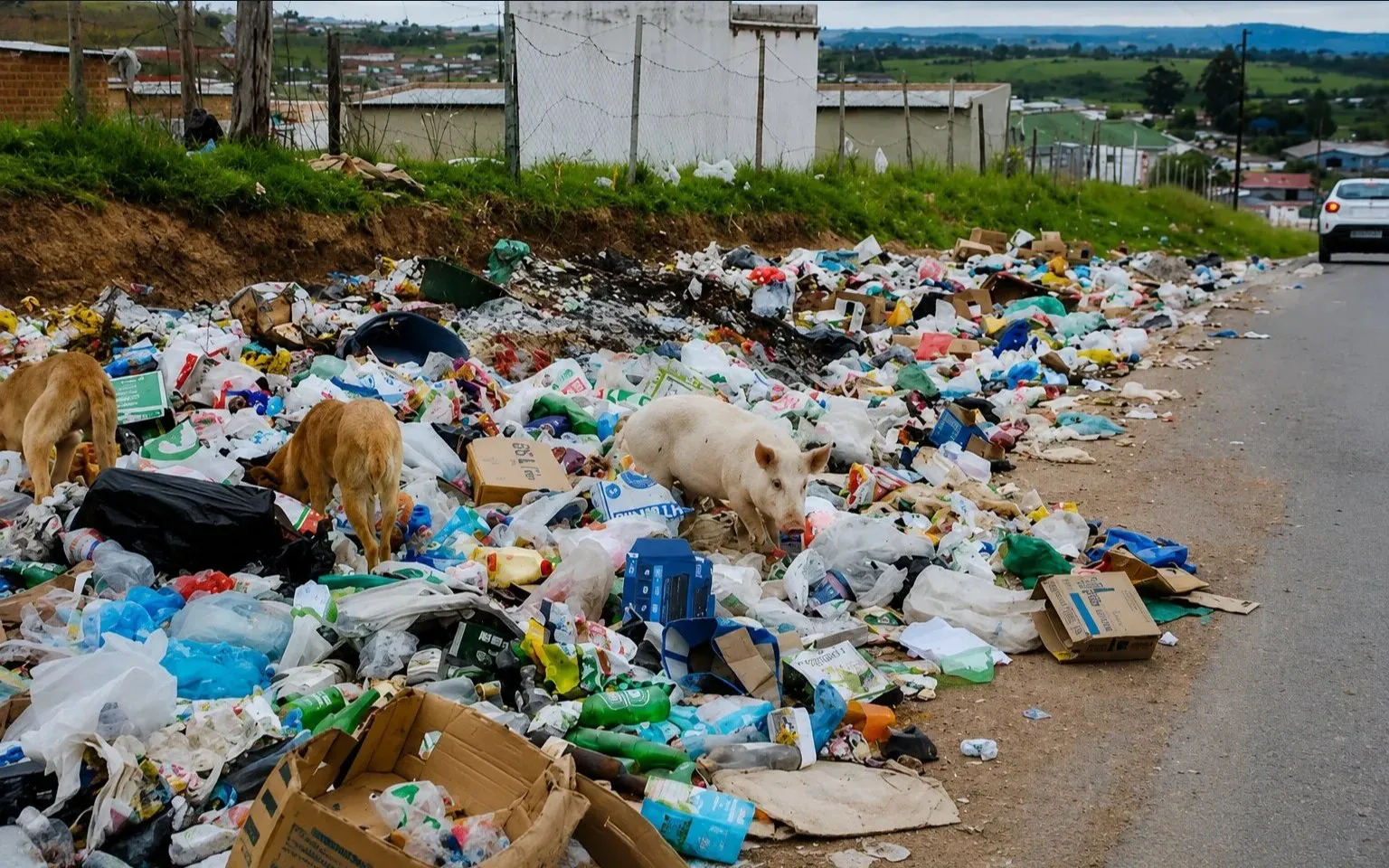
Together, these have contributed to weak service delivery, declining public and investor confidence, institutional breakdown, economic decline and increased poverty. The coalition argues that municipal failure has become an economic issue because businesses depend on reliable water, electricity, roads, waste management, sanitation and efficient municipal approvals.
“When basic municipal systems fail, the cost of doing business rises, production is disrupted and investment decisions are affected,” says Peter. “Every day that the metro remains dysfunctional places additional pressure on businesses, workers, households and the regional economy.”
The Rebuild Plan proposes a phased 18-month recovery journey.
- The first three months would focus on immediate stabilisation, including closing leadership and governance gaps, stabilising services, finances and supply chains, and mobilising rapid-response capacity.
- The second phase, covering months three to 12, would focus on an institutional reset – strengthening systems, filling critical skills gaps, improving the working environment, restoring operational coherence and coordinating support from social partners.
- The final phase, from months 12 to 18, would focus on rebuilding confidence, supporting investment and jobs, and positioning the metro for long-term sustainability.
“The sequence matters,” says Peter. “We cannot expect investor confidence to return while basic systems remain unstable. We must first stabilise the institution, then restore its functionality, and then build the confidence needed for economic recovery.”
One of the most significant proposals is the establishment of a temporary, high-calibre intervention team (internally known as SWAT) to provide specialist technical capacity to the metro during the recovery period.
The proposed team would draw on expertise in finance, engineering, legal services, human resources, governance, service delivery and planning, working directly with the City Manager and senior municipal officials. Importantly, the coalition stresses that the intervention team is not meant to be a parallel municipality. Its role would be to plug critical capacity gaps, accelerate priority interventions and transfer capability into the existing administration before being phased down as operational stability improves.
“Where the municipality lacks capacity in critical areas, we cannot simply accept that as the status quo,” says Peter. “The SWAT Team is designed to bring in the specialist capacity needed to unblock urgent work, support municipal leadership and get the machinery of government functioning again.”
The coalition is also proposing a monthly public-facing Rebuild Dashboard to track whether the recovery is actually happening. The dashboard would monitor progress across governance, finance, service delivery, economic growth and public confidence.
Among the proposed indicators are the filling of leadership vacancies, governance decisions taken on time, resolution of legal and disciplinary cases, water and electricity performance, roads and waste services, capital and grant expenditure, revenue collection and liquidity, procurement turnaround times, clean-audit action plans, planning application turnaround times and stakeholder engagement.
“This is about moving from promises to proof,” says Peter. “Residents, businesses and investors should not have to rely on political statements to know whether the Metro is improving. They should be able to see the evidence.”
The Coalition says the Rebuild Plan is deliberately apolitical and is intended to strengthen, rather than replace, the municipality.
It calls for collaboration between government, business, civil society, communities, labour and investors, with council retaining political oversight and the Executive Mayor and City Manager responsible for implementation.
A Rebuild Steering Committee would own and monitor the plan, supported by an Advisory and Advocacy Committee and the proposed "SWAT Team".
The Coalition says previous plans have too often been undermined by political instability, inconsistent leadership follow-through, acting appointments, critical skills shortages and weak accountability. The Rebuild Plan therefore places implementation discipline, measurable milestones, monitoring and visible quick wins at the centre of the recovery effort.
“Recovery cannot belong to one political party, one administration or one sector,” says Peter. “Government must lead, but government cannot rebuild the Bay alone. This requires a social compact in which every stakeholder understands both its responsibility and its role.”
The Coalition warns that the stakes extend well beyond municipal administration.
Nelson Mandela Bay is a strategic economic centre of the Eastern Cape, with manufacturing and its ecosystem serving as a key source of employment, while the automotive sector anchors production, exports and jobs. Agriculture, citrus, mohair, logistics and port activity are also critical components of the regional economy.
“Every failure in the municipal system eventually has an economic consequence,” says Peter. “When businesses struggle with unreliable services, inefficient processes and rising operating costs, the impact travels through the entire economic ecosystem, from investment and production to jobs, household incomes and municipal revenue.”
The Coalition says municipal recovery is therefore not simply about fixing government systems.
“It is about protecting the future of Nelson Mandela Bay,” Peter says. “We need to stabilise the municipality, restore services, rebuild confidence and protect the economy. Those four imperatives must become the shared mission of the metro.”
The Civil Society Coalition will take the Rebuild Plan into the Nelson Mandela Bay Economic Summit on 29 - 30 September, seeking to use the gathering to build broad-based support, secure concrete commitments from stakeholders and establish the structures required to move from proposal to implementation.
“The Bay has no shortage of ideas. What it needs now is the collective will, leadership and discipline to execute,” says Peter.
“Failure is no longer an abstract possibility. It is already costing us. The opportunity before us is to choose recovery – deliberately, collectively and urgently.”