
ANC Head Honchos Face Anxious Wait As Court Weighs Bid To Have Them Jailed
By Johnnie Isaac
17 October 2026 · 4 min read
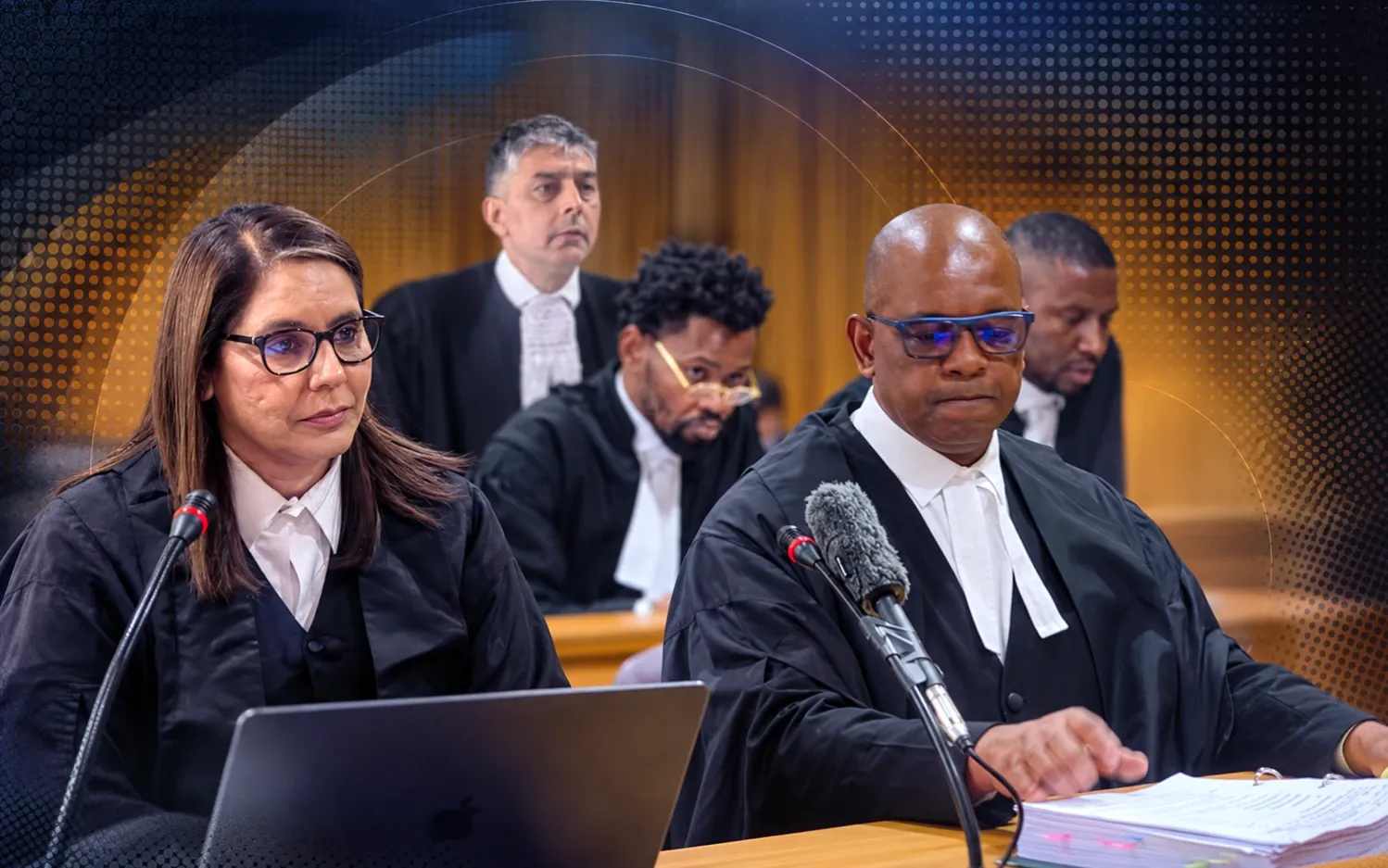
Legal heavyweights Dali Mpofu, Yusuf Saloojee, Viwe Notshe and Karmeshni Pillay went head-to-head over what really happened after the ANC was ordered to halt its Eastern Cape conference earlier this year
Judgment has been reserved in an application seeking the imprisonment of senior ANC leaders accused of defying a court order that barred the party from holding its Eastern Cape conference in March.
The contempt of court application was heard before a full bench of the Eastern Cape High Court in KuGompo City, comprising Judges Bantubonke Tokota, Murray Lowe and Fathima Dawood.
The application was brought by ANC members Lwazi Rotya, Sinethemba Mpande and Nompumelelo Mzothwa, who had earlier successfully approached Acting Judge Babalo Metu to stop the party's provincial conference.
The respondents include ANC secretary-general Fikile Mbalula, Justice and Constitutional Development Minister, Mmamoloko Kubayi, Eastern Cape Premier and provincial ANC chairperson, Oscar Mabuyane as well as other ANC deployees, including suspended Police Minister, Senzo Mchunu.
The applicants' counsel, Advocate Dali Mpofu, argued that the respondents knew about Metu's interim order but nevertheless allowed activities linked to the conference to continue.
Metu's order interdicted the ANC from holding its provincial elective conference from March 26 to 29 and directed the party to comply with its governance instruments, including its constitution and conference guidelines.
The dispute arose from allegations of irregularities in the Branch General Meetings leading up to the conference. The applicants had sought access to the ANC's raw membership data to establish who had attended the meetings and whether the required threshold for the conference had been met. Despite the order, delegates were allowed to arrive and register at the conference venues.
Mpofu told the full bench that the ANC did not immediately tell delegates to leave after the order was issued. “They didn't tell delegates to go home, there's no conference. They only did so on Saturday, the 28th when the applicants returned to this court to seek relief as the respondents did not comply with the initial order,” he argued.
Mpofu said the respondents cannot rely on the fact that the conference was ultimately abandoned, arguing that their conduct - before the event derailed - amounted to contempt. He also challenged the position taken by Minister Kubayi. She argued that she cannot be held liable for contempt of court since she was not cited as a respondent in the original application before Metu.
Mpofu pointed to statements Kubayi made at the conference venue indicating that the ANC intended to continue with its programme. "But in fairness to her, she made mention about being guided by the law,” said Mpofu.
He also accused Mabuyane of continuing to publicly support the conference after the order had been granted. Mabuyane had told journalists that about 60% of delegates had registered. The ANC stated at the time that their decision to continue was based on legal advice, directing that as long as they are appealing the court order, they can proceed.
Mpofu disputed the reliance on that advice, saying an opinion by Advocate Apla Bodlani SC dated March 27 only dealt with the appealability of Metu's order and did not provide an unconditional basis for continuing with the conference. He referred the court to the Constitutional Court's judgment involving former president Jacob Zuma, arguing that public office bearers and senior political leaders have a particular obligation to respect court orders.
“Some of the respondents are members of parliament, one among them is Kubayi, the minister of justice, there's also her predecessor, the (suspended) minister of police and the active premier of a province,” said Mpofu. “They deliberately went out of their way to defy the court. We had to come to court that morning for them to realise that it was serious."
Mbalula's defence
Mbalula's counsel, Yusuf Saloojee, rejected the contempt allegation. He argued that allowing delegates to register and permitting other organisational activities was an attempt to manage ANC processes and members' expectations rather than an attempt to hold the prohibited conference.
Thousands of delegates had travelled from across the province, he said, and could not simply be sent home immediately. Saloojee also pointed to what he described as an inconsistency in the applicants' case. He said that, in another court matter, the applicants themselves acknowledged that the provincial conference never actually sat.
He referred the court to correspondence from Mbalula instructing delegates and officials to vacate the venue after the conference had been postponed.
Mpofu, however, argued that the instruction came only after the applicants had returned to court to launch the contempt application. The ANC ultimately announced that the conference had been put in abeyance. Reports at the time recorded that delegates were instructed to return home.
Kubayi: there was no conference
Kubayi's counsel, Advocate Viwe Notshe, argued that there could be no contempt because the conference itself never took place. He pointed to the absence of formal conference proceedings, including the declaration that the conference was open, adoption of credentials and policy discussions. Notshe said Kubayi's statements to the media amounted to responses to questions and did not constitute contempt of court.
Mabuyane's defence
Advocate Karmeshni Pillay, representing Mabuyane, argued that the applicants had failed to establish the requirements for a finding of contempt of court. She said there needed to be a direct connection between the conduct complained of and non-compliance with Metu's order.
Pillay referred to Mabuyane's statements on March 26, including his comments that the conference would continue, but argued that those statements could not themselves constitute contempt. “Our laws don't recognise incitement to contempt as contempt,” she said.
Pillay also maintained that the ANC had obtained legal advice supporting its position and had lodged an appeal against Metu's order within an hour of it being issued.
But Judge Lowe questioned whether Bodlani's advice went as far as authorising the ANC to continue with the conference. Lowe pointed out that the advice addressed whether the order was appealable, rather than whether the order remained enforceable.
Pillay responded that there were disputes between the parties' lawyers over precisely what the applicants had sought and what Metu had ultimately ordered.
The court has reserved the judgment.
You may also like
Port St Johns Mayor Fired: Council Rejects Cogta Pick
Zolile Menzelwa · 1d ago · 3 min read

South Africa, Let’s End Hunger By Putting A Meal On Someone’s Plate
The Coastal Reporter · 1d ago · 3 min read
The Church, The Pulpit And The Race For The Mayoral Chain
Lubabalo Ngcukana · 2d ago · 3 min read