
Opinion
OPINIONS & PERSPECTIVE: The UDM Is At The Crossroads Of Legacy And Power
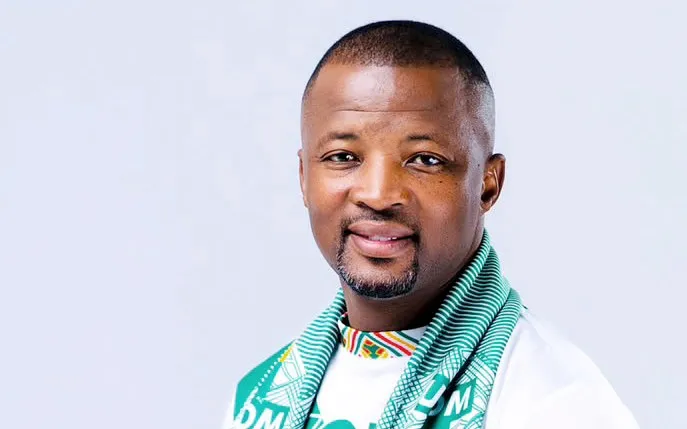
By Nqabayomzi Kwankwa
28 September 2026 · 5 min read
As the UDM approaches its 30th anniversary, a new generation faces the challenge of turning the party’s founding principles into a modern programme for governing, economic growth and service delivery.
I have spoken to people who were there on the day the United Democratic Movement was launched on September 27, 1997 - individuals who stood in a packed venue at the World Trade Centre in Kempton Park, and felt the electricity of the moment without fully grasping what it would come to mean.
Some were not even convinced it was the right path, raised on a clear map of political allegiances, a clear enemy and a clear liberation story. This new party did not fit neatly into any of it. Perhaps that is what makes its founding so instructive. History rarely announces the significance of a decision when it is being made; we understand its meaning only later, when we see the road it opened.
Twenty-nine years on, as we mark our birthday, that is where the UDM finds itself again. The choices my generation makes now will only make sense, in hindsight, to the young people asking me today: what does the UDM actually stand for, and where is it going?
I understand the scepticism. Parties built around founding figures eventually reach a moment when the struggle that defined them recedes, and a new generation asks: what have you actually done? That is a fair question. I would rather answer it with our record than with nostalgia.
The UDM was founded by General Bantu Holomisa and Roelf Meyer around a proposition that remains relevant: that South African politics need not be trapped by historical divisions.
For me, the UDM's record on political integrity is not a slogan; it is a standard we must apply to ourselves wherever we govern. Our history demonstrates that principle can be turned into action. When we assumed control of the King Sabata Dalindyebo (KSD) Local Municipality following the December 2000 local elections -- the first under South Africa’s restructured democratic local-government system -- we demonstrated disciplined local administration. The UDM won 33 of the 64 council seats, making us the largest force.
But that mandate was subsequently overturned as the ANC regained control in 2004 through floor-crossing and by-elections, offering a sobering lesson: when electoral mandates are altered mid-term, institutional continuity and the voter-party relationship are profoundly disrupted.
The same principle informed our 2002 Constitutional Court challenge to floor-crossing, arguing that allowing representatives to switch parties undermined the voter-party compact. Although the Court upheld the challenge only for national and provincial legislatures, our campaign continued until floor-crossing was abolished through constitutional amendments taking effect on 17 April 2009.
Our defense of constitutional democracy also brought us back to the Constitutional Court in 2017 with our successful application for a secret ballot in motions of no confidence, ensuring parliamentarians could vote according to conscience without coercion.
That commitment to accountability extends far beyond parliamentary halls. In 2011, General Holomisa lodged a complaint with the Public Protector over suspected irregularities in the IEC's R320-million Riverside Office Park lease. The Public Protector found maladministration and an unmanaged conflict of interest involving then chair Pansy Tlakula. A Treasury forensic investigation confirmed the procurement was unfair. The Electoral Court ruled on June 18, 2014, that Tlakula's misconduct warranted her removal, and the Constitutional Court dismissed her challenge. Tlakula ultimately resigned in September 2014.
The significance is not simply that the UDM raised an alarm. It is that we followed the matter through the institutions of our democracy, triggering proper institutional scrutiny. These are not just historical episodes. They define the kind of political organisation we must be.
I joined this party in 2007 after leaving the ANC in 2006. Starting as support staff writing speeches and researching, I learned the UDM's institutional memory from the inside. When sworn in as an MP in 2013, becoming Chief Whip a year later, serving as Deputy Secretary-General from 2010, and serving as Deputy President from December 2016 to date, I came through every level of our ranks.
Leadership must be earned, not inherited. Political organisations need a pipeline, not a dynasty.
General Holomisa and Meyer's 1997 partnership broke historical boundaries. The responsibility of my generation is not to leave that history behind, but to translate those core principles into a modern governing programme that a young person in Buffalo City recognises as relevant to her life.
That is exactly what I am trying to do across Buffalo City.
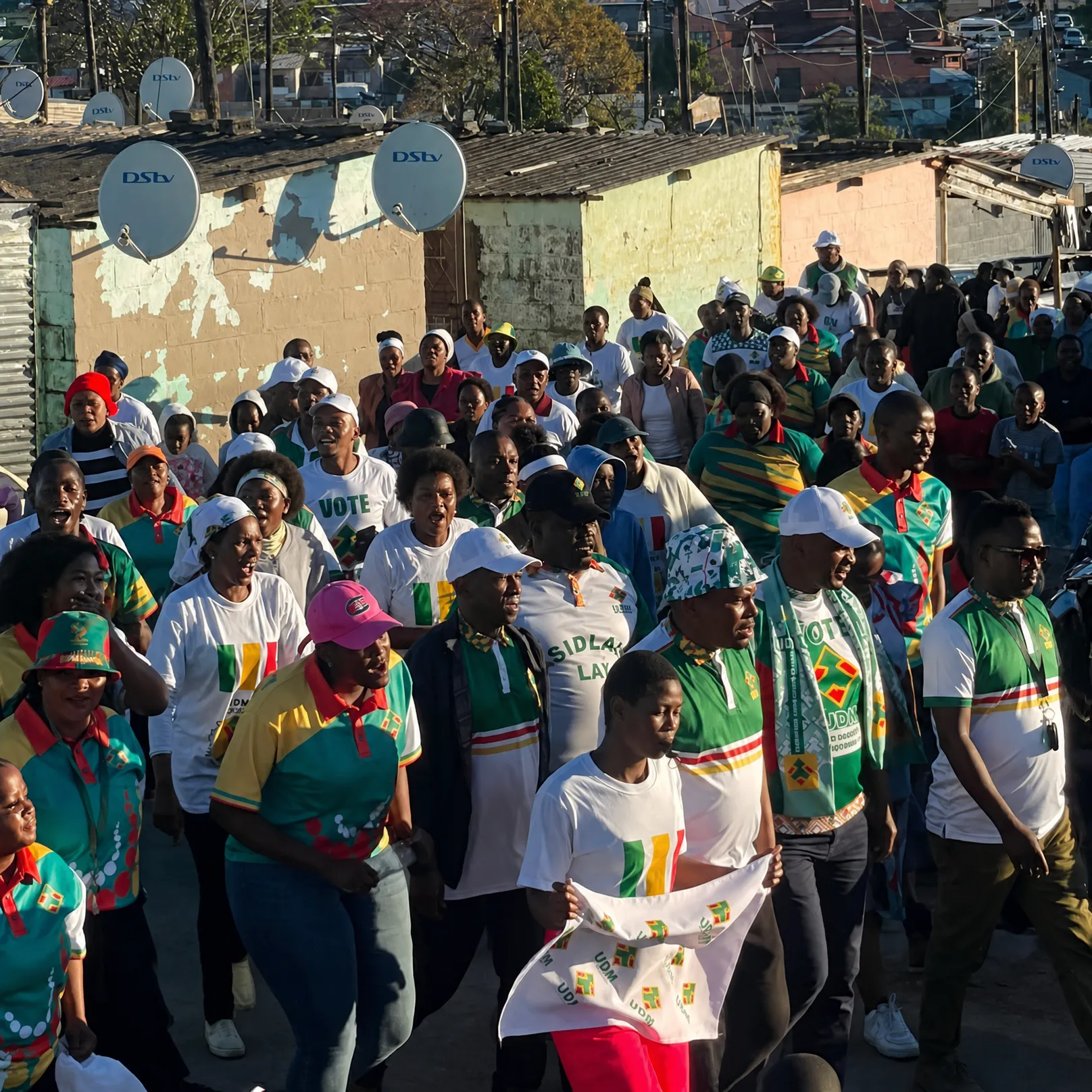
I am not approaching Buffalo City as though it begins and ends in KuGompo City. This is a vast metropolitan municipality, stretching from Qonce and Mdantsane to Duncan Village, Zwelitsha, Dimbaza and Ginsberg; from Ntabozuko and Breidbach to Macleantown, Phakamisa and Potsdam; from Peelton, Ilitha, Pirie Mission and Ndevana to Tsholomnqa and rural villages forming part of this municipality. These communities are not peripheral; they are Buffalo City.
And the questions people ask me are remarkably practical: Where is the water? Why has the road not been repaired? Where are the economic opportunities?
A young person in KuGompo City, a small business owner in Qonce, a household in Mdantsane or a resident of Tsholomnqa experience government through whether the water runs, whether the lights work, and whether someone answers when they ask for help.
That requires functioning institutions, transparent procurement, competent administration, and a government using technology to make itself accountable. That is the pivot the UDM must make: from general anti-corruption rhetoric to specific plans for economic growth, digital governance, and measurable service delivery.
Furthermore, we are moving into an era where no single party commands an outright majority. Local government now runs on the ability to build coalitions with people you may have spent years disagreeing with - which is precisely the skill General Holomisa and Meyer demonstrated in 1997, and which the UDM put into practice building coalition governments after 2016. That cross-ideological partnership is our core competency, and it is exactly what metros like Buffalo City need right now.
The future of the UDM looks like a party doing two difficult things at once: honouring a legacy of integrity without becoming a museum to one man, and modernising our message without losing our moral seriousness.
That future needs young people - students, first-time voters, young professionals and almost half of this metro's youth grappling with joblessness while hungering for economic emancipation, whether in KuGompo City, Qonce, or villages like Pirie Mission and the townships in between - willing to do what I did: join not for a title, but for the work.
We are actively building structures for young leaders across this province and beyond. If you believe integrity in public life is still worth fighting for, there is a place for you in this party.
Thirty years from a founding plenary is not a small milestone. Whether the UDM reaches it as a stepping stone towards real governing power is now our generation's responsibility to answer. The people who stood together in 1997 could not have known what that decision would mean. Neither can we. But we can decide what we do with our inheritance.
For the UDM, the next chapter should be about proving that our foundational principles can still produce better government for a new generation. I intend to answer that question in Buffalo City. And I intend to do it by building, not merely remembering.
You may also like
Thank goodness for the storytellers – the ones who probe, question, irritate the powerful
 Meera Selva, CEO: Informed · 14h ago · 3 min read
Nicaragua: Reinventing Journalism in Exile
 Carlos Fernando Chamorro · 14h ago · 4 min read
WORLD NEWS DAY: Trust Doesn't Arrive On Its Own. Someone Has To Go And Get The Facts.
Branko Brkic · 1d ago · 4 min read