
Opinion
The Eastern Cape Cannot Afford To Miss The Green Hydrogen Opportunity

By Oscar Mabuyane
21 September 2026 · 4 min read
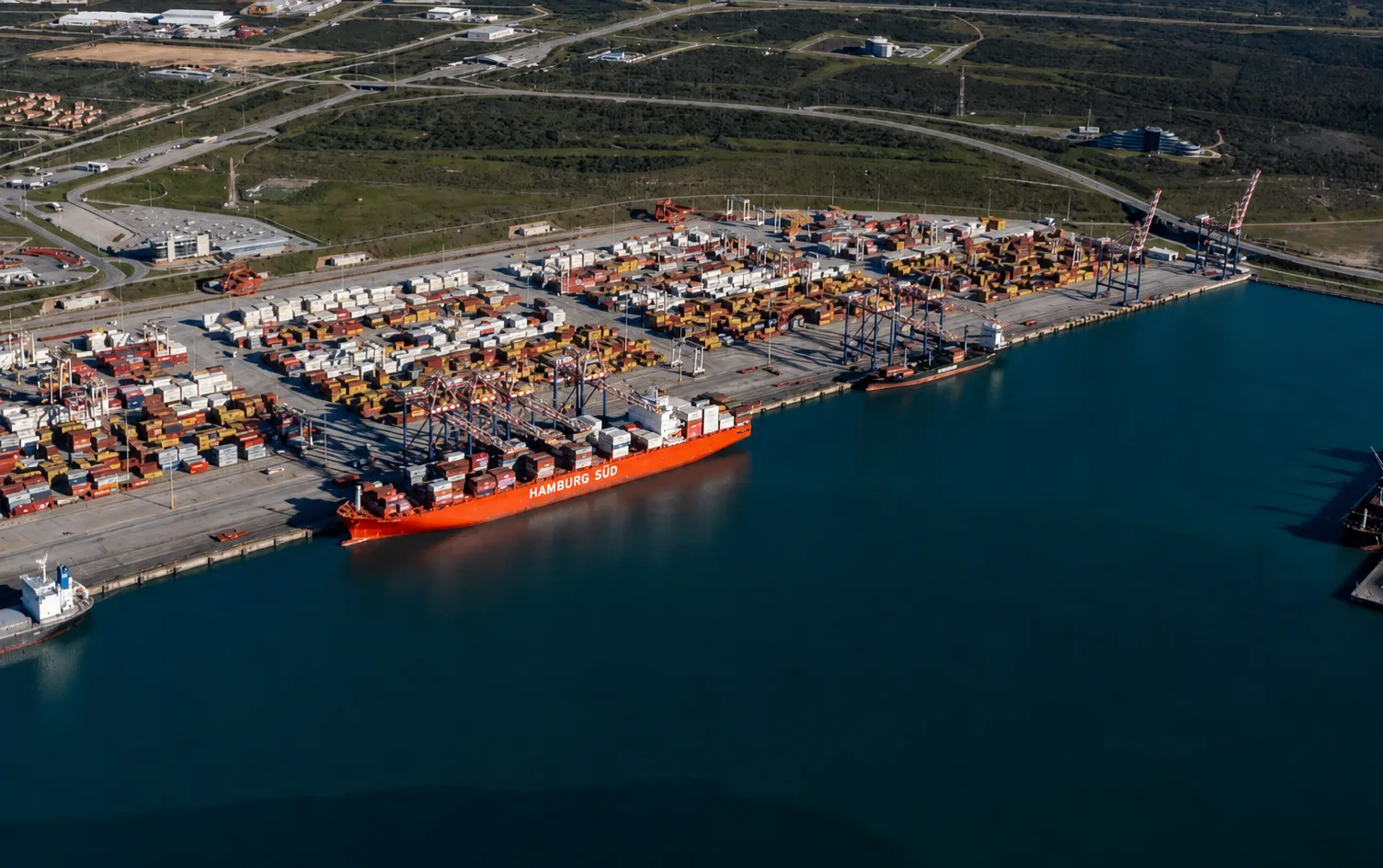
With world-class renewable energy resources, strategic ports and established industrial hubs, the Eastern Cape has the ingredients to build a new green economy — but turning its hydrogen ambitions into investment, industries and jobs will depend on execution
The world economy is being reshaped before our eyes. Investment is flowing to low-carbon industries, supply chains are pivoting to clean energy, and nations are competing to secure the industries of the future.
In this new era, success will not be determined by market size or labour costs, but by the ability to provide reliable clean energy, sustainable production and policy certainty. For the Eastern Cape, this is more than a trend. It is a once-in-a-generation opportunity to lead, industrialise and create jobs.
The Eastern Cape Green Hydrogen Strategy is built on a clear premise: the global shift to a low-carbon economy is not only an environmental necessity, but a major economic opportunity. Green hydrogen can drive industrial diversification, boost exports, create jobs, and support decarbonisation, while strengthening and modernising industries facing growing global climate-related pressures.
Our province is uniquely positioned to lead this transition. With world-class wind and solar resources, strategic ports at Ngqura and East London, investment-ready industrial zones at Coega and East London IDZ, and a strong automotive and manufacturing base, the province has all the ingredients to become a green hydrogen hub. These competitive advantages are already attracting significant investor interest and positioning the Eastern Cape at the forefront of South Africa's green industrial future.
The Hive Green Ammonia Project at Coega, valued at approximately R105 billion, is among the largest industrial investments ever proposed in South Africa. Once fully operational, it will produce over one million tonnes of green ammonia annually for export to Europe and Asia, supported by growing investor confidence, financing commitments and strategic technology partnerships.
But green hydrogen is about far more than hydrogen. It is about industrialising the Eastern Cape, positioning the province at the forefront of emerging industries such as green steel, sustainable aviation fuel, green shipping fuels, fertilisers, chemicals and advanced manufacturing. It is about using our renewable energy advantage to move beyond exporting raw resources and instead build higher-value industries, stronger supply chains and sustainable jobs.
As the world accelerates towards net-zero emissions, trade and investment patterns are rapidly changing. Regions that move early will attract capital, technology and markets. Those that hesitate risk being left behind. For an export-driven province like the Eastern Cape, inaction is not neutrality; it is a strategic risk.
The Eastern Cape stands at the threshold of a once-in-a-generation opportunity. Green hydrogen is not simply another energy project. It is the foundation of a new industrial economy, one that can position our province at the centre of the global transition to clean energy and low-carbon manufacturing.
Our Green Hydrogen Strategy provides a clear path forward. The decade to 2030 is about laying the foundations: attracting investment, building infrastructure, developing skills and advancing flagship projects at Coega and the East London IDZ. The decades that follow are about scale, industrialisation and global competitiveness. But strategies do not create industries. Execution does.
The real test lies in four areas: infrastructure, finance, skills and coordination.
Without reliable energy networks, water systems, storage facilities and ports, investment will go elsewhere. Without competitive financing, we will lose ground to regions already racing ahead. Without skilled people, we will import expertise rather than create jobs. Without coordination across government, industry and research institutions, opportunity will be lost in bureaucracy.
This is why partnerships matter. The Three Capes Partnership between the Eastern Cape, Western Cape and Northern Cape, that was unveiled last week, is about creating a powerful regional platform that combines renewable energy resources, industrial capacity and export infrastructure.
In a fiercely competitive global market, scale matters. Yet the ultimate measure of success is not the number of hydrogen plants built or the value of exports generated. It is whether ordinary people benefit. Will local businesses enter new supply chains? Will SMMEs secure meaningful opportunities? Will young people gain the skills to participate in the industries of the future? Will communities experience real economic growth and improved livelihoods?
These are the questions that guide every investment decision, every policy intervention and every partnership we pursue. Because the promise of green hydrogen is not merely about producing cleaner energy, it is about building a more prosperous, inclusive and globally competitive Eastern Cape. That is why the Strategy places strong emphasis on localisation, enterprise development, skills training and inclusion.
Green hydrogen projects are expected to create opportunities across construction, manufacturing, renewable energy, logistics, operations and maintenance. The Hive project alone is projected to support thousands of jobs across its lifecycle. The emergence of green industrial hubs in Nelson Mandela Bay and Buffalo City should also serve as catalysts for broader regional development. The greatest risk of all, however, is not failure. It is inaction.
The global energy transition is accelerating whether we participate or not. Markets are changing. Capital is moving. Industrial competitiveness increasingly depends on access to low-carbon energy and production systems.
The Eastern Cape has the resources, the location, the ports, the industrial foundations and now it has a strategy. What remains is execution.
In the emerging green economy, regions will not be rewarded for potential. They will be rewarded for delivery. Our task is clear: transform strategy into projects, projects into industries, and industries into jobs and shared prosperity. The opportunity before us is historic. We cannot afford to miss it.
You may also like

OPINIONS & PERSPECTIVES: The Gift Of Not Belonging
Dr. Naledi Mbude-Mehana · 2d ago · 5 min read

OPINIONS & PERSPECTIVES: Who Can Fix Buffalo City? Putting The Mayoral Hopefuls To The Test
Zola Pinda · 2d ago · 11 min read

OPINIONS & PERSPECTIVES: I Am A man. I Am A Father. I Am Scared.
 Mayibuye Mandela · 3d ago · 3 min read