
Opinion
OPINIONS & PERSPECTIVES: What If Science And Our Ancestors Are Speaking Of The Same Mystery?
By Sizwe Kupelo
10 October 2026 · 3 min read
From dark matter and the Big Bang to uQamata and abaphantsi, humanity has always searched for meaning in what it can see — and what it cannot.
This week I watched a video that began at my homestead and ended 92 billion light-years away. It reduced Earth to a speck, the Sun to one of 400 billion stars in the Milky Way, and the Milky Way to one of two trillion galaxies. Then came its humbling coda: everything we can see — stars, planets, people — accounts for only five percent of existence. The rest is dark matter and dark energy, invisible and inexplicable, yet holding everything together and pulling everything apart.
For centuries we have lived in precisely that tension between the visible and the invisible, but we have named it differently.
Our tradition cautioned us about uQamata and the ancestors — custodians of moral order who inhabit rivers, forests and the world beneath the water. Christianity arrived promising eternity, with judgement rendered by God and subverted by a figure called Satan — a paradoxical villain blamed for all evil in our waking lives, the killings, the rapes, the wars, yet who will also serve as the eternal jailer of sinners in a furnace he himself stoked.
What has troubled me more, each time I sit in a church or at a funeral service, is how readily we blame God for death itself, whether natural or brutally inflicted. The liturgy intones, “The Lord has given and the Lord has taken.” I refuse to accept it. God cannot be made the scapegoat for premature death, for children butchered, for lives truncated by cruelty. If we attribute every tragedy to divine will, we absolve human responsibility and turn faith into fatalism.
These contradictions are not abstract. One dream by a young Xhosa woman, Nongqawuse, in 1856, precipitated the ritual slaughter of cattle and destruction of crops on the promise that ancestors would resurrect with new wealth. It was a moment of spiritual literalism that collapsed into famine, dispossession and unbearable suffering — a sobering reminder that when faith suspends discernment, the kraal empties.
That is precisely why science and religion appear in perpetual contrast. Not because one is true and the other false, but because both attempt to answer the same primordial questions: Who fashioned the earth? Who possesses the galaxies? What, then, is our station in between?
Science asks: How? How did Earth accrete 4.5 billion years ago from a protoplanetary disk? How do supermassive black holes, millions of times the mass of our Sun, ignite into quasars when galaxies collide? Its instrument is measurement; its discipline is scepticism.
Tradition and religion ask: Why and Who? Why is there something rather than nothing? Who sustains us when we stand naked and vulnerable before the world? Their instrument is meaning; their discipline is reverence.
In the early 1800s, the Xhosa prophet Ntsikana is said to have dreamt of a pale people arriving with coins in one hand and a book in the other. He reportedly warned amaXhosa not to accept the coins but to embrace the book with the red mouth — the Bible. Some historians dismiss this as a post-hoc political myth engineered to facilitate conquest; others read it as prescient insight that literacy would become a tool of resistance. Either way, it encapsulates our enduring dilemma: we were forced to choose between material power and spiritual text, between coin and book, when survival demanded both.
Conflict erupts only when either domain claims absolute jurisdiction. When religion insists on six literal twenty-four-hour days of creation, it collides with geology. When science insists that only what is quantifiable is real, it collides with every person who has prayed at dawn on the Durban beachfront or at the kraal in Mafini and felt an answer no spectrometer could register.
That video conceded what our grandmothers always knew: 95 percent of the universe is unseen. Astrophysics calls it dark matter and dark energy. Our ancestors called it abaphantsi, the world beneath the water, the invisible architecture that renders the visible intelligible. Different lexicons, identical humility.
The question of creation, therefore, need not be resolved by choosing between Genesis and geology, between uQamata and the Big Bang. The Big Bang describes the expansion of space-time 13.8 billion years ago; it does not explain why there are laws that permit expansion at all. Science provides the chronology of creation; God, however understood, provides its grammar.
We do not need to choose between the telescope and the prayer mat, between laboratory and kraal. We need the telescope to measure the scale of our house, and we need tradition and faith to teach us how to dwell in it without burning it down.
You may also like
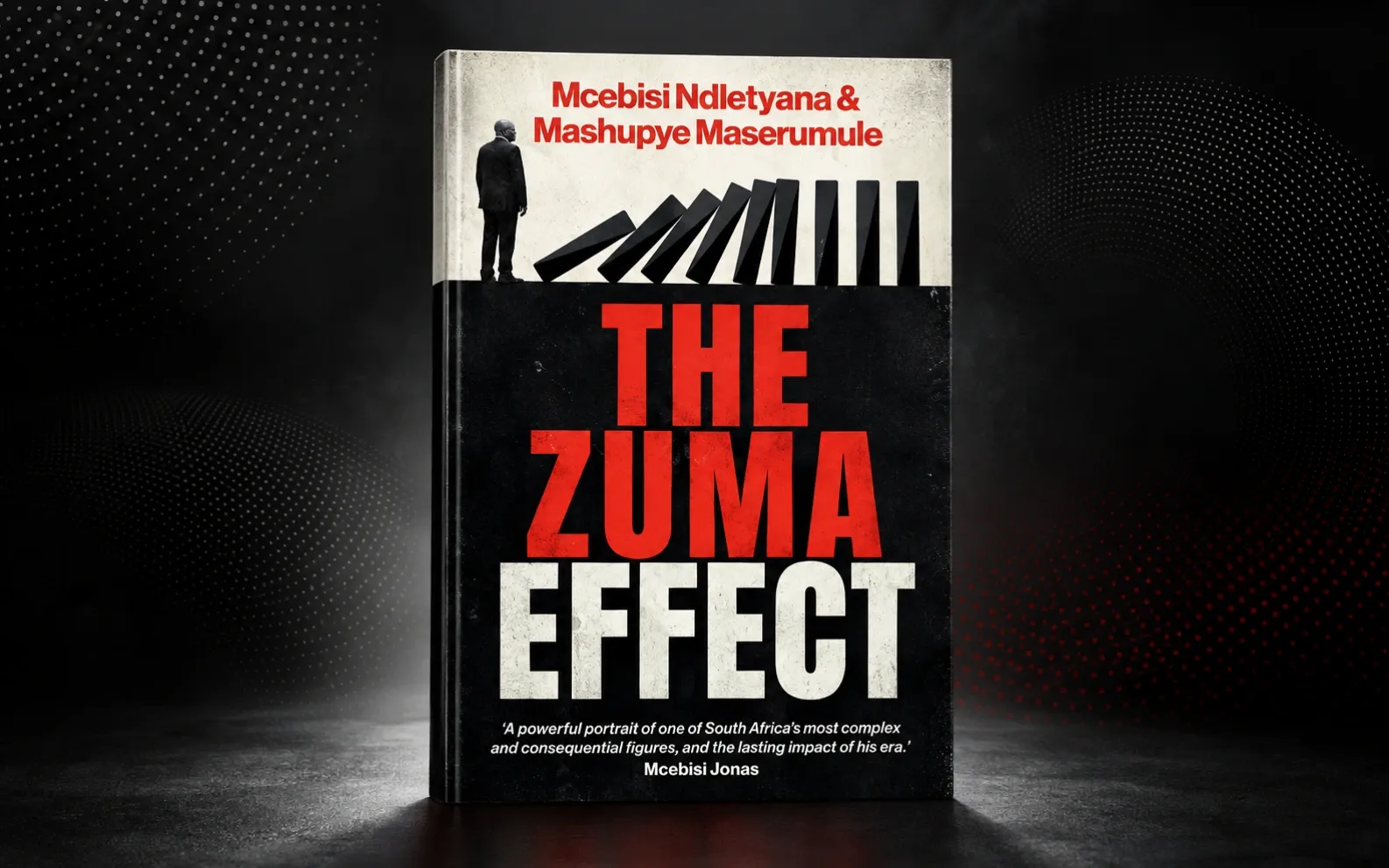
BOOK REVIEW: The Zuma Effect Asks Us To Look In The Mirror
 Mnoza ka Melane · 3d ago · 3 min read

OPINIONS & PERSPECTIVES: Farm Murders, White Genocide And The Burden Of Evidence
Andile Nduna · 6d ago · 7 min read

OPINIONS & PERSPECTIVES: The Courage Of Champions Is The Spirit South Africa Needs
Lyndon Barends · 6d ago · 2 min read