South Africa’s Citrus Industry Is Expanding Production While Opening New Routes Into Global Markets
By Bonface Orucho
10 September 2026 · 5 min read
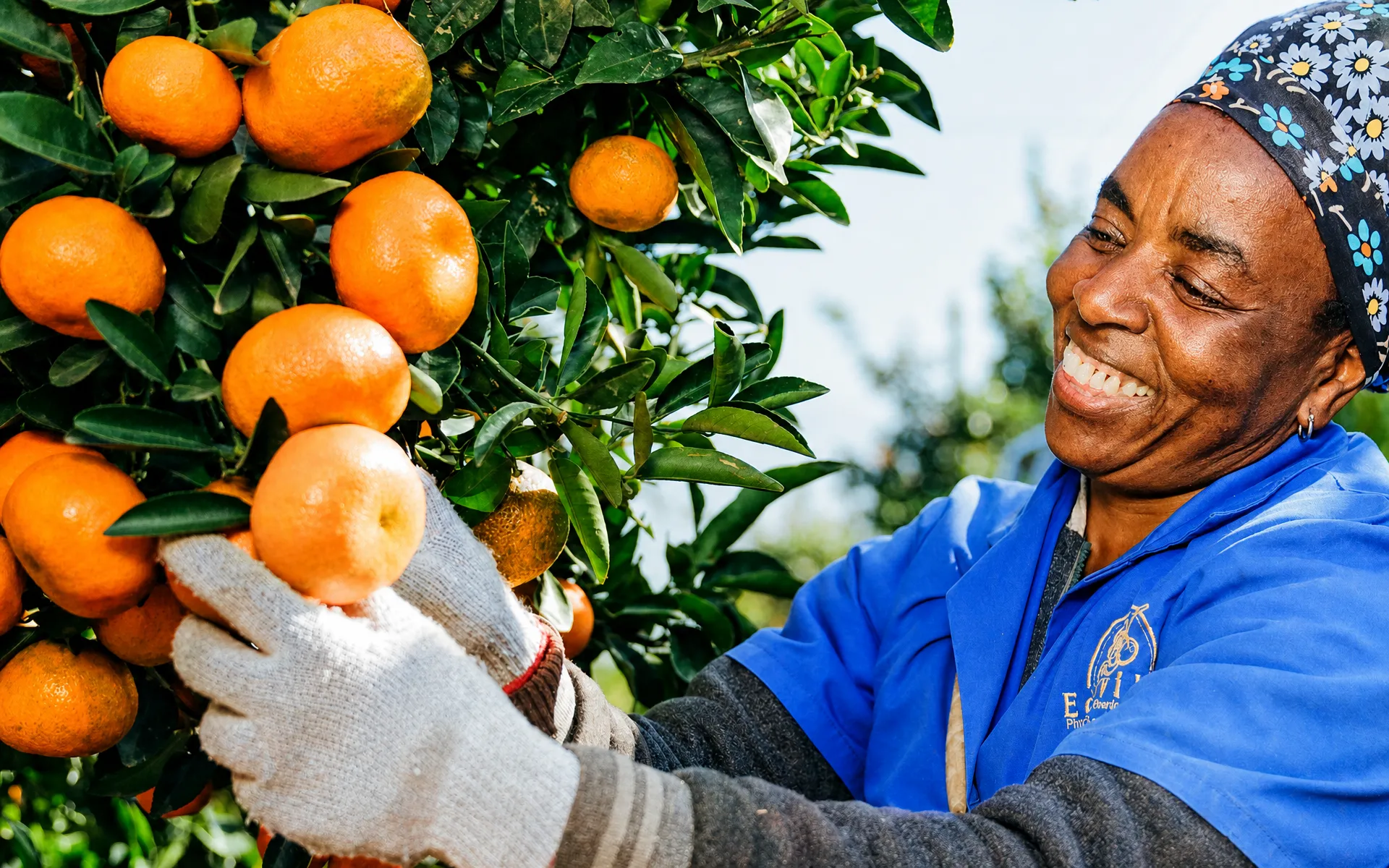
A worker at a citrus farm.
From Southern Africa to North Africa, growers are investing in orchards, processing and market access as competition for buyers intensifies.
South Africa has widened its citrus export route into India, giving growers more flexibility to supply a market of 1.47 billion people as African producers look beyond traditional destinations.
The move comes as established exporters diversify their markets while newer citrus operations in Zimbabwe and Botswana expand production, processing and export capacity.
India approved additional fruit-fly cold-treatment options for fresh South African citrus on August 18, following almost a decade of negotiations between the two countries.
The Citrus Growers’ Association of Southern Africa (CGA) and South Africa’s Department of Agriculture said the additional protocols would improve fruit quality and give exporters greater logistical flexibility.
“This demonstrates the importance of sustained public-private partnership in improving technical conditions for accessing markets,” said Boitshoko Ntshabele, chief executive of the CGA.
South Africa already exports citrus to India, but trade has accelerated sharply. Export volumes rose 85% in 2025, with shipments increasing from just under 4,000 pallets in 2016 to about 54,000 pallets last year, according to the CGA.
India’s scale gives the market further importance. Its population is about 1.47 billion, while South Africa’s counter-seasonal production allows its growers to supply fruit when domestic Indian production is lower.
Tariffs remain a constraint. South African citrus faces Most-Favoured-Nation duties of about 25% to 30% in India, putting it at a disadvantage to Southern Hemisphere competitors with preferential trade arrangements.
The need for wider markets has become more pressing as South Africa enters a difficult 2026 export season.
The CGA on August 24 cut its citrus export estimate to 197.9 million 15kg cartons, from an opening forecast of 209.4 million cartons.
The revised forecast includes 58 million cartons of Valencia oranges and 24.3 million cartons of Navels, down about 8% and 19%, respectively, from the initial estimates.
The CGA attributed some of the pressure to the conflict in the Middle East, which has disrupted trade routes that normally carry South African fruit. About 20% of the country’s citrus crop is typically exported to Middle Eastern markets.
The disruption has also reduced the availability of empty containers, increased congestion at ports and pushed up shipping and logistics costs, according to the CGA.