
Eastern Cape Bets Big On Green Hydrogen As Three Capes Join Hands
By The Coastal Reporter
16 September 2026 · 4 min read
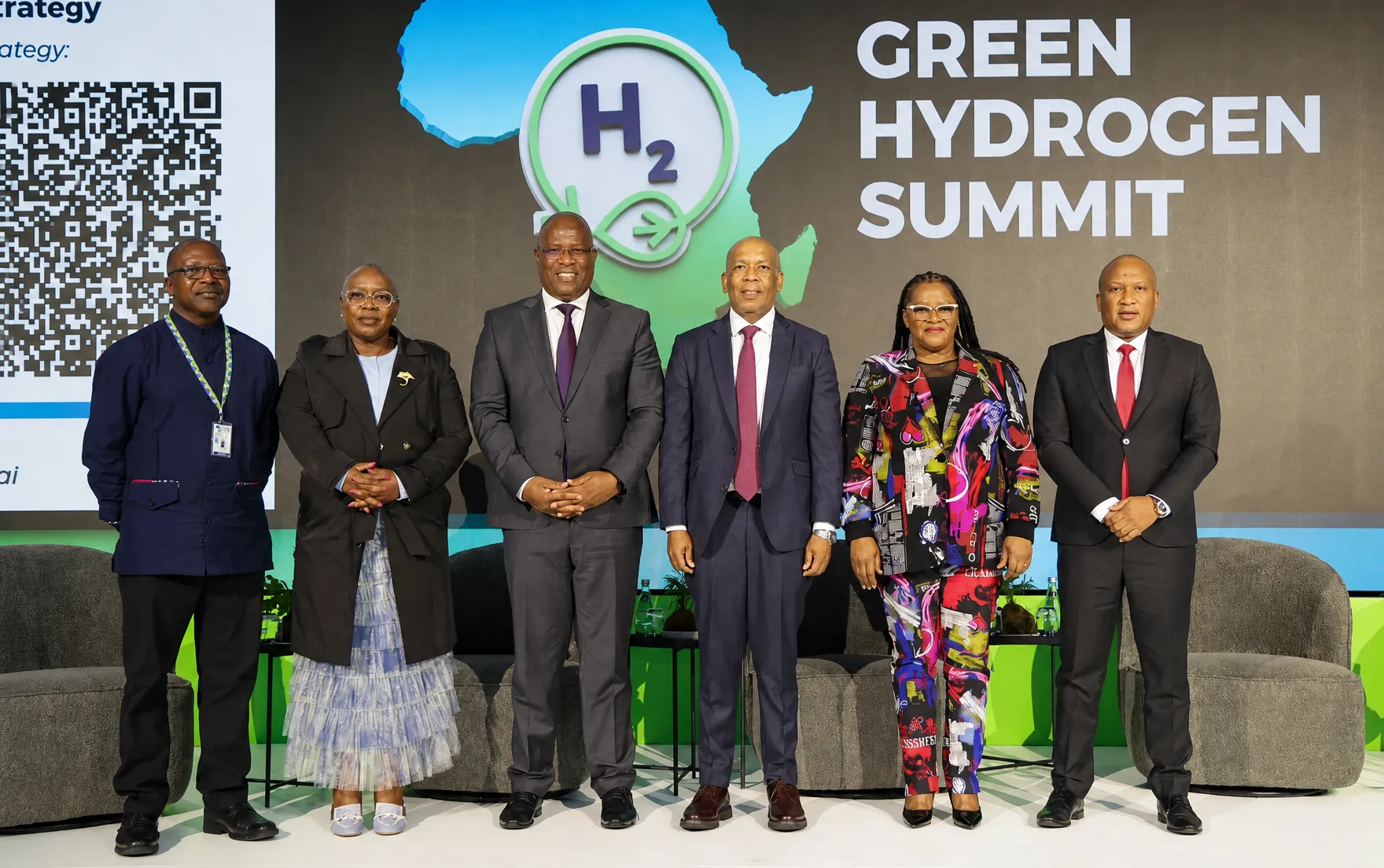
Premier Oscar Mabuyane and Minister of Electricity Sputla Ramokgopa together with the other participants at the summit
Eastern Cape Premier Lubabalo Oscar Mabuyane unveiled a potential groundbreaking strategy to position the province, in collaboration with its northern and western neighbours, as preferred global exporters of green hydrogen and producers of clean maritime fuel.
Known as the Eastern Cape Green Hydrogen Strategy, it includes a concept named the Three Capes Partnership, aimed at combining resources from the Eastern Cape, Northern Cape and Western Cape to offer the international green energy market a competitive value proposition in the south.
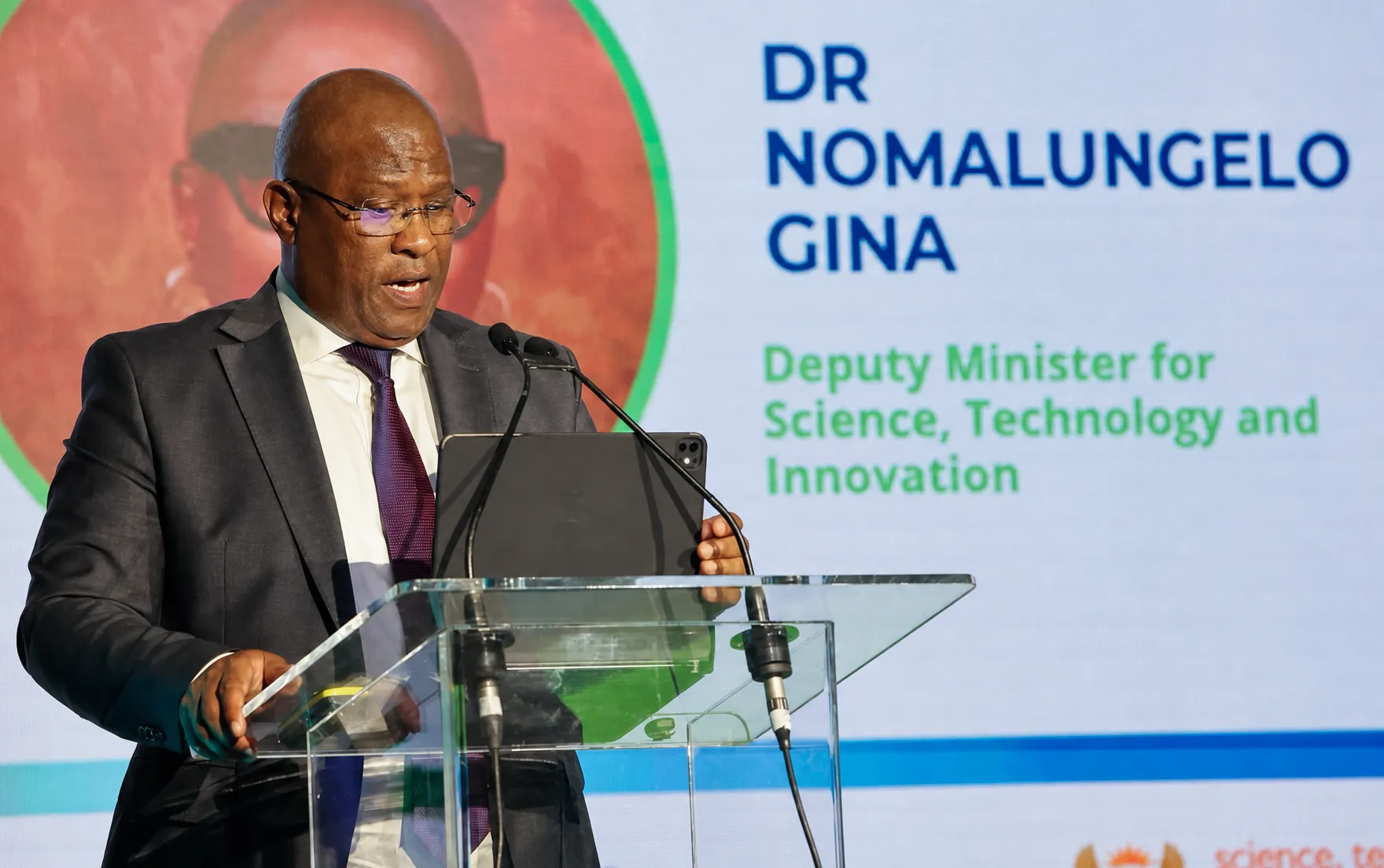
Mabuyane made the announcement at the Africa Green Hydrogen Summit 2026 in Cape Town on Tuesday (15 September), describing the initiative as a catalyst for industrialisation, economic growth and long-term competitiveness.
The Eastern Cape Green Hydrogen Strategy was approved by the Eastern Cape Provincial Executive Council for resourcing and implementation in order to position the province favourably to build a competitive green hydrogen economy while supporting the continued competitiveness of existing industries.
“It gives us a roadmap to attract investment, deepen value chains, support localisation and skills development, and ensure that our existing automotive, manufacturing and export industries remain competitive as global markets transition to lower-carbon production.
“Green hydrogen production, export and utilisation represent both a substantial economic opportunity and a strategic priority for the Eastern Cape,” Premier Mabuyane said.
The fourth annual summit, held over two days at the Century City Conference Centre brought together representatives from seventeen countries, researchers, strategic decision makers, the private sector and investors, among others.
The Strategy responds to a major shift in the global economy. Governments and industries are working to reduce greenhouse-gas emissions, while climate-related trade measures are increasing pressure on exporters to lower the carbon intensity of goods and production processes.
Green hydrogen and its derivatives can support the decarbonisation of sectors that are difficult to electrify directly, including steel, chemicals, fertilisers, aviation, shipping and heavy transport.
The Eastern Cape enters this transition with significant advantages. The province has strong wind and solar resources, established industrial and logistics platforms, the Coega Special Economic Zone, the East London Industrial Development Zone, the Port of Ngqura and the Port of East London.
It also has an established automotive and manufacturing base that will need to remain competitive as global markets move towards lower-carbon products and value chains.
While the Eastern Cape Green Hydrogen Strategy, developed by the Department of Science, Technology and Innovation, the South African National Energy Development Institute, the Nelson Mandela University and the Eastern Cape Department of Economic Development, Environmental Affairs and Tourism, will largely be implemented over three phases, ending 2050, numerous clean energy projects are already underway in the province.
The Eastern Cape has more than 2.4 Gigawatts or renewable energy projects operational or under construction and a renewable energy pipeline exceeding 10 Gigawatts.
An added advantage is that anchor green hydrogen projects at the Coega and East London Industrial Development Zones have been designated as national strategic integrated projects, providing lucrative platforms for investment and commercial development.
Hive Hydrogen South Africa
Construction on the Coega green ammonia project, owned by Hive Hydrogen South Africa in collaboration with Hive Energy (UK) and BuiltAfrica, is expected to start next year with commissioning scheduled for 2029.
The green ammonia plant, powered by a dedicated source of clean solar and wind energy, is expected to create up to 20 000 direct and indirect jobs and produce more than one-million tonnes of green ammonia for export to international markets.
Green ammonia is produced by using clean energy via water electrolysis to produce hydrogen, during a much more environmentally sustainable process.
Eastern Cape earned its place
Nonkqubela Pieters, Eastern Cape MEC for Economic Development, Environmental Affairs and Tourism, said the province earned its inclusion in the broader South African strategy.
“Our special economic zones, Coega and East London, are critical platforms in this process because they bring together industrial infrastructure, logistics, investment support, skills and access to global markets.
“By connecting these platforms with our renewable energy resources, seaports, infrastructure and regional partners, we can move beyond simply producing green hydrogen to building new industries, new capabilities and economic opportunities for the Eastern Cape,” MEC Pieters said.
The province’s renewable energy resources, Special Economic Zones, deepwater ports, skills base and export manufacturing capability provide a strong platform from which to develop the sector, attract investments and create jobs.
These advantages are further strengthened through the Three Capes cooperation with the Western and Northern Cape. Linking renewable-energy resources, ports, industrial platforms, transmission infrastructure and logistics corridors can create greater scale, integrated value chains and a stronger proposition for investors.
The Strategy’s focus is now on converting these advantages into viable projects and broad-based economic benefits. Anchor green hydrogen projects at Coega and the East London IDZ have been designated national strategic integrated projects, providing an early platform for investment and commercial development.
Implementation is structured in three phases: establishing the sector and enabling conditions to 2030; scaling production, industry and skills from 2030 to 2040; and developing a mature, internationally competitive green hydrogen economy integrated into global low-carbon value chains from 2040 to 2050.
Five linked priorities will drive delivery.
· Infrastructure and logistics will connect renewable power to production sites and markets through grid, water, storage, road, rail and port investment.
· An enabling environment will focus on coordinated institutions, predictable approvals, policy alignment and international certification.
· Investment and finance will mobilise private capital, development finance, climate finance and strategic partnerships.
· Skills and knowledge will align universities, TVET colleges, research institutions and industry with emerging technical and operational needs.
· Localisation and innovation will build local suppliers, enterprises, research capability and downstream industries so that more value is retained in the province.
You may also like
Crumbling Mthatha City Hall Irks Legal Eagle
Lubabalo Ngcukana · 5d ago · 4 min read
Humewood, Kings And Hobie Beaches Fly The Blue Flag For The Eastern Cape
Asemahle Mfombi · 23 Oct · 6 min read
Decades Of Hardship And Years Of Waiting: Fishermen Ask Where Their R99m Is
Johnnie Isaac · 23 Oct · 6 min read