
Eastern Cape Farmers Know How To Farm Climate-Smart — So Why Aren’t They?
By Aretha Linden
21 October 2026 · 3 min read
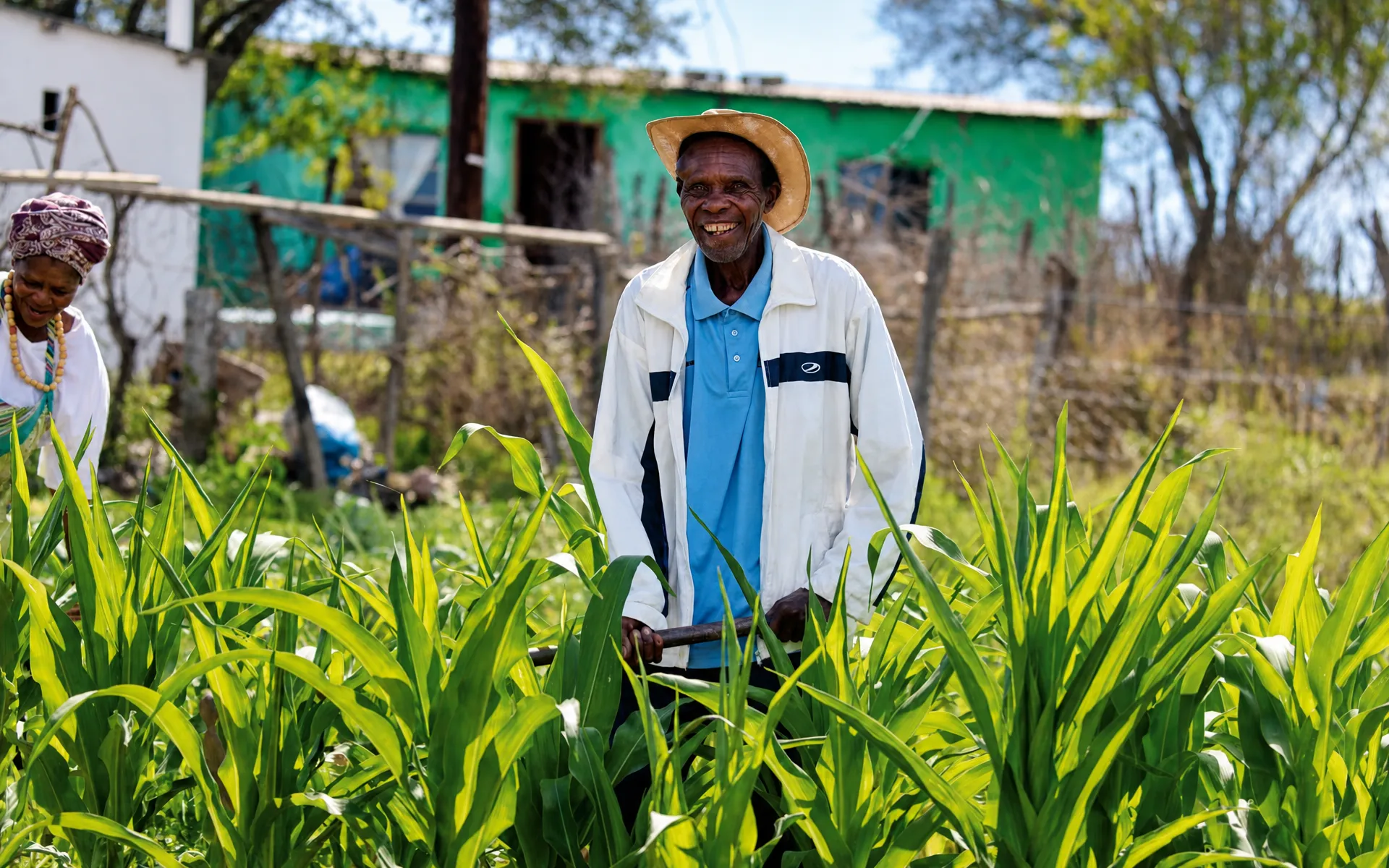
More than three-quarters of farmers surveyed in a University of Fort Hare research identified resistance to change as a barrier, despite widespread awareness of practices designed to cope with a changing climate.
Small-scale farmers know about climate-smart farming but are just reluctant to change, if a recent study of two Eastern Cape villages by University of Fort Hare academics, is anything to go by. The study also found that these farmers were also being held back from using climate-smart farming by inadequate financial resources and limited agricultural extension support.
Conducted by Sibonise Lufume, Dr Lindokuhle Gwala and Dr Leocadia Zhou from UFH’s Department of Agricultural Economics, Extension and Agribusiness and the Centre for Global Change, the study examined 158 small-scale farmers in Melani and Msobomvu villages in Raymond Mhlaba Local Municipality. The municipality covers a number of small farming towns including Fort Beaufort, Bedfort, Middledrift, Hogsback and Adelaide. It is also home to the University’s Alice campus, which means the study speaks directly to the communities on Fort Hare’s doorstep.
The research examined farmers’ awareness of climate-smart agriculture (CSA), the barriers to adoption and the socio-economic and institutional factors associated with their decisions. It was published in the Frontiers in Sustainable Food Systems academic journal in September 2026.
One of the study’s most striking findings was that 76.6% of respondents identified resistance to change as a barrier to adopting climate-smart agriculture, highlighting the challenges of translating awareness into practice. CSA involves farming methods that help farmers improve agricultural productivity, adapt to climate change and, where possible, reduce greenhouse gas emissions. These practices include rainwater harvesting, crop diversification, soil conservation and the use of drought-tolerant crop varieties.
“The findings revealed that respondents generally possessed a good awareness and understanding of climate-smart agriculture practices, although awareness differed across technologies,” the authors indicated.
Rainwater harvesting was the most widely recognised practice, with 80% of respondents aware of it. Crop diversification followed at 71%, while conservation agriculture and soil conservation each recorded 68%. Awareness was lower for drought-tolerant crop varieties, at 57%, climate information services, at 55%, and improved livestock management, at 49%.
Despite this awareness, resistance to change was the most frequently reported barrier to adoption. It was identified by 121 of the 158 respondents. “The study further identified farmer resistance to change, inadequate financial resources, and limited agricultural extension materials as the major barriers limiting CSA adoption,” the authors indicated.
The study also highlighted the role of economic and institutional conditions in farmers’ decisions. Using one-way analysis of variance (ANOVA), the researchers found statistically significant associations between adoption decisions and financial constraints, market access, knowledge of climate-smart agriculture technologies and extension support.
Education and household circumstances also influenced the implementation of recommended practices. The researchers reported that lower educational attainment could limit farmers’ understanding of climate-smart technologies and their confidence in applying them. Household composition also affected labour availability, particularly in households with elderly members or fewer economically active people.
The findings suggest that raising awareness alone is not enough. Farmers also need practical training and support to apply climate-smart practices in their own fields.
“From a policy perspective, these findings indicate that awareness campaigns should move beyond simply introducing climate-smart agriculture concepts towards strengthening farmers’ practical knowledge and implementation skills. Investment in continuous farmer training, demonstration plots, participatory learning approaches, and improved access to climate information services could enhance farmers’ confidence in implementing CSA technologies.,” the authors wrote.
The researchers indicated that these interventions could improve agricultural productivity, strengthen farmers’ ability to manage climate variability and support more sustainable farming systems among smallholder farmers in Raymond Mhlaba Local Municipality.
They also called for greater collaboration between government departments, research institutions, development organisations and other stakeholders to support the adoption of climate-smart agriculture.
By examining why awareness does not always translate into adoption, the study contributes to understanding the practical challenges facing rural farmers and the support needed to address them.
Ultimately, this study adds to the University of Fort Hare’s body of research aimed at making a practical impact in the Eastern Cape, across South Africa and on the African continent. For a university rooted in rural Alice, it is research that begins at home.
This article, first published on the university's website, is being republished with UFH's permission.
You may also like

DA Paper Trail Puts Spotlight Back On City's Disputed R2.2m Boxing Deal
Zolile Menzelwa · 1d ago · 5 min read

SA Takes Biodiversity Funding Fight To Global Summit
Tembile Sgqolana · 2d ago · 3 min read

21 Eastern Cape Teachers Guilty of Sexual Misconduct Back At Work Where They Offended
Zolile Menzelwa · 2d ago · 3 min read