
SA Takes Biodiversity Funding Fight To Global Summit
By Tembile Sgqolana
19 October 2026 · 3 min read
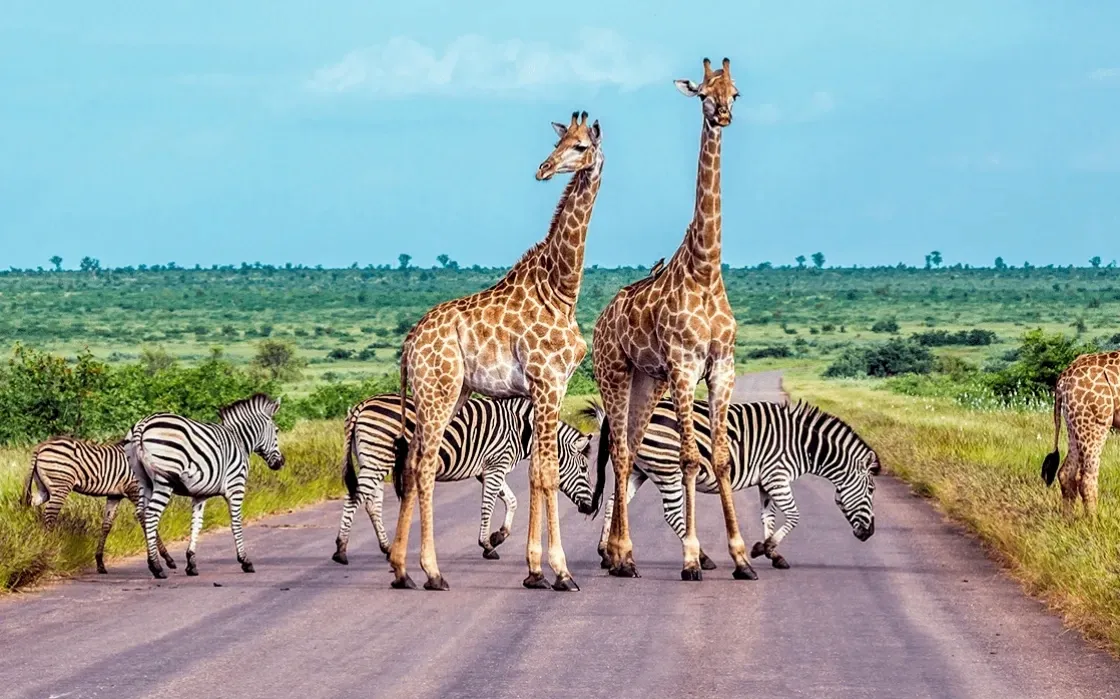
Delegation to Armenia talks will seek fairer sharing of genetic resource benefits and stronger support for developing countries ahead of 2030 conservation deadline.
South Africa will use a major international biodiversity summit in Armenia to campaign for increased funding, technology transfer and capacity-building to help developing countries address the growing loss of biodiversity.
The country will join other nations at the 17th meeting of the Conference of the Parties to the Convention on Biological Diversity (CBD COP17), taking place in Yerevan from 19 to 30 October 2026.
Led by the Deputy Minister of Forestry, Fisheries and the Environment, Narend Singh, the South African delegation will push for stronger support to turn international biodiversity commitments into practical action.
The summit will also mark the first global review of progress towards implementing the Kunming-Montreal Global Biodiversity Framework, adopted in 2022, which aims to halt and reverse biodiversity loss by 2030.
South Africa says the review must be accompanied by concrete measures to help countries meet their commitments, particularly those with limited financial and technical resources.

“COP17 cannot be just another conference that diagnoses the biodiversity crisis without equipping countries to act,” Singh said.
He said South Africa will advocate for an implementation package that matches global ambitions with adequate funding, technology and capacity, while ensuring that benefits derived from genetic resources are shared fairly.
One of South Africa’s priorities will be securing increased financial support for developing countries to protect biodiversity and implement their national conservation targets.
According to the Department of Forestry, Fisheries and the Environment, South Africa will support a strengthened resource mobilisation strategy for 2025 to 2030. The country will call for increased public funding, grants and other forms of finance that do not add to developing countries’ debt burdens.
It will also push for a financial mechanism that is more responsive and accountable to developing countries, with funding commitments informed by equity and historical responsibility.
Access to finance remains central to implementing biodiversity conservation plans, including efforts to protect ecosystems and restore degraded environments. South Africa will also prioritise fair and equitable benefit-sharing from Digital Sequence Information (DSI), which refers to digital data derived from genetic resources such as plants and animals.
The issue concerns how benefits are shared when genetic information is used in research, biotechnology and commercial product development. South Africa will support the effective implementation of the Cali Fund, a global mechanism established to channel contributions from the use of digital sequence information towards benefit-sharing.
The country wants developing nations to have priority access to support, alongside meaningful representation for Indigenous Peoples and local communities. It will also call for dedicated funding for capacity-building to help countries participate effectively in the system.
The negotiations are significant for countries with rich biodiversity, where genetic resources may have scientific and commercial value beyond their borders. The South African delegation will also focus on the protection of marine biodiversity and the governance of genetic resources.
It will support science-based processes to identify Ecologically or Biologically Significant Marine Areas (EBSAs), while emphasising that such descriptions do not determine maritime jurisdiction.
The delegation will also address the new agreement on biodiversity beyond national jurisdiction, known as the High Seas Treaty, or BBNJ Agreement. According to the department, South Africa is undertaking domestic processes towards ratifying the agreement.
Under the Nagoya Protocol, which deals with access to genetic resources and the fair sharing of benefits arising from their use, South Africa will seek a formal process to recognise specialised access and benefit-sharing instruments.
The department said this was intended to protect national sovereignty and prevent the weakening of prior informed consent requirements.
Beyond funding and benefit-sharing, South Africa will support stronger cooperation between international agreements dealing with biodiversity loss, climate change and land degradation.
The country will also promote ecosystem-based adaptation, which uses the protection, restoration and sustainable management of natural ecosystems to help communities respond to climate change.
The approach can support climate resilience while delivering benefits for biodiversity and local communities. The department said South Africa had submitted its national biodiversity targets and seventh national report ahead of the global review. It is also finalising its National Biodiversity Strategy and Action Plan for 2026 to 2035, which is expected to be submitted after COP17.
The outcomes of the summit will help determine whether countries can translate global biodiversity commitments into funded national action before the 2030 deadline.
You may also like
Constitutional Court Ruling Puts ANC Back In Contention
Zolile Menzelwa · 3d ago · 2 min read
Buffalo City Invests R20m In Buffalo Park Upgrades Ahead of Cricket World Cup
Liyema Somhlaba · 3d ago · 2 min read
Port St Johns Mayor Fired: Council Rejects Cogta Pick
Zolile Menzelwa · 3d ago · 3 min read