
Decades Of Hardship And Years Of Waiting: Fishermen Ask Where Their R99m Is
By Johnnie Isaac
23 October 2026 · 6 min read
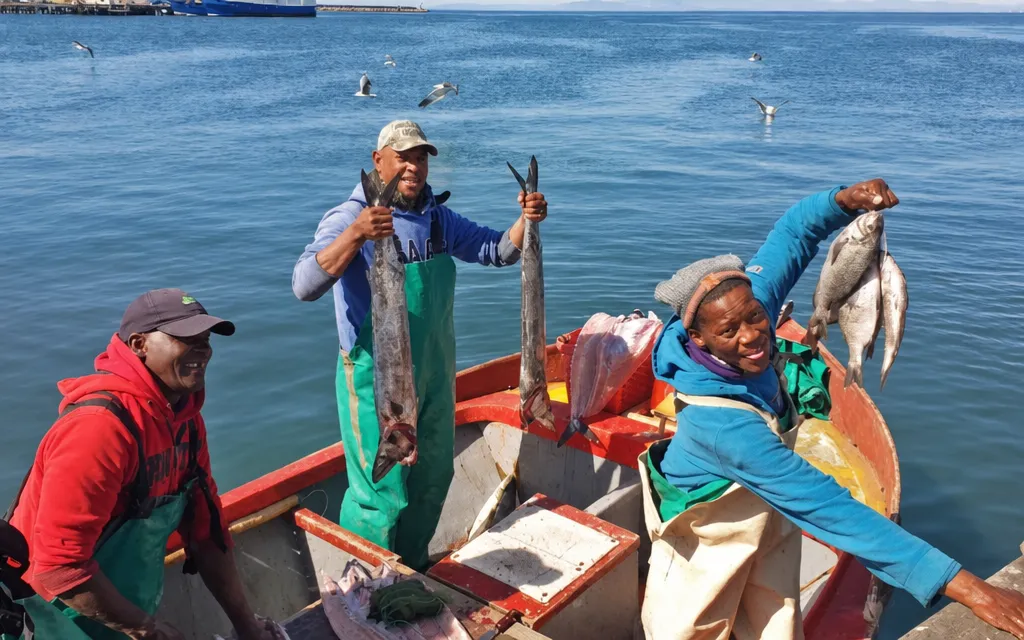
Western Cape fishing communities are still waiting to benefit from a multi-million rand settlement, but the South African government says it is a pipe dream.
A R99-million (about US$7.5 million) settlement arising from one of South Africa’s largest illegal fishing cases has become the focus of a fresh legal and political fight.
Coastal fishing communities are demanding access to funds they say were recovered for their benefit, while the Department of Forestry, Fisheries and the Environment (DFFE) insists that the restitution programme intended to channel the money to them never lawfully existed.
At the centre of the dispute is the long-running Arnold Bengis matter, involving the illegal harvesting and under-declaration of West Coast rock lobster by companies linked to the Bengis family. Bengis, Jeffrey Noll and David Bengis were prosecuted in the United States for violations of the Lacey Act and US customs laws.
The case was closely connected to the South African prosecution of Hout Bay Fishing Industries, a Bengis-linked company, for contraventions of the Marine Living Resources Act. A 2018 proposal prepared by B Xulu & Partners for the then Department of Agriculture, Forestry and Fisheries recorded that US courts had ordered restitution of US$30.05 million to South Africa, with a further US$37.2 million forfeiture order made later.
The proposal stated that the South African government sought to settle the matter to avoid protracted multi-jurisdictional litigation and to expedite the return of funds to the Marine Living Resources Fund. The parties ultimately agreed to a US$7.5 million forfeiture settlement. After costs payable to the Jersey Attorney General, the proposal estimated that roughly R99 million would be repatriated.
What was meant to happen to that money is now contested. The 2018 proposal envisaged a dedicated Marine Living Resources Sub-Fund into which the Bengis proceeds would be placed and ring-fenced. It outlined a three-year programme that included rebuilding West Coast rock lobster stocks, strengthening fisheries enforcement and investigations into overfishing and under-declaration, recovering outstanding levies, improving surveillance, and supporting small-scale fishing communities.
The programme also contained measures to enhance fisheries security and combat illegal fishing, alongside capacity-building initiatives for coastal communities. The DFFE now maintains that no such lawful departmental restitution programme ever existed. Spokesperson Sello Molekwa said the department had established that the document referred to as the 2018 Bengis proposal was not an authorised departmental document, was not approved policy, and was not authorised by the then director-general.
“The Department designed no programme,” said Molekwa. He added that the programme described in the document appeared to have been designed by a service provider at the instance of B Xulu & Partners Incorporated (BXI), rather than by the department itself.
The department’s position is that the “Bengis Projects” and the proposed Marine Living Resources Sub-Fund referred to in litigation were created by Xulu, and that there were no statutory or departmental approvals for them. The department has also challenged BXI’s role in administering the settlement proceeds. Molekwa said BXI was engaged under a service-level agreement in May 2017, but that the Western Cape High Court declared the agreement and a related settlement invalid in 2020 and ordered BXI to repay R20.24 million removed from departmental bank accounts under writs of execution.
The Constitutional Court subsequently refused leave to appeal, according to the department. DFFE says it has recovered only R1.17 million of that amount. Separately, the department has instituted proceedings seeking to recover a further R24.54 million paid to BXI between April 2017 and June 2018, or alternatively R14.89 million in alleged overpayments.
Molekwa said the department’s position is that BXI was never lawfully appointed and that a court order purportedly making it the implementing agent for the settlement proceeds was obtained without proper authority. “That matter is before the courts and judgment has been reserved,” he said.
Fishing community representatives argue that disputes over the programme’s formal status should not obscure the purpose for which the money was recovered. Coastal Links founder Hendrick Latola said the agreement with the United States was linked to a restitution programme intended to advance the interests of coastal communities affected by the alleged overfishing and under-declaration.
“The programme was designed as the order of the court and the court in the United States endorsed what was designed in South Africa,” Latola said. He added that the funds were subsequently held in the Criminal Assets Recovery Account and that disputes over their use had stalled implementation.
Latola said fishing communities had not been properly recognised as stakeholders in the litigation. “We are hoping that the new DFFE minister will hear us, acknowledge us as stakeholders,” he said. “We also have options and one of them is to approach the USA Justice system and state our case, that funds that were released in our name from that country are being withheld from us,” Latola added.
He said the impact of the Bengis case continued to be felt by small-scale fishers’ decades after the Hout Bay Fishing Industries matter first emerged. “The issue of Hout Bay Fishing Industries began in 1987, and its impact is still felt today by the small-scale fishers,” said Latola.
He said exploitation of crayfish led to stringent measures. Latola described the small-scale fishing sector as facing near-total collapse, with coastal communities struggling as a result. Community members have proposed practical interventions such as diver training in a sector where, they say, lives continue to be lost.
Another community member, Iona Grosch, said cooperatives had been established in the expectation that restitution funds could help develop skills, improve fishing methods, train divers and secure fishing permits. “Everyone is talking about the Oceans Economy, but residents of these coastal communities are not empowered about this economy,” Grosch said.
“They see ships coming and going and those traditional fishing communities are not well equipped on the business side of things. They know how to catch a fish but don’t know what it’s worth, how to establish a market for their product and make a good living out of it,” she said.
The dispute has also drawn Xulu, the former head of BXI back into public view. Xulu says he was tasked by then Agriculture, Forestry and Fisheries Minister Senzeni Zokwana with pursuing the Bengis money after assets linked to the matter had been frozen in the United States.
He maintains that he was instrumental in securing the settlement and that he was later unfairly treated by the state. “At the end of the negotiated settlement I was thinking I am a hero, I brought part of what was stolen from our communities,” Xulu said.
The department disputes this account and says BXI was not lawfully appointed. The department’s current position is unequivocal: there was no lawful restitution programme to implement. “The Minister (David Maynier) has been briefed and has ascertained that there was never any lawful restitution programme,” said Molekwa.
DFFE also rejects any suggestion of a dispute with US authorities over the use of the settlement proceeds. Molekwa said US authorities had no jurisdiction over how the proceeds were used in South Africa and referred to an August 2018 email from a US Attorney’s Office official stating that there were no terms and conditions attached to the restitution payments to South Africa.
The coastal communities say they continue to bear the consequences of historic overfishing, whether money recovered from the plundering of a public natural resource will ever reach the people who say they were among its victims is a question that remain unanswered.
You may also like
Two KuGompo City Beaches Closed Following A Shark Attack
The Coastal Reporter · 4d ago · 1 min read
Malema Returns To KuGompo City To Rally EFF Support Ahead Of Local Polls
Asemahle Mfombi · 4d ago · 1 min read

DA Paper Trail Puts Spotlight Back On City's Disputed R2.2m Boxing Deal
Zolile Menzelwa · 4d ago · 5 min read