
Opinion
OPINIONS & PERSPECTIVES: The Conversion Of Public Influence Into Institutional Power: The Case Of Ntsiki Mazwai

By Zola Pinda
30 September 2026 · 4 min read
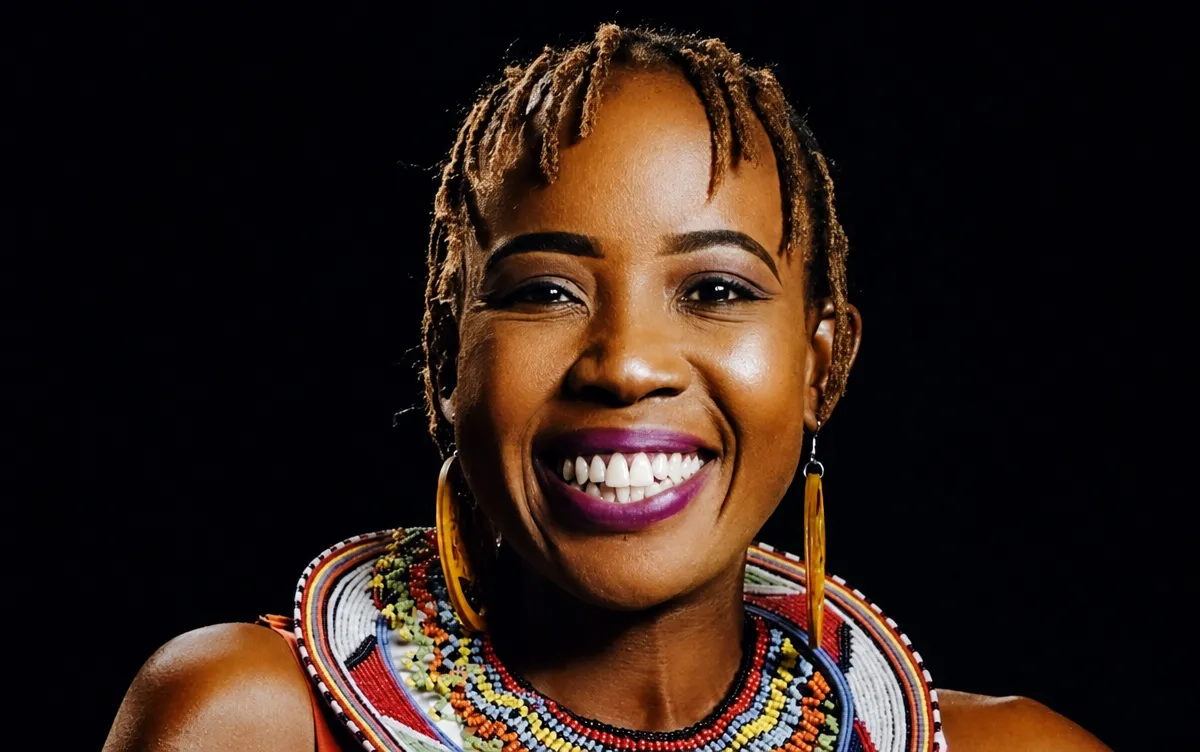
Ntsiki Mazwai has built a career speaking truth to power. Now she wants power of her own. Her Johannesburg mayoral bid will test whether public influence can be converted into the organisation, policy and institutional capacity needed to govern Africa’s economic powerhouse.
Johannesburg’s 2026 mayoral contest has acquired an unusual political character. Among the better-known names entering the race is Nontsikelelo “Ntsiki” Mazwai, a poet, musician, beadwork artist, podcaster and social commentator who has spent much of her public life speaking about politics from outside formal political office.
On July 8, that changed. Mazwai was unveiled as the Land Party’s candidate for Johannesburg’s executive mayoralty, declaring that she no longer wanted to remain an “armchair critic” and had decided to move from political commentary into political action. Her launch speech placed the city’s decline, service delivery, housing, employment, infrastructure, safety and economic opportunity at the centre of her proposition.
But why should readers outside Johannesburg care about the mayoral race? Johannesburg is not simply another municipality. It is South Africa’s economic and commercial center, and decisions taken in the city reverberate through business, investment, employment, infrastructure, public services, and the broader national economy.
The Johannesburg mayoral contest, therefore, deserves attention beyond the boundaries of the City of Gold. It is, in many respects, a window into the choices South Africans are making about urban governance, accountability, and the future direction of one of the continent’s most important cities. So her candidacy presents a question larger than the personality of one candidate: what happens when public recognition has to be converted into the organisation, money, policy detail and municipal capacity required to contest one of South Africa’s largest cities?
The question matters because Johannesburg is not a symbolic prize. The City’s approved 2026/27 budget is R97.1 billion. Its own budget documents identify non-revenue water losses of more than 40%, electricity distribution losses of 27%, and an infrastructure-renewal backlog of more than R185 billion across Johannesburg Water, City Power and the Johannesburg Roads Agency.
Mazwai has entered this environment with a programme that calls for a transparent service-delivery tracker, redevelopment of Alexandra, improved infrastructure, local employment incentives, a 24/7 city, expanded public transport, solar-energy interventions, support for new businesses and a more technologically advanced Johannesburg.
But a campaign is not only its candidate or its manifesto. It is also the people who organise it, the political party that carries it, the resources available to it, the professionals it can attract, the volunteers who take its message into communities and the institutional understanding required to translate political promises into municipal decisions.
That is where the real story of the Mazwai campaign begins.
Before she became a mayoral candidate, Mazwai had already built a public identity across several fields. Her own biography describes her as a beadwork artist, poet, musician, producer, author, blogger and social activist. It records the House of Mobu beadwork range, spoken word and music projects, writing, public talks and other creative work.
Her education also cuts across the creative and business worlds. Mazwai’s published biography lists a Diploma in Marketing Management from the Institute of Marketing Management, an Entrepreneurship and New Venture Creation programme at Wits Business School, and a cum laude Master of Arts in Creative Writing from Rhodes University. The dates for the Rhodes qualification differ across versions of her own published biography, so this article deliberately avoids an unsupported graduation-year claim.

This matters because the usual description of Mazwai as simply a cultural figure is incomplete. Her public record combines creative production, entrepreneurship, social commentary and activism. The political question is not whether she arrived from nowhere; it is how that existing public platform translates into the very different demands of municipal government.
Her own account of her political engagement predates the 2026 campaign. In September, Mazwai told the Sunday Times that she had spent years speaking about power, inequality, justice, governance and the livedrealities of ordinary South Africans, and that the decision to enter electoral politics was an attempt to take that voice into the institutions where decisions are made.
Yet the available reporting also establishes an important distinction. Mazwai entered the Johannesburg mayoral race without a prior record of elected municipal office or of running a metropolitan administration. Daily Maverick reported in July that she had no formal political experience. That is not a judgment on her candidacy; it is a description of the experience she brings into a municipal contest.
The distinction becomes important when the campaign’s promises are tested. Johannesburg’s executive mayor operates within a council that retains major legislative and financial powers. The council approves the budget, tariffs and by-laws, while the executive mayor exercises powers delegated by council and works with the mayoral committee and municipal administration.
The result is that Mazwai’s political transition cannot be assessed only through the language of personal conviction. It must be assessed through the institutional question: how would the public voice that made her a prominent commentator operate inside a municipal system governed by legislation, council votes, budgets, procurement rules and an administrative chain of accountability?
This is the point at which the article moves beyond personality. The story is no longer simply about a public figure entering politics. It is about the conversion of public influence into institutional power — and the organisational machinery required to make that conversion credible.
The question now moves from visibility to capacity
Mazwai’s entry into Johannesburg’s political contest therefore deserves to be examined on the substance of the transition: the ideas she advances, the organisation carrying them, and the institutional capacity required to turn political language into municipal action. That is where the campaign’s public promise will ultimately meet the realities of governing a complex city.
You may also like

Journalism & Our Chaotic World’s Future
 Branko Brkic and Tina Brown · 2d ago · 4 min read
OPINIONS & PERSPECTIVES: The Perils Of Political Opportunism In An Era of Shifting Allegiances
 Xolani Somaca · 2d ago · 3 min read
OPINIONS & PERSPECTIVE: The UDM Is At The Crossroads Of Legacy And Power
 Nqabayomzi Kwankwa · 2d ago · 5 min read