
Opinion
OPINIONS & PERSPECTIVE: Perhaps We Need to Go Back to Remember How We Got It Right
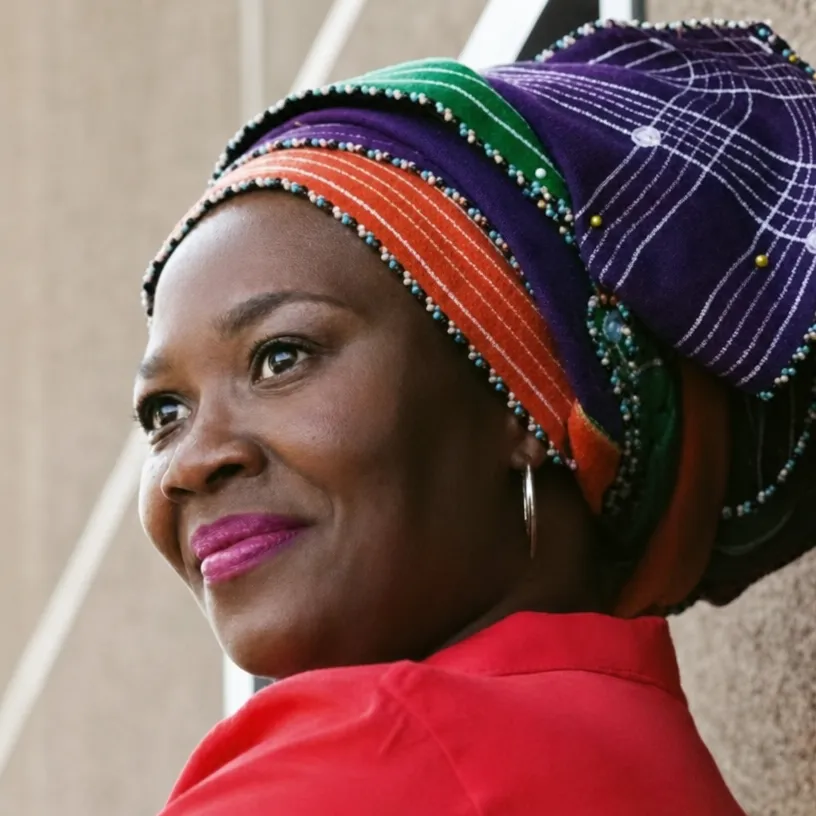
By Pumla Ngesi
30 September 2026 · 4 min read
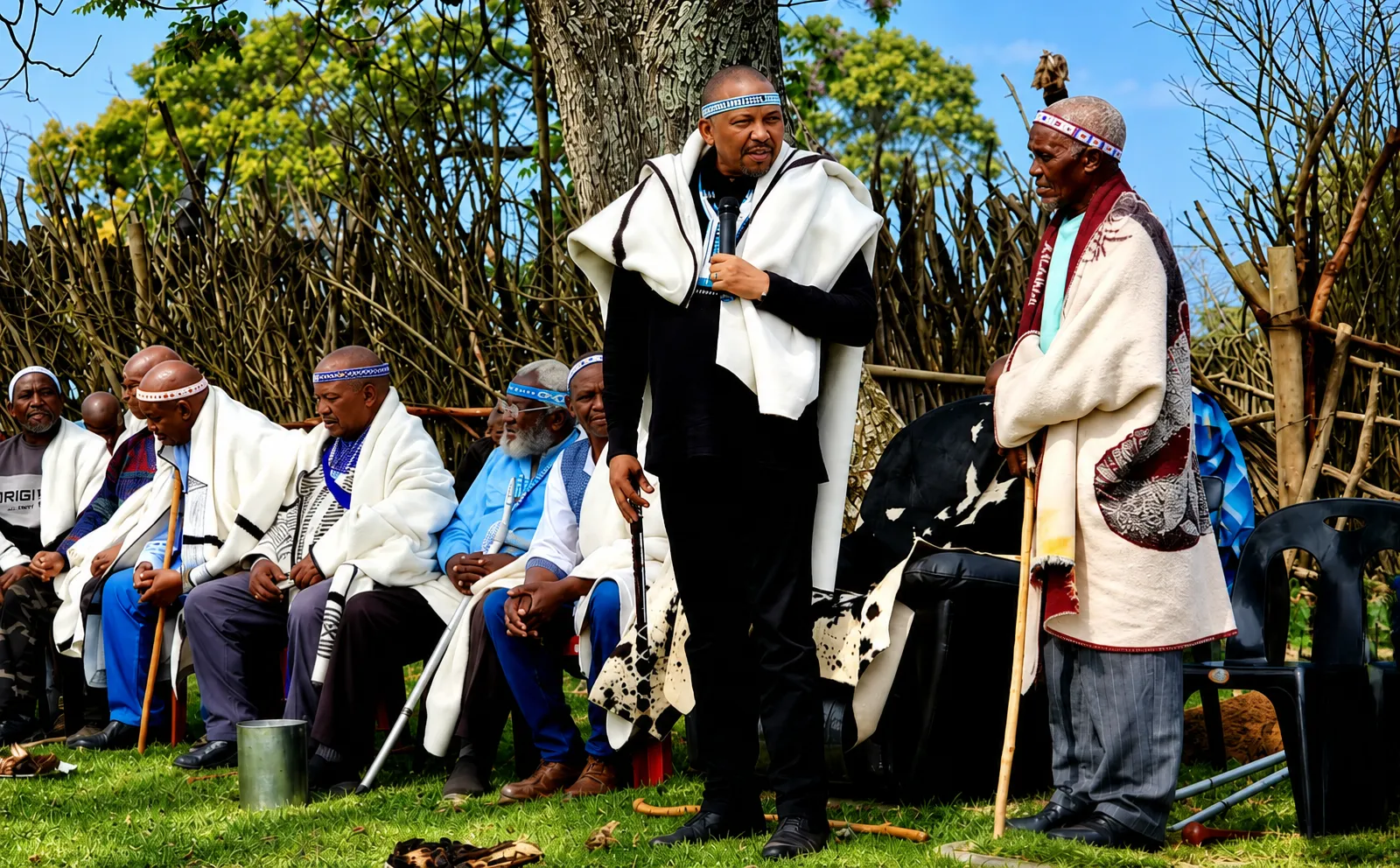
Nkosi Phathekile Holomisa addressing his guests
A Heritage Day spent in the villages of Mqanduli, followed by a journey along the Wild Coast, became a reminder that the Eastern Cape’s greatest tourism assets are not only its spectacular landscapes, but its people, traditions and stories — and that those who call the province home should share in the opportunities they create.
As September draws to a close, grinding both heritage and tourism month activities to a halt, I find myself reflecting on how I recently experienced the Eastern Cape through a different lens — not through a brochure or a formal tourism programme, but through its people, its traditions, its villages and its coastline.
Last week (September 23-27), I had the privilege to spend time at Lower Ngqungqu in Mqanduli, at the homestead of Nkosi Phathekile Holomisa, Ah! Dilizintaba, a traditional leader of amaHegebe and a long-standing member of the Congress of Traditional Leaders of South Africa (CONTRALESA).
The centrepiece of our visit was the Heritage Day gathering on September 24, themed “Masibuyel’Embo” — let us go back to our roots.
It would be easy to describe the day simply by what could be seen: the traditional attire, food and song. Elders gathering beneath a magnificent tree while young people move freely among them. While the generational mix was impressive in itself, it was so much more than a simple cultural display; it was our heritage providing a teachable moment.
The programme deliberately took people back into the history and traditions of amaGebe: their origins, the journey of a boy from birth into manhood, the journey of a girl into womanhood, marriage, the integration of a bride into her new family, and the responsibilities that accompany different stages of life.
There were questions. There was clarification. There was teaching.
And I found myself wondering how much previous generations learnt by simply engaging with their elders and remaining in rural settings. In modern day South Africa, those learnings must be deliberately sought and taught, while it used to be organically passed on to younger generations.
In his address, Dilizintaba spoke about problems facing black communities today — problems that were far less common a generation or two ago. The challenge behind Masibuyel’Embo, then, was not merely nostalgic. It raised a much bigger question: what did we leave behind that may still have something to teach us?
Perhaps African solutions to African problems do not require us to reject everything modern or foreign. Perhaps they simply require us to stop assuming that wisdom can only come from somewhere else. There was another part of this experience that no programme could fully capture: the life and hospitality of Komkhulu itself.
People came seeking assistance, counsel or simply a place to engage. Some gathered under the tree; others met inside the meeting room. There was a sense that this was not merely a private homestead, but a place where the community can gather. We, too, were received with remarkable warmth. We were allocated our own rooms and made to feel at home.
For that, I remain deeply grateful to the Chief’s wife, his sisters, his sons — including the prince — and the staff who served us throughout our stay. Their hospitality reminded me that heritage also lives in how we receive people, prepare food, make space for others and make strangers feel that they belong.
That too is African dignity.
The next day, September 25, we travelled to Coffee Bay and the Hole-in-the-Wall. I had seen photographs before. Seeing it for myself was different. Hole-in-the-Wall, known locally as esiKhaleni, is one of the Wild Coast’s iconic natural landmarks. A local tour guide led us through the vegetation. He knew the plants by name and told their stories as easily as he pointed them out. We trusted him completely.
Suddenly, we were tourists in our own province. And I loved that feeling.
Later at the restaurant, three young women caught my attention. They could hardly have been older than 20. They appeared to be locals who decided to eat out. They sat together, enjoyed themselves, and paid their own bill. It was such an ordinary scene, yet I found it beautiful. I saw independence. Friendship. Self-love.
And I thought: this beautiful Eastern Cape coastline, right on their doorstep, had created a space for that moment. Tourism is not only for foreigners. It is also us, the locals willing to explore our own province with an open mind.
The following day, we attended a traditional wedding within the same clan. Heavy rain did not keep people away. Food was aplenty, people gathered and the community prevailed. By then something had become very clear to me. In the Eastern Cape, heritage and tourism should not be separate conversations.
The Wild Coast is not only about its beaches and cliffs — it is also about the people who live alongside them, and the stories they carry in their limbs. The guide who walked us through the vegetation. The family who fed us. The cook, the craftsperson, the small guesthouse owner. They should all share in the riches the tourism economy has to offer.
Tourism should leave more than photographs behind. It should leave opportunity.
As September closes, I am left with a simple conviction: our province needs to be explored — by others, certainly, but also by us. Let us visit the villages, stay overnight, walk the beaches, eat the local food, use the local guide, attend the cultural gathering and ask about the history.
Because sometimes we will travel the world to gain insights while the same opportunities for self-realisation and fulfilment can be found on our own doorstep.
Masibuyel’Embo. Let us return to our roots — and perhaps, in doing so, rediscover just how much the Eastern Cape has to offer.
You may also like

Journalism & Our Chaotic World’s Future
 Branko Brkic and Tina Brown · 2d ago · 4 min read
OPINIONS & PERSPECTIVES: The Perils Of Political Opportunism In An Era of Shifting Allegiances
 Xolani Somaca · 2d ago · 3 min read
OPINIONS & PERSPECTIVE: The UDM Is At The Crossroads Of Legacy And Power
 Nqabayomzi Kwankwa · 2d ago · 5 min read