
One Ball, 40 Players: How Mdantsane Produced An SA U20 Prospect
By Asemahle Mfombi
8 September 2026 · 6 min read
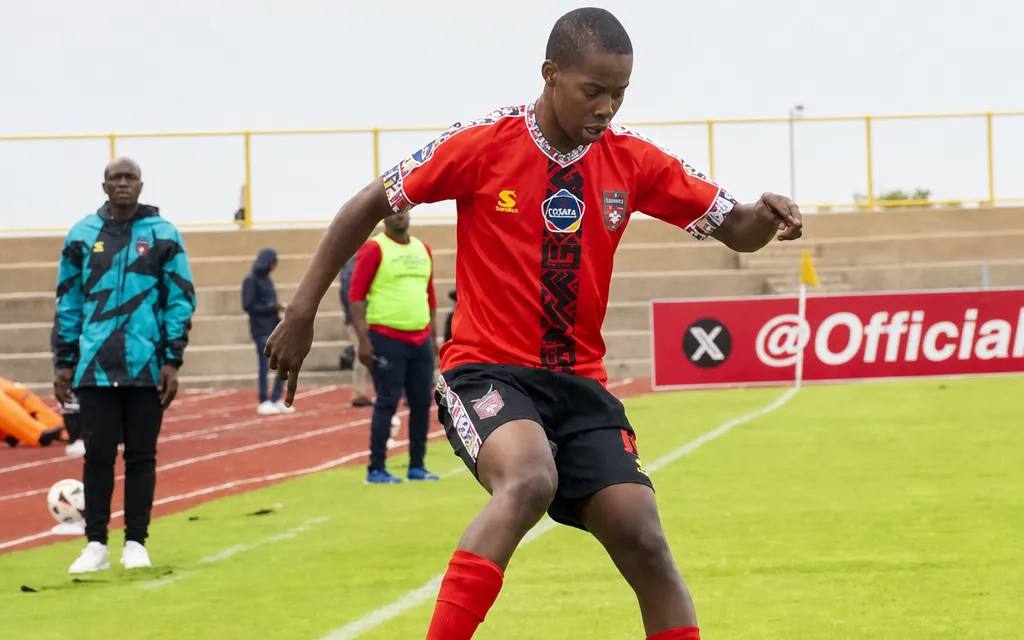
Ukhonaye Magele's form has earned him a place in the South African U20 national team preliminary squad
Ukhonaye Magele grew up in a township known for boxing rings rather than football fields. His call-up to the South African U20 preliminary squad last week has changed what young footballers in South Africa's second biggest township are allowed to dream and expect.
When the news came through that Ukhonaye Magele had been named in the South African U20 national team preliminary squad, the reaction was not the uncomplicated joy that outsiders might expect. It was heavier than that, and older — the sound of something long asked for finally answering back.
“When I found out I was part of the squad I had mixed emotions, because this is something that I’ve always worked and prayed for.”
For a footballer out of Mdantsane, the call-up carries weight beyond a squad list. It is an argument, settled. The township on the outskirts of East London has long been synonymous with boxing champions and with crime statistics, it has rarely been named in the same breath as national football selection. That, he says, is precisely the point.
A house full of supporters
Magele’s love for the game did not begin on a field. It began at home, in a family where football was simply what everyone followed and argued about. The game was in the house long before it was ever a plan.
The first evidence that he might be more than a keen supporter arrived early. Around the ages of 10 and 11, opponents kept making the same mistake about him.
“Whenever I played against my age mates they always thought I was older than them, because of the way I played. So that made me believe that I’m actually good — I need to work hard and see where this puts me.”
One ball, forty players
Belief was the easy part. Mdantsane supplied the rest of the education, and not all of it was gentle. He describes an environment where the pull away from football was constant, and where staying on the path meant repeatedly declining what was on offer around him.
“Growing up in Mdantsane — an area that is well known for boxing and the crime rate — it was very hard for me, because I had to always try and run away from peer pressure and influence.”
The structural obstacles were just as real. Scouts were a rumour more than a routine. Clubs that spotted talent often had no way to fund a trip beyond the province to show it off. And the basic tools of development were rationed in a way that would be unrecognisable at a well-resourced academy.
He recalls squads of close to forty players training with a single ball between them. It is a detail that explains a great deal about what young Eastern Cape footballers are up against, and about how much has to be made from how little.
The doubt, and what answered it
Magele does not pretend the belief was uninterrupted. There were stretches where he questioned whether the thing he was working towards was actually reachable from where he stood. What steadied him was, oddly, the dismissiveness itself.
“What kept me going was the fact that I always heard that people were overlooking Mdantsane, that there were no players from there. So I always wanted to go out there and show people that there are players in Mdantsane.”
The people, and the price
Asked who carried him, he does not hesitate: family and coaches, from development football through to the level he is at now. Their contribution, as he describes it, was less about technical instruction than about insistence — on hard work, on discipline, on staying determined when there was little external evidence that any of it would pay.
He is careful to spread the credit widely among the coaches who handled him along the way, saying each of them played an important part in getting him here.
The cost was social. The sacrifice he names is not missed parties or late nights, but people — the ongoing, awkward business of choosing a career over the company he grew up in, and being misread for it.
“The sacrifice I had to make was choosing between the people I associate myself with, or my career. That always made me look like I look down on people, or like I make myself better than others.”
Varsity Cup: everything is different
Magele is now balancing tertiary study with Varsity Cup football, and he is blunt about the gap between that level and everything that came before it. The intensity, he says, does not relent from the first minute to the last, and the pressure of home and away fixtures brings an expectation he had not previously had to carry.
Managing it alongside lectures, training, travel and assessments is, by his own account, genuinely difficult. His answer is unglamorous and practical.
“It is actually very hard, but I always make sure that I manage my time well in order to be able to do everything. I believe it all falls down to time management.”
Sharper in the areas that decide games
The higher standard has changed his game in ways he can point to. The clearest improvement, he says, is psychological: an ability to stay calm when the game speeds up, which shows in his one-versus-one duels and in what he offers going forward.
“We are almost there, young man. The dream keeps getting closer day by day.”
He is equally clear that the work is unfinished, naming several areas he knows he must still develop before professional and international football becomes a realistic conversation rather than an ambition.
The recognition that has followed him lately is handled the same way — as fuel rather than confirmation. He says he has told himself to stay humble, keep working and ignore the noise, treating the attention as evidence that he is moving towards something rather than proof that he has arrived.
Bigger than one player
For Magele, the U20 consideration reads as a collective result. It is his surname, his hometown and his province being placed somewhere they have not often appeared — a national squad list.
That is also the message he wants the call-up to send back to the boys still playing on Mdantsane’s streets and in its under-resourced development sides.
HIS MESSAGE TO MDANTSANE
“I hope my journey can show them it is actually possible — through hard work, discipline, determination and ignoring the influence and the pressure that comes from the area.”
Where he wants this to end up
The next few years have a specific shape in his mind: a place in the PSL with one of the country’s top-flight sides, and from there whatever the senior international game might offer. He frames even that ambition in terms of the people it would reach.
A professional contract, he says, would be a life-changing opportunity not only for him but for Mdantsane and for the Eastern Cape — proof, in a place that has been told it does not produce footballers, that it does.
For now the work continues, largely unseen, in the same time-managed rhythm of lectures, training and travel. But the boy who was once mistaken for being older than his age is now on a national list, and the message he would send back to that boy has not changed much: keep going. It is closer than it looks.
You may also like
Athletics South Africa At Loggerheads With Comrades Marathon
WATCH News Agency · 5d ago · 2 min read
From North End To The National Stage: Lakham Gqongo Reacts To His National U20 Call-Up
Asemahle Mfombi · 5d ago · 4 min read

Three-Way Battle for Border Athletics Presidency As October Election Looms
WATCH, News Agency. · 6d ago · 2 min read