Opinion
OPINIONS & PERSPECTIVES: What Our National Stadium Can Teach Parliament
By Sizwe Kupelo
11 September 2026 · 3 min read
From Mandela’s Ellis Park moment in 1995 to 90,000 voices at FNB Stadium, rugby has revealed a version of South Africa that politics too often obscures: confident, diverse and united.
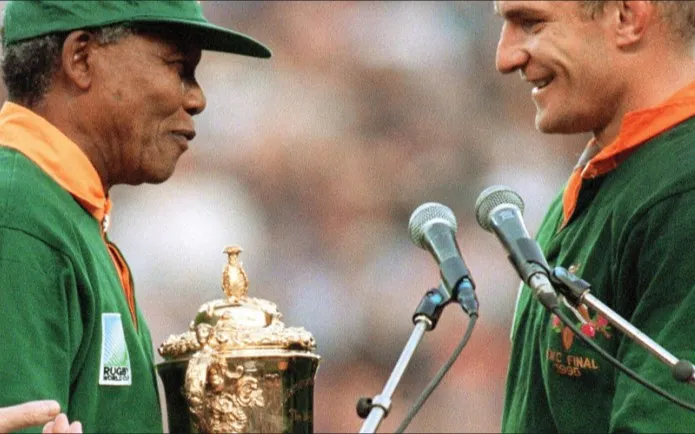
South Africa remains united in its diversity, and sport, particularly rugby, continues to illustrate this fundamental truth about our nation. In 1995, in the nascent days of our democracy - a period characterised by profound fear, audacious hope, and palpable anger from those who had just lost political power - our world icon and first democratically elected president, Nelson Mandela, masterfully deployed sport as the unifying instrument of the rainbow nation.
That moment was not mere symbolism. It became the blueprint for three decades of nation-building.
It was profoundly moving to witness 90,000 South Africans from every conceivable walk of life speaking a single language of celebration at the FNB Stadium last weekend. The Mexican wave that rippled through the stands became a universal dialect - black and white, rich and poor, rural and urban - united behind the Amabhokobhoko. For a nation often mischaracterized by external agitators, that wave was a powerful rebuttal.
The pernicious myths of racial genocide and systematic racial killings in South Africa were, for all the world to see, decisively dismissed by that very spectacle. The footage, which scattered across social media platforms and international broadcast networks, transmitted an unambiguous message: we are one people. In that stadium, no one asked about the race, class, or political affiliation of the person next to them. They were simply South African.
Sport has achieved what many political programmes have failed to do. It brings together all and sundry, irrespective of status, geography, or history. It remains the single most effective strategy for uniting our people and consolidating our nationhood.
It is deeply regrettable that politics, which birthed the very democracy we inhabit, achieves the precise opposite of what sport accomplishes in the national psyche. While sport unites, politics divides.
Politicians themselves, ironically, exhibit remarkable unity behind closed doors and at funerals. They sip whiskey, share spirits, laugh and dance in boardrooms and exclusive gatherings, yet in public they perform a theatre of divisive posturing, shouting and labelling one another as enemies. This duplicity has consequences.