
Ncedo Kumbaca: The Buffalo City insider who says political patronage is crippling the metro
By Johnnie Isaac
15 September 2026 · 6 min read
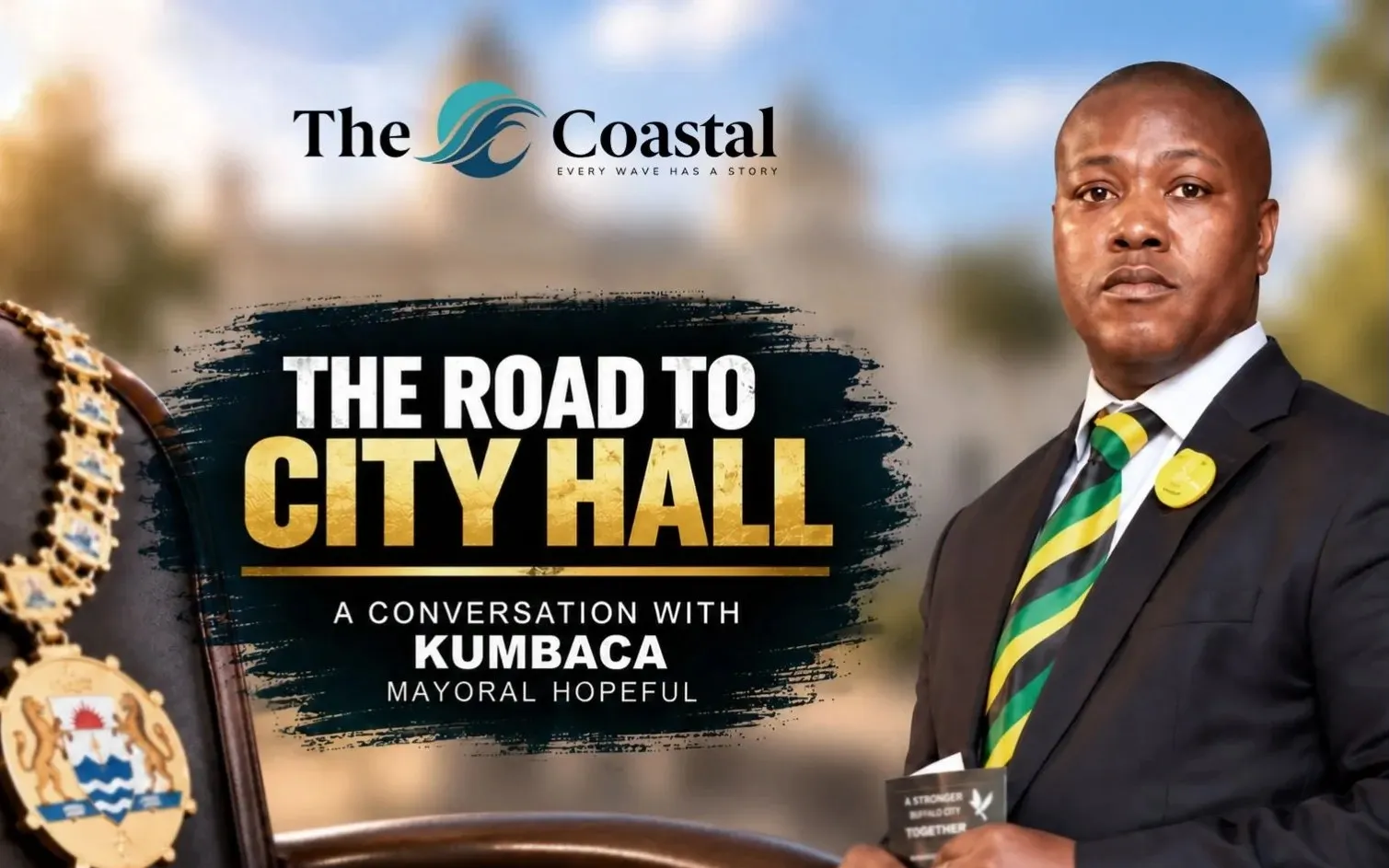
Buoyed by the backing of civic organisations rather than the highly divisive ANC factions, the journalist-turned politician says Buffalo City needs stronger leadership, a growing economy and an end to patronage politics.
Ncedo Kumbaca knows Buffalo City’s corridors of power intimately. He has served as a councillor, sat on the municipality’s mayoral committee and acted as mayor. Yet his bid to lead the troubled metro has emerged from a constituency beyond the ANC’s usual political machinery.
A councillor since 2016, Kumbaca briefly served on the Buffalo City mayoral committee as infrastructure portfolio head between 2016 and 2018 before being removed from the executive and relegated to the rank of an ordinary councillor.
He remained influential in the ANC’s Dr WB Rubusana region, even as he chose not to contest regional leadership positions after stepping down as regional treasurer in 2018. Now, almost a decade after entering the council, Kumbaca finds himself among four ANC candidates competing for the party’s nomination to become executive mayor of the metropolitan municipality.
His candidacy has been described in some quarters as having entered the contest through the “back door”, bypassing the regional political machinery. Kumbaca rejects that characterisation. He believes his nomination represents something potentially more significant: an intervention by communities frustrated with the political choices being made on their behalf.
According to Kumbaca, at least 20 organisations, including NGOs, churches, sporting bodies, the taxi industry and youth structures nominated him for consideration. “I see my nomination as an outcry by Buffalo City communities to the leadership of the ANC to consider me as a candidate. Communities have thrown the factional arrangement of the party out of the window so they can select a candidate they believe in,” he said.
‘We often field the weakest’
Kumbaca’s diagnosis of Buffalo City’s dysfunction is unusually blunt. He believes the municipality suffers from a failure to understand the boundary between political leadership and public administration, what he describes as the “dichotomy of political and administrative leadership”.
“Here in Buffalo City, political leadership and administrative leadership act as equals, but it’s not supposed to be that way,” said Kumbaca.
He said this blurring of roles creates fertile ground for political interference and patronage. He is particularly critical of what he calls the “juniorisation” of the political environment.
Kumbaca describes local government as a sphere that has increasingly become a destination for politicians who failed to secure positions at national or provincial level, rather than one in which political parties deliberately deploy their strongest candidates. “Those who didn’t get positions in national and provincial politics are dumped in local government. While other parties field the best, we often field the weakest,” he said.
Kumbaca points to the ANC’s decision to introduce a matric requirement for councillors, then later waive it, as an example of how communities can ultimately be short-changed. His argument is that municipal government has become too important to be treated as an extension of internal party patronage.
The economy before the rates bill
While much of the public debate around Buffalo City focuses on municipal rates, electricity prices, billing and non-payment, Kumbaca says there is another crisis beneath the surface. The shrinking local economy.
“Companies are leaving BCM in numbers because they find doing business here difficult and expensive,” he said.
That, in his view threatens the municipality's ability to generate revenue in the first place. A city cannot continuously increase the financial burden on those who pay while its productive economic base contracts. His solution is to pursue investment and production rather than simply looking inward at municipal collections.
Kumbaca says that, if appointed mayor, he would introduce a city production incentive scheme within his first 100 days and embark on an aggressive investment-promotion campaign. The objective would be straightforward: attract businesses, create jobs and broaden the municipality's revenue base by economically empowering more people to pay for municipal services.
Patronage in overalls
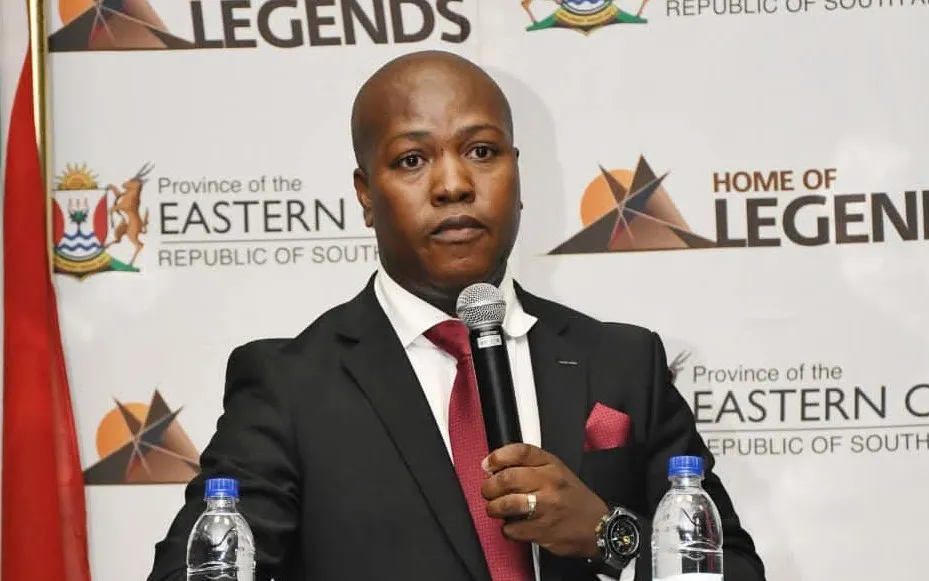
Kumbaca has also expressed concern about municipal programmes that create large numbers of temporary jobs without a clear long-term financial strategy. He points specifically to temporary employment initiatives, including jobs created through the Buffalo City Metropolitan Development Agency (BCMDA), which he says recently employed about 200 people per ward potentially around 10,000 people to clean the city.
“We have seen this towards the party’s regional conference, where people were signing employment contracts in ANC branch general meetings. We can’t have leadership that plays with people’s emotions, using their hunger and poverty and also abusing the purse of the municipality,” said Kumbaca.
He believes the programme could leave the next administration with a serious financial and political problem when those contracts expire. “When the contracts of these people come to an end, they are going to demand permanent employment,” he said. It is perhaps the strongest indictment Kumbaca makes of the political culture he wants to change, and one that inevitably raises a question about the ANC itself.
If patronage and factionalism have become embedded in the relationship between party politics and municipal administration, how does an ANC politician reform the system while remaining inside the same organisation? Kumbaca’s answer is that the ANC’s own structures and communities can still correct its course. He argues that his nomination is evidence of that.
The man who chose not to contest
Kumbaca's name has repeatedly surfaced during ANC regional leadership contests in Dr WB Rubusana, yet he has not contested for the regional leadership since being voted out in 2018. He says the decision was deliberate. Contesting political leadership, he argues, takes an emotional and financial toll.
Kumbaca chose instead to exercise influence from outside the formal leadership contest. “Sometimes you can just use your influence to back what you consider a better devil between those that are contesting and hope you tilt towards a positive trajectory,” he said.
That approach has allowed him to remain politically relevant without continuously seeking formal positions.
From journalism to politics
Kumbaca’s political journey began in another profession concerned with telling the stories of ordinary people. Born in Buffalo City, he worked as a journalist before becoming increasingly drawn into politics. Through the lens and the pen, his biography says, he found himself pulled towards “the calling to fight for the rights and advancement of the people”.
He rose through the ANC Youth League to provincial level before making what he describes as a significant sacrifice: leaving a senior post as communications director in the Eastern Cape government to enter local government. That decision brought him into Buffalo City’s political leadership.
When he served on the mayoral committee between 2016 and 2018, Kumbaca was responsible for critical municipal portfolios including water, electricity, roads and infrastructure. He also acted as mayor on several occasions and led Buffalo City delegations to China and Europe.
“When I left the BCM mayoral committee in 2018, I performed at 97% in all the quarterly reports. I was the star of the institution in terms of performance. But I can tell you, nothing happened after my departure, like the electrification of informal settlements,” said Kumbaca.
Bringing back those who left
The ANC's political problem in Buffalo City is not confined to the contest with opposition parties. The party has experienced internal divisions, with some disgruntled members defecting to the United Democratic Movement.
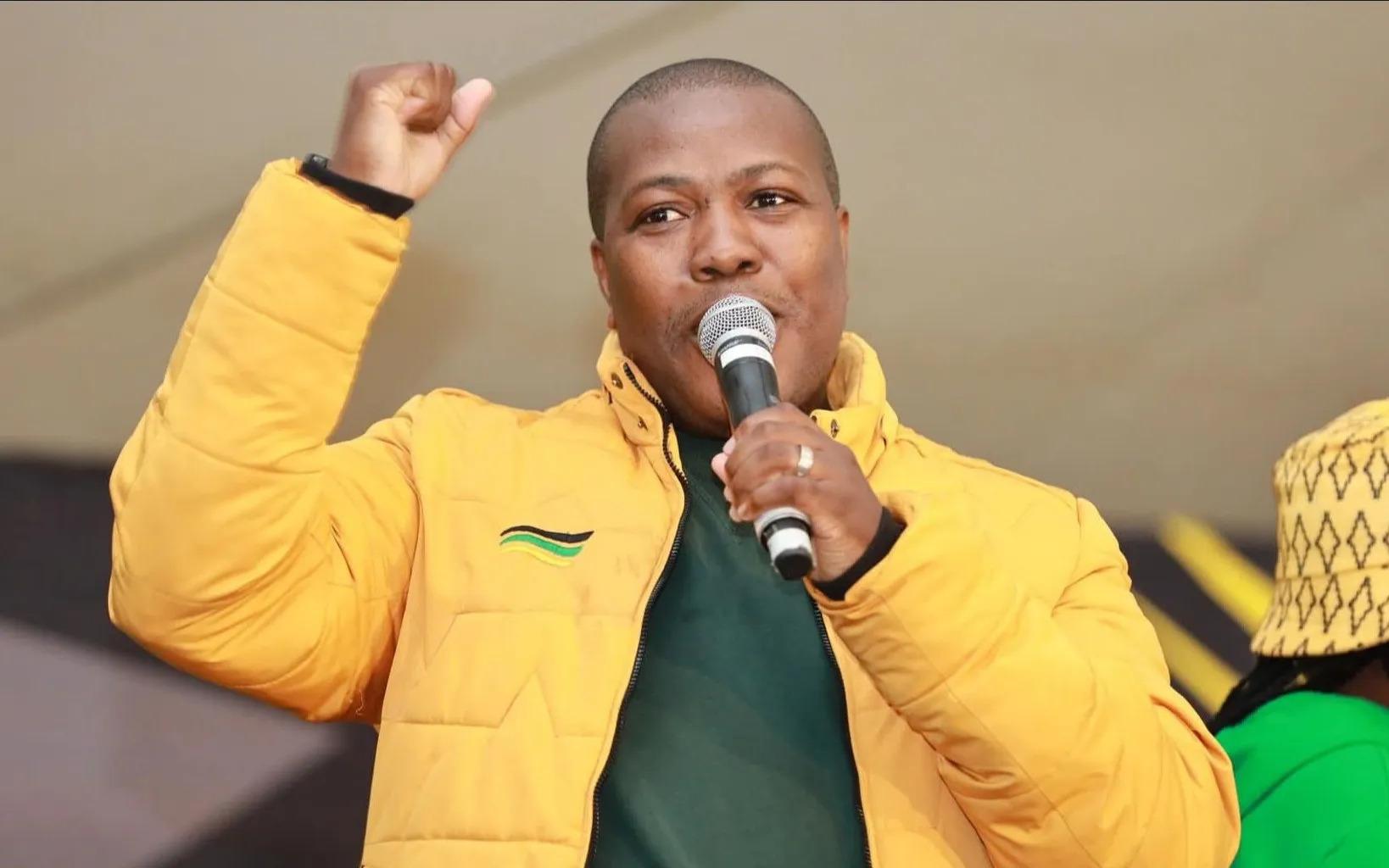
Recent polling has also suggested that the Democratic Alliance has overtaken the ANC in support in the metro. Kumbaca believes the ANC can reverse that trajectory, but only if it gets its leadership choices right.
“If I’ll be announced as the BCM mayor, my first task is to bring back the people that have left the party and joined the UDM. Most of those people are my friends, I worked with some of them in the ANC youth league,” he said.
Kumbaca's vision extends beyond immediate service-delivery complaints. He wants to reverse the negative Auditor-General findings that have repeatedly dogged the municipality and revive major infrastructure projects.
Among the projects he identifies is a massive sewer tunnel project that he believes could unlock development across the city. He also wants stronger partnerships between the municipality and the private sector.
On public safety, his proposals include centralising the safety and security cluster, introducing a Metro Police service and establishing Metro Courts.
You may also like
KSD carries R1bn in overdue rates, refuse and rental debt
The Coastal Reporter · 1d ago · 1 min read
KSD formally ties senior managers’ performance to service delivery — particularly roads, water, sanitation and infrastructure
Asemahle Mfombi · 2d ago · 2 min read

Komani’s Financial Alarm Bells Ring as Collections Sink to 49%
The Coastal Reporter · 2d ago · 2 min read